Notes from inside the tape.
Patterns, mistakes, and methods — written by people who actually trade. No SEO filler, no hype, no recycled course content.
 Trading Psychology
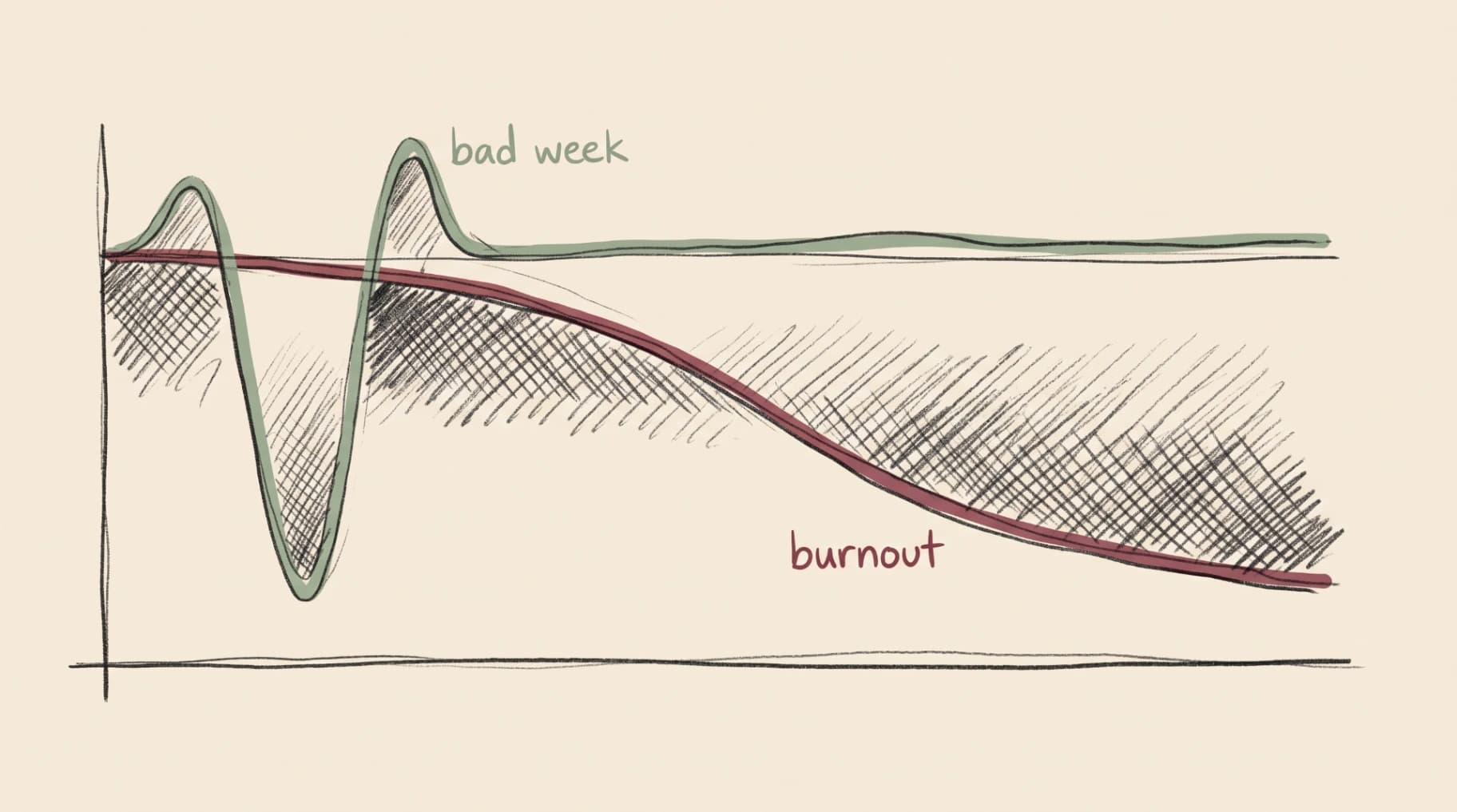
Trading Burnout: When the Process Stops Working Because You Are Tired
The charts have not changed. The plan has not changed. What changed is quieter than that, and it does not show up in a strategy review, only in how heavy every single decision has started to feel.
Read Trading Psychology
How to Actually Stop Revenge Trading Mid-Session
Knowing what revenge trading is does not stop it from happening. Here is a set of hard, boring mechanisms that catch it in the moment, not after the account has already paid for it.
Read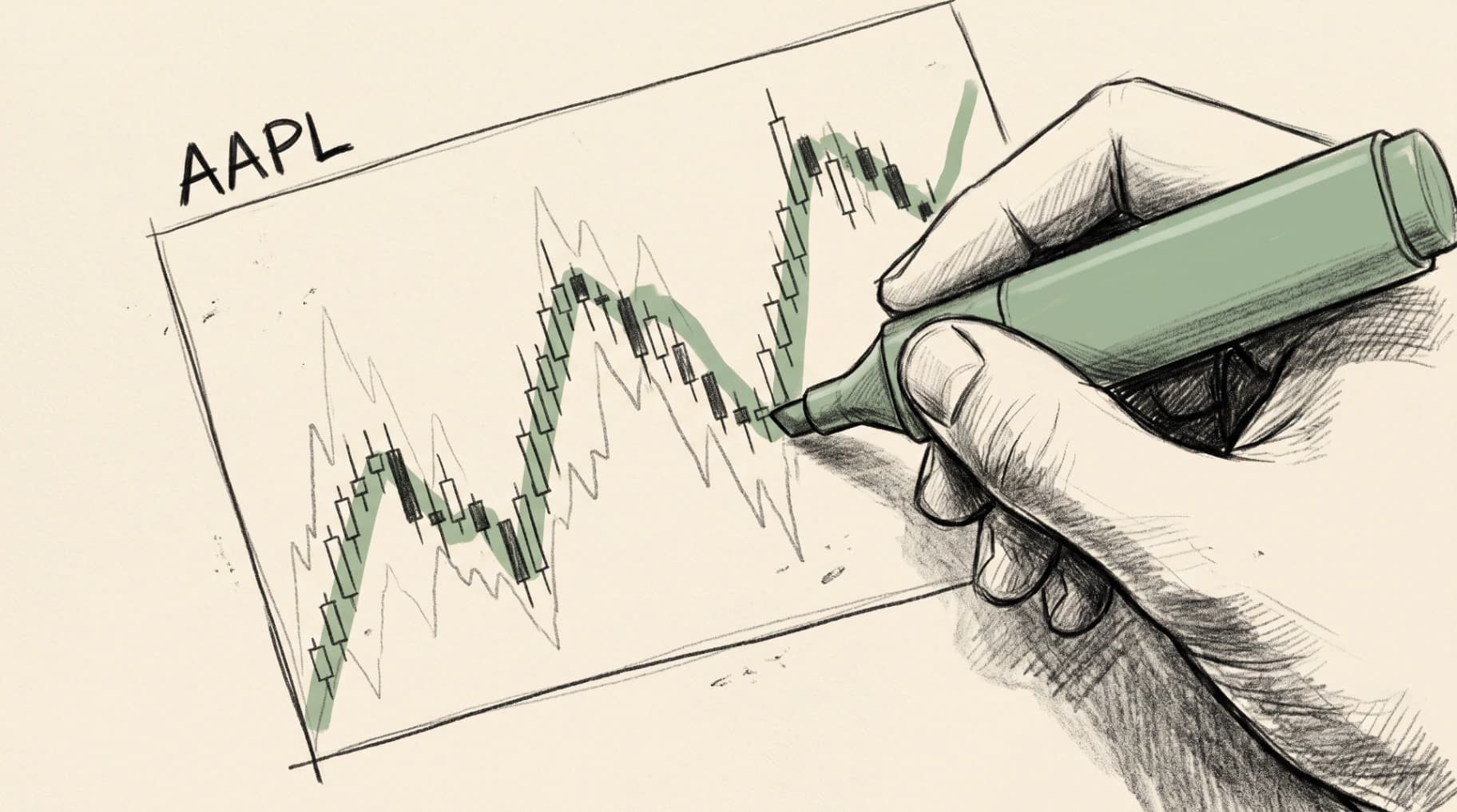 Trading Psychology
The Cognitive Biases That Feel Like Skill When You Are Trading
Bias does not announce itself. It shows up dressed as instinct, as a hunch you would swear was earned. Here is what that actually looks like inside a single trading day.
Read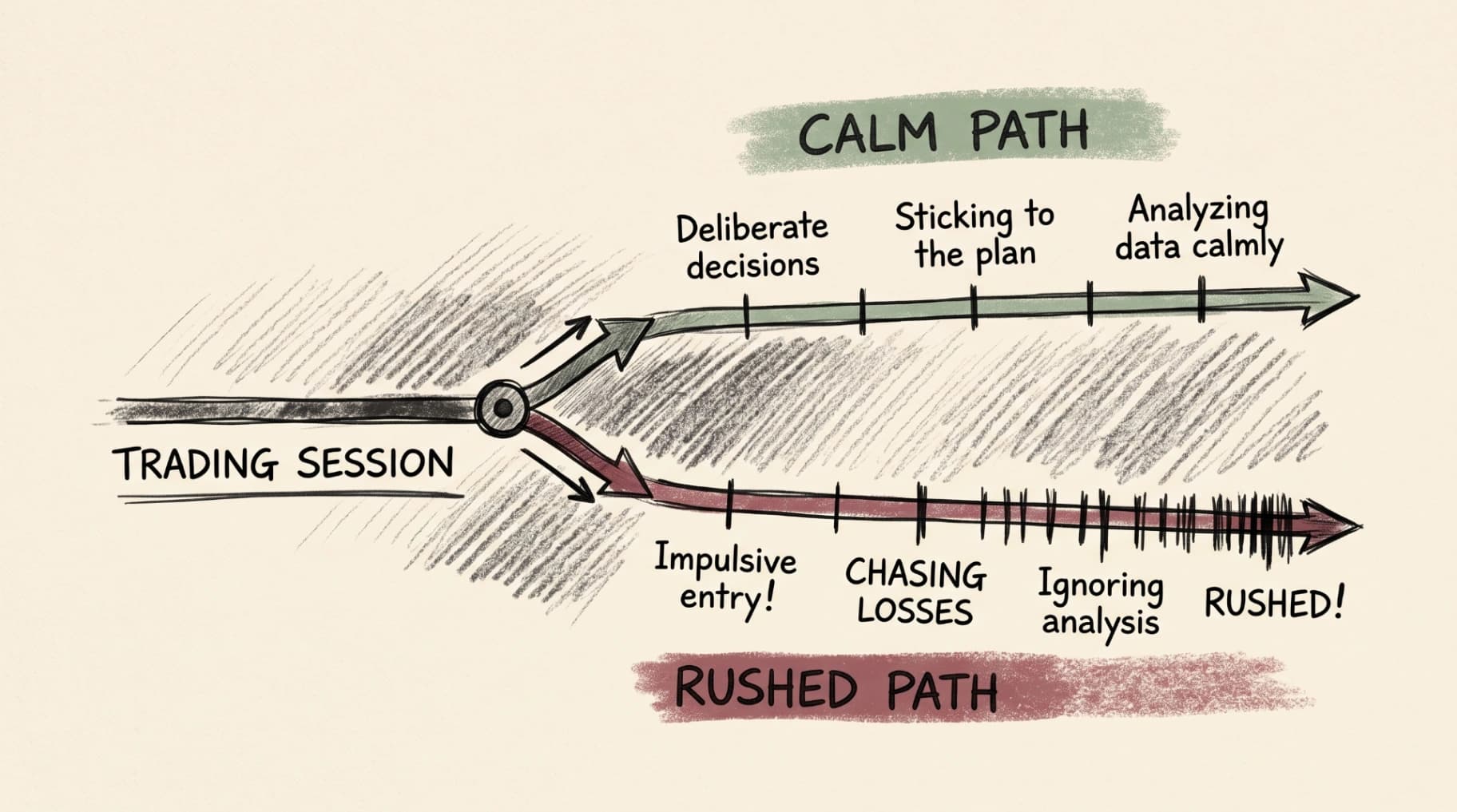 Trading Psychology
Trading Tilt: How to Recognize It Before It Costs You
Tilt does not feel like a mistake while it is happening. It feels like conviction. Here is how to catch the shift before it costs you the week.
Read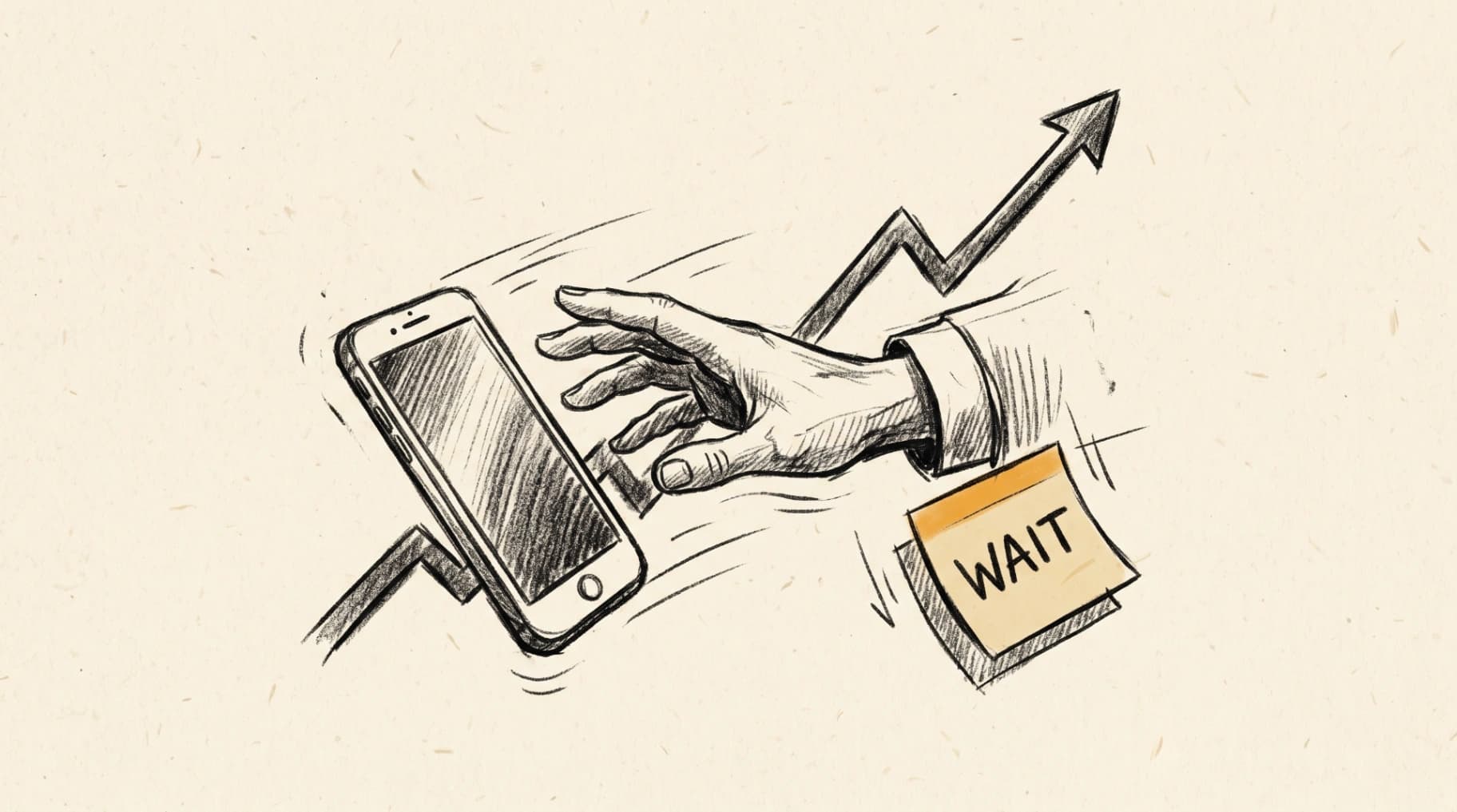 Trading Psychology
FOMO Trading Mistakes: Why Chasing the Move Costs You More Than It Seems
FOMO does not feel like a mistake while it is happening. It feels like urgency. Here is how to recognize the pattern in real time and build a checkpoint that catches it before you click.
Read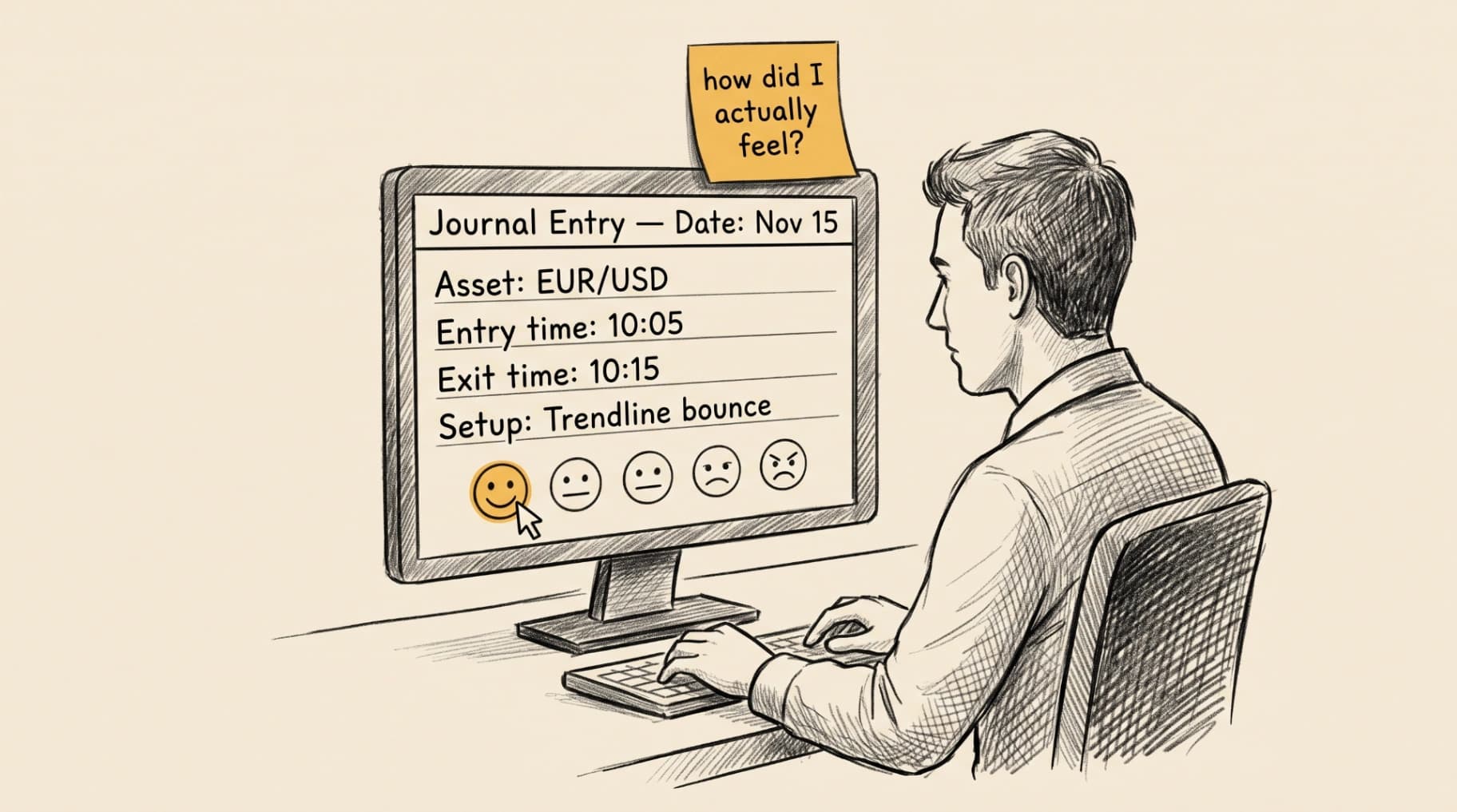 Trading Strategies
Mood Tracking: Why the Feeling Behind the Trade Matters as Much as the Setup
The setup gets written down. The feeling behind it rarely does. Mood tracking closes that gap, so the emotional side of a trade stops disappearing the moment you close the position.
Read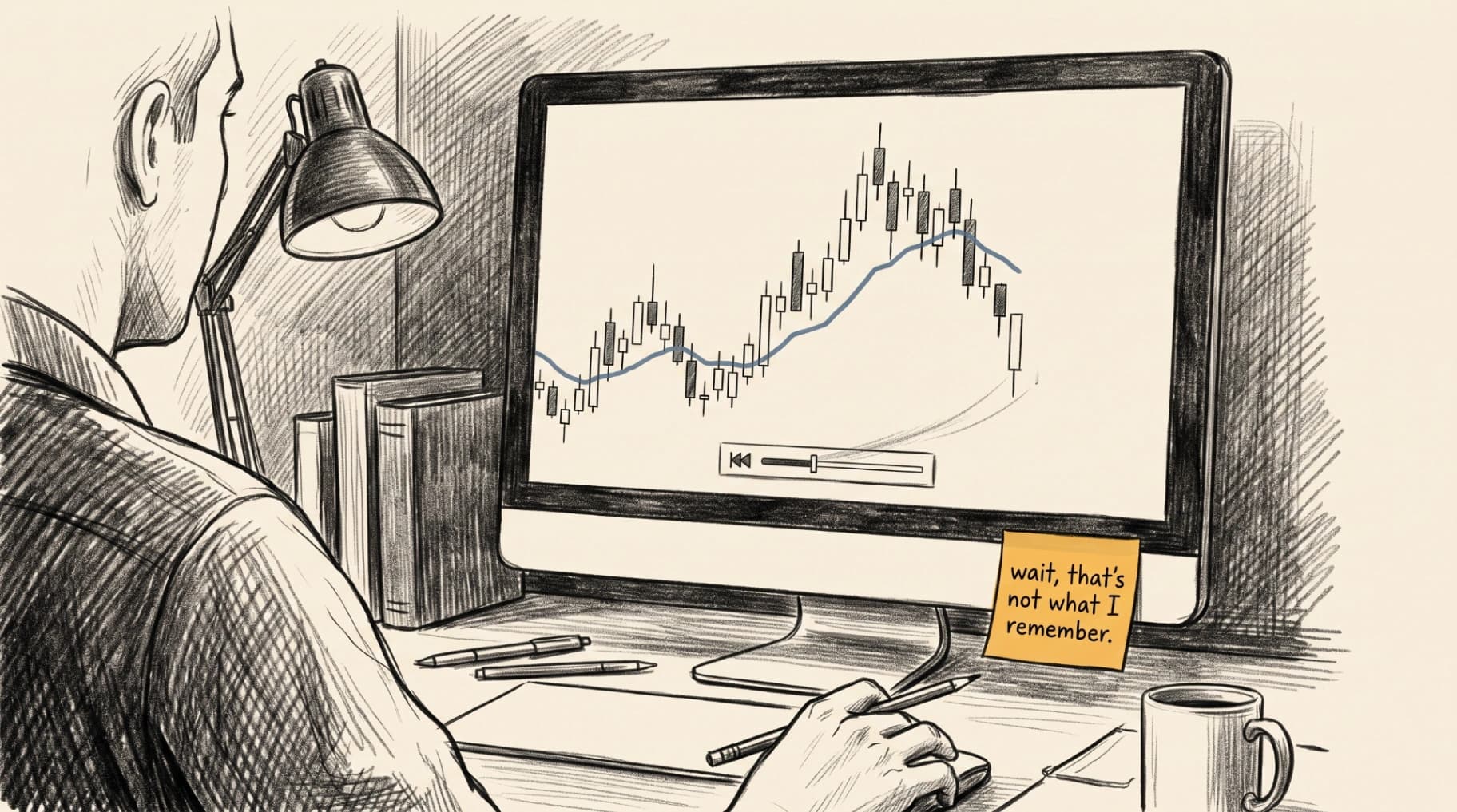 Trading Strategies
Trade Replay: Watch Every Trade Play Out Before You Trust Your Memory of It
Your memory of a trade is not the trade. Trade replay puts you back on the actual chart, entry to exit, so the review is based on what happened, not on what you think happened.
Read Trading Tools
Stock Screener Guide: Turning Thousands of Tickers Into a Shortlist That Matters
A stock screener is only as useful as the filters behind it. Here is how to build a screen that actually narrows the market instead of just resorting it.
Read Trading Tools
Technical Analysis Tools: Why Having More Doesn't Mean Trading Better
Technical analysis tools keep multiplying, but the traders who read markets well tend to use fewer of them, not more. Here is why.
Read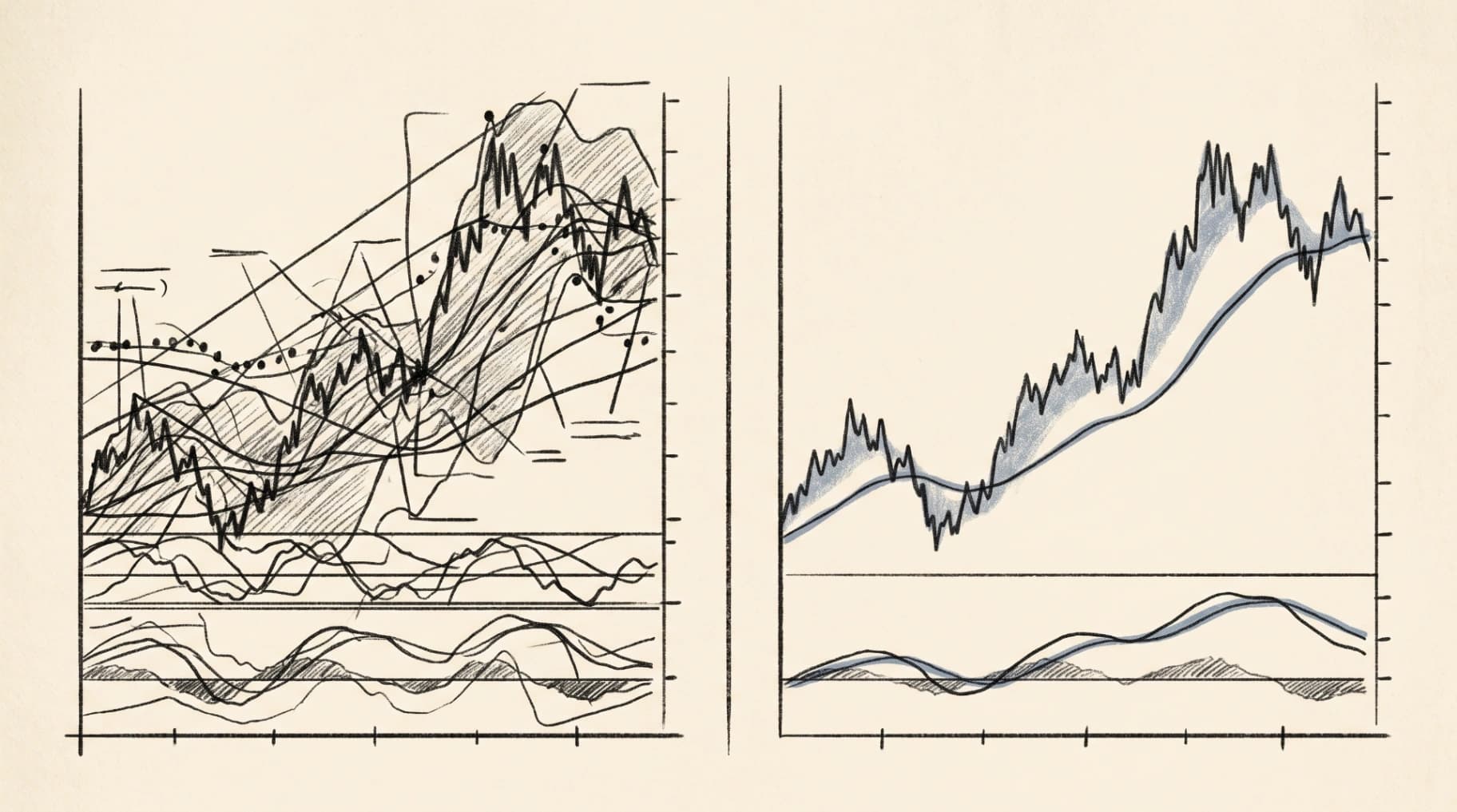 Trading Tools
Stock Charting Software: What Traders Actually Need vs What Gets Sold
Most stock charting software is sold on indicator count. Here is what actually separates a chart you can trade from a chart you just look at.
Read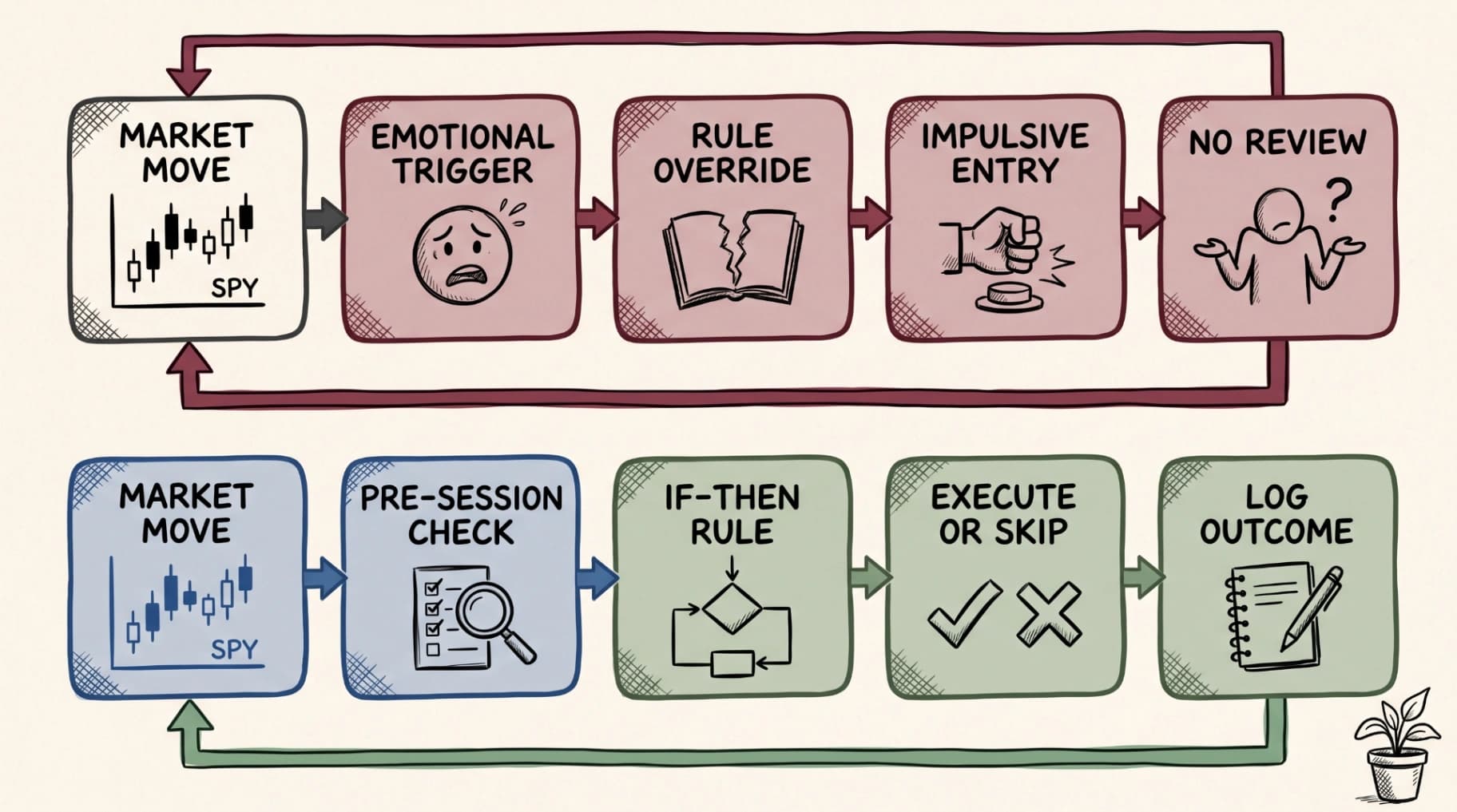 Trading Psychology
Trading Mindset Tools: Routines That Build Real Discipline
Trading mindset tools are not affirmations or willpower. They are repeatable routines, pre-session resets, post-loss protocols, and structured reviews, that make discipline something you do instead of something you feel.
Read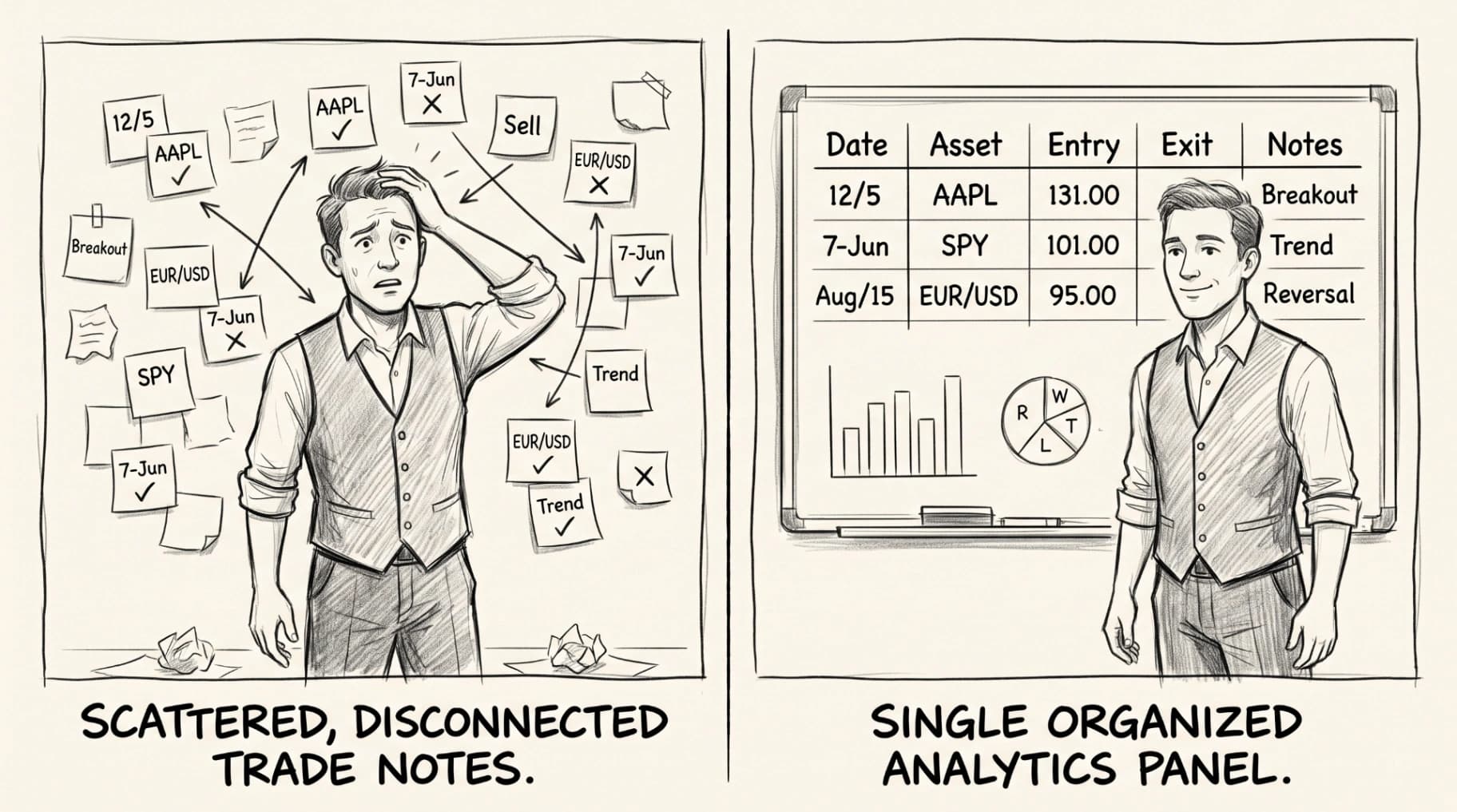 Performance Analytics
Smart Trading Analytics: What Your Trade Data Is Telling You
Most traders collect data. Very few actually use it. Here's what smart trading analytics really means, and why it changes how you review your trades.
Read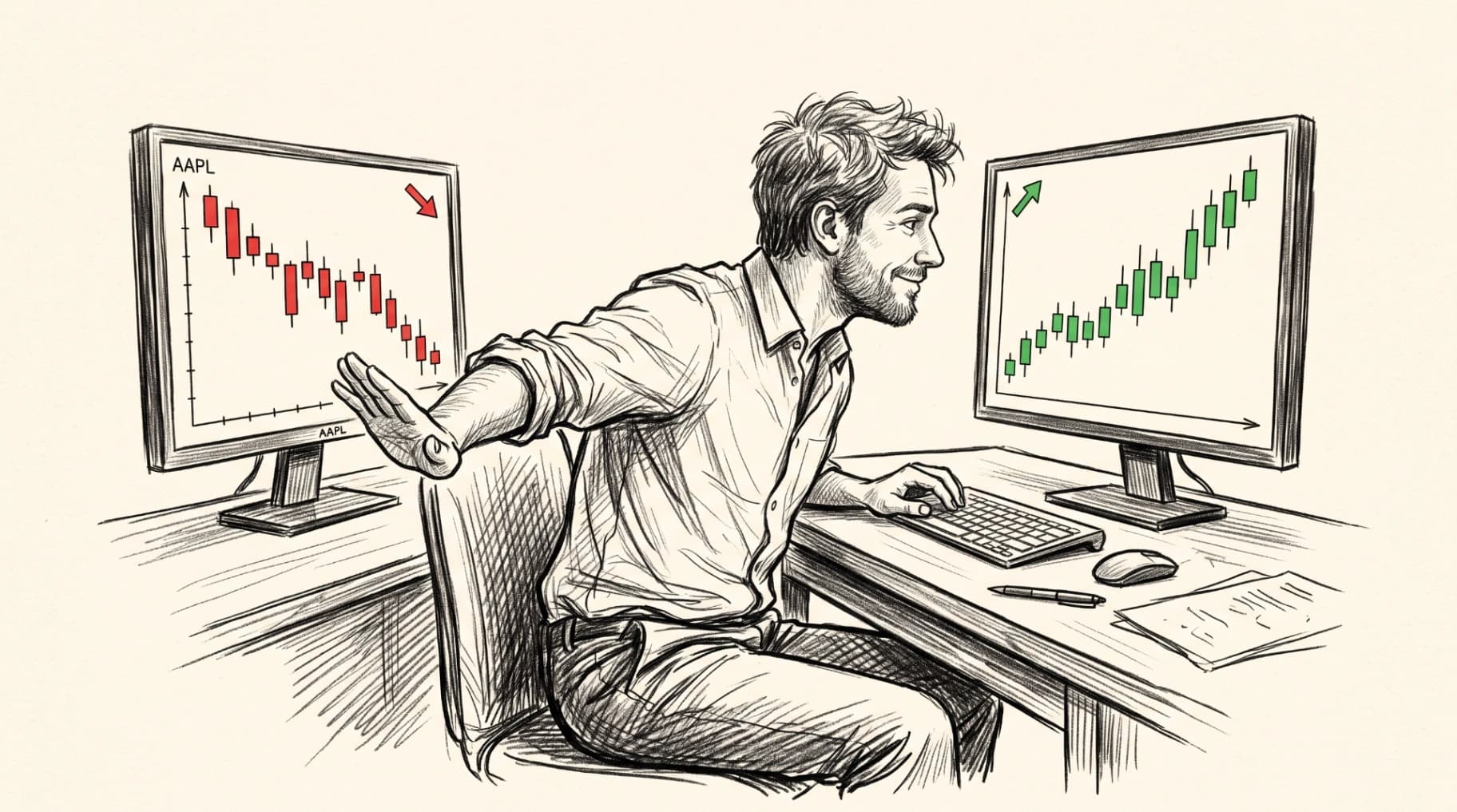 Trading Psychology
Cognitive Trading Biases: The Hidden Mental Shortcuts Costing You Trades
Your brain is quietly editing the market to fit what you already believe. Here's how cognitive trading biases show up in real decisions, and how to catch them before they cost you the next trade.
Read AI Trading
Predictive Trading Software: What It Can (and Can't) Predict
Predictive trading software promises to see what's coming next. Here is what these tools actually forecast, and why the most useful prediction available to you is the one built from your own trade history.
Read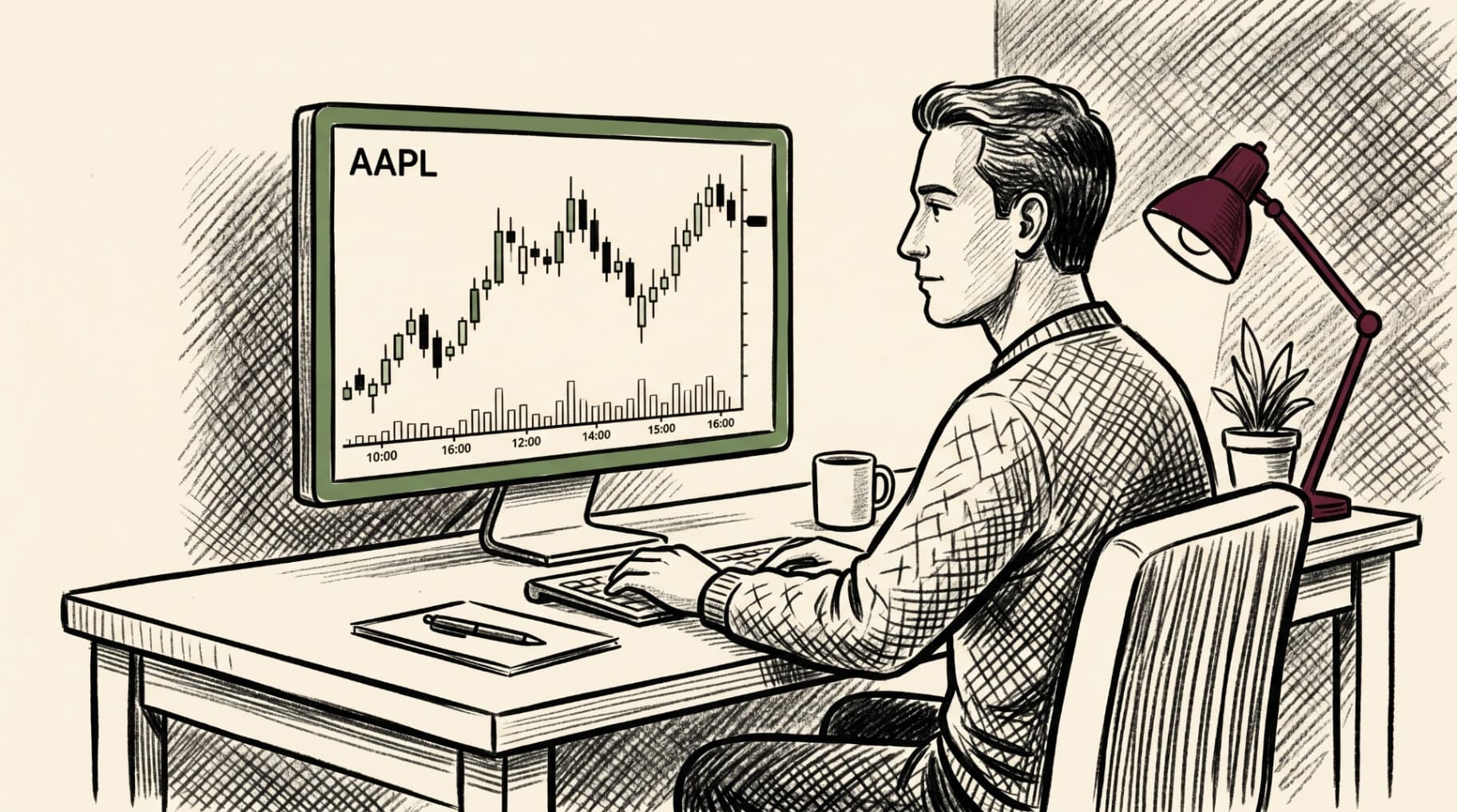 Trading Psychology
Trading Discipline: The Real Reason Traders Break Their Own Rules
Most traders have a plan. Most traders also break it. Trading discipline is the gap between the rules you write when you are thinking clearly and the decisions you make when a position is live. This guide breaks down exactly why discipline fails, what patterns to look for, and how behavioral analytics can help you close that gap for good.
Read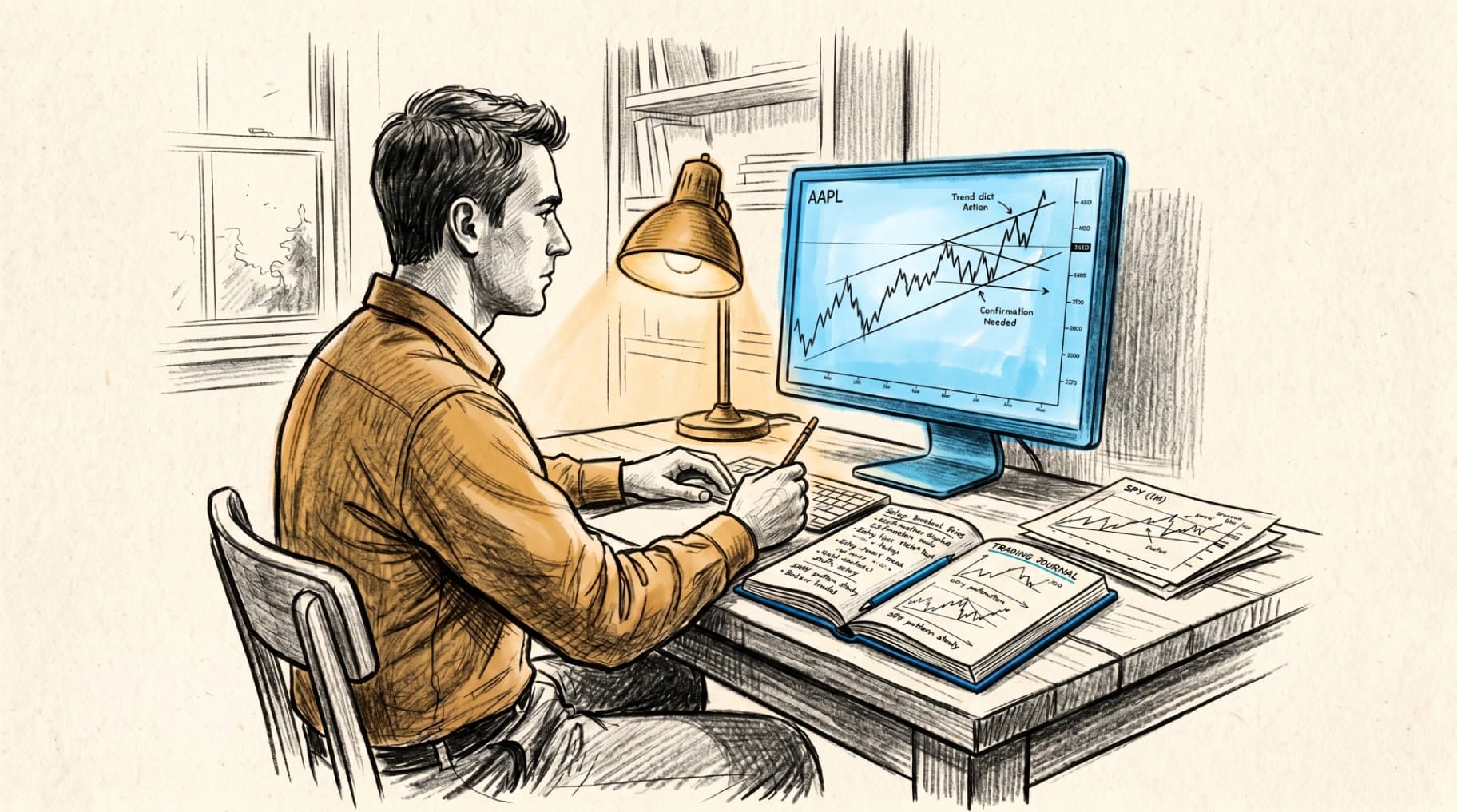 Trading Journal
How to Keep a Paper Trading Journal (And What Most Traders Miss)
Paper trading without a journal is just practice with no memory. Learn what to log, how to structure your entries, and how to use a paper trading journal to actually prepare for live trading.
Read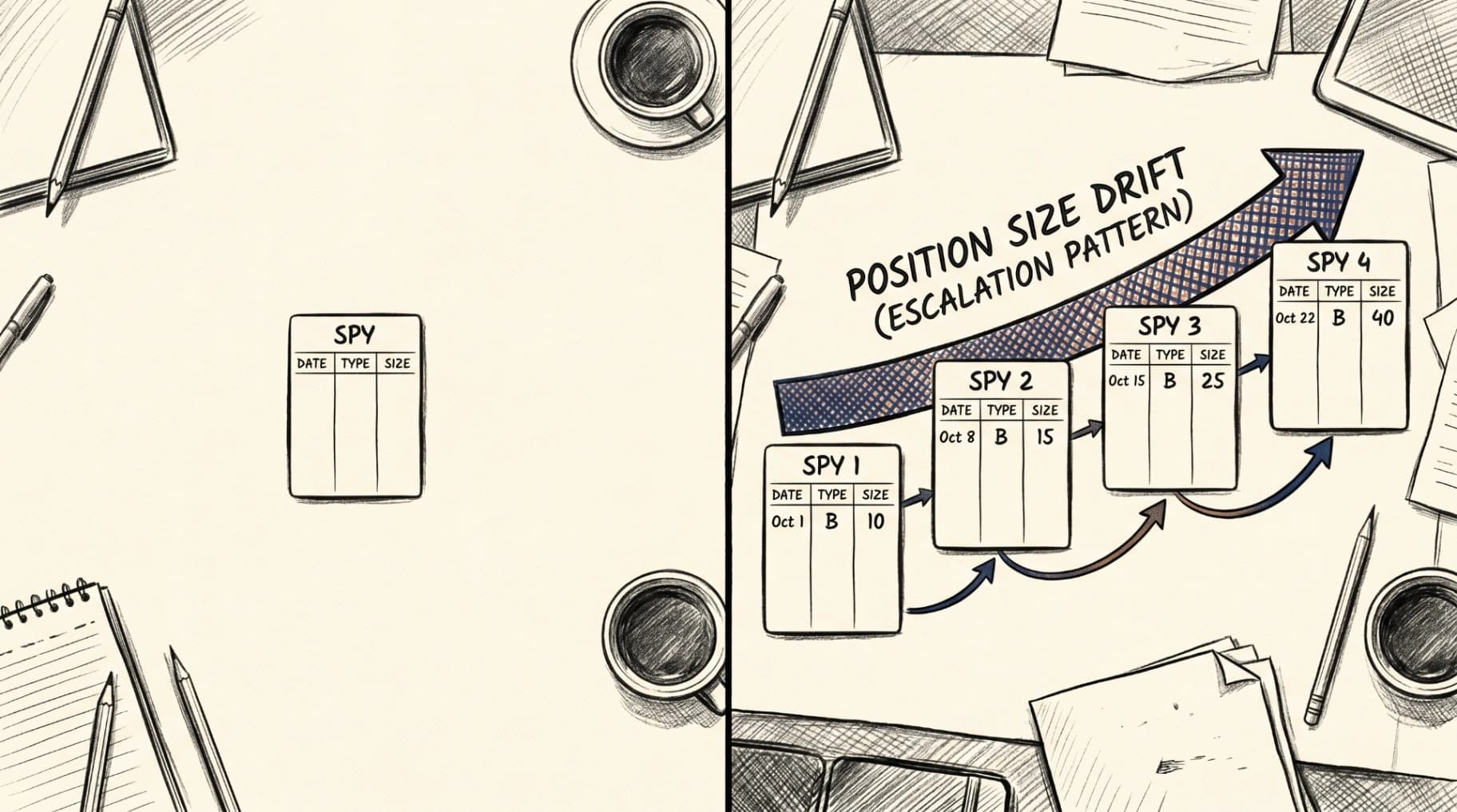 Trading Psychology
Trader Behavior Analytics: The Missing Piece in Most Trading Journals
Most traders log their trades. Far fewer track the patterns behind them. Trader behavior analytics is the layer that connects what you repeatedly do with what it consistently costs you, and it only becomes visible in the aggregate.
Read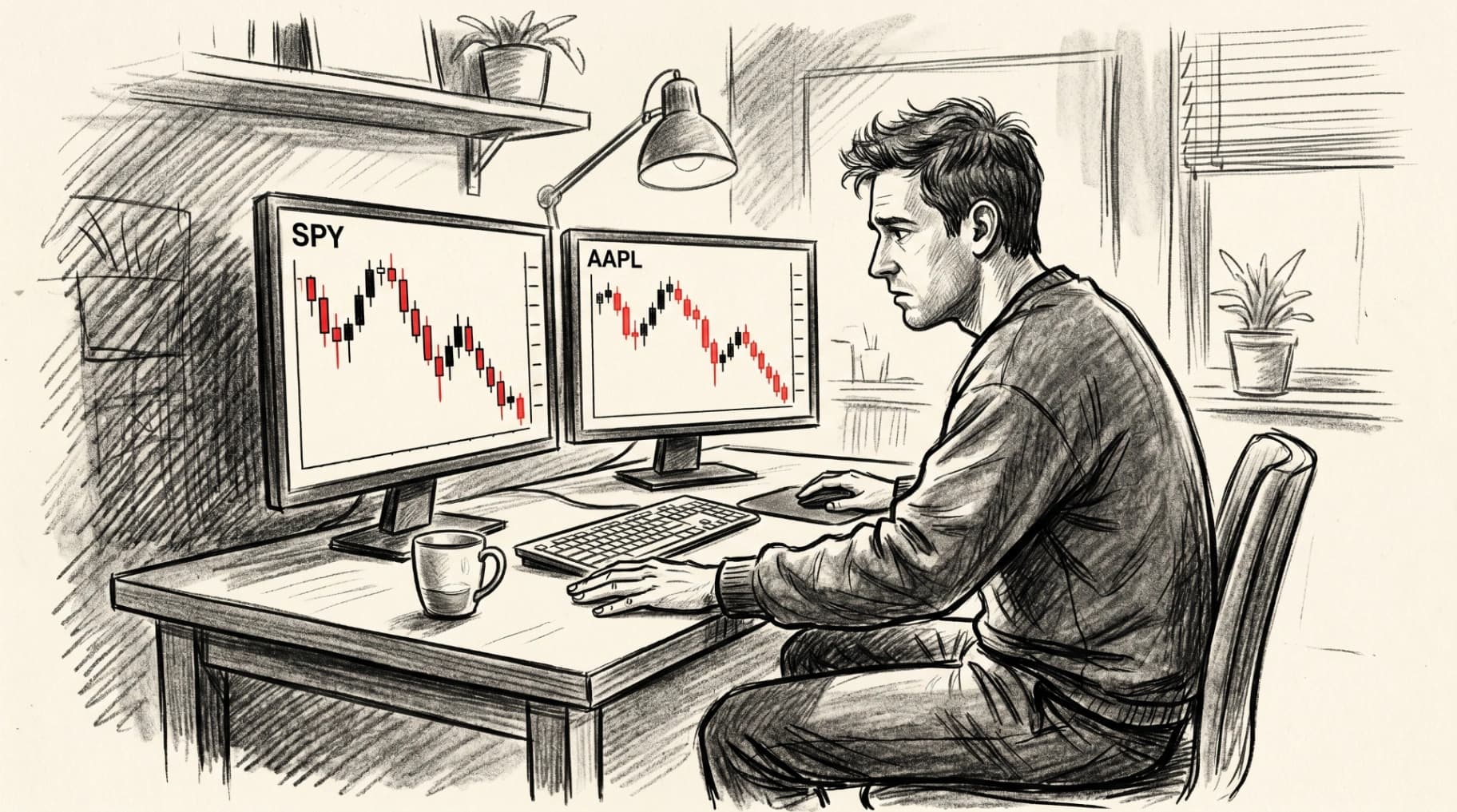 Trading Psychology
What Is Revenge Trading and How to Stop It
Revenge trading feels like a second chance. It isn't. Here's why traders fall into the cycle, what it actually costs, and how behavioral tracking helps you break it.
Read Trading Strategies
AI Trading Software: What It Actually Does (And What It Doesn't)
Every trading platform calls itself "AI-powered" now. Here's what AI trading software actually covers, where the real value sits, and how to tell a useful tool from a flashy one before you commit to it.
Read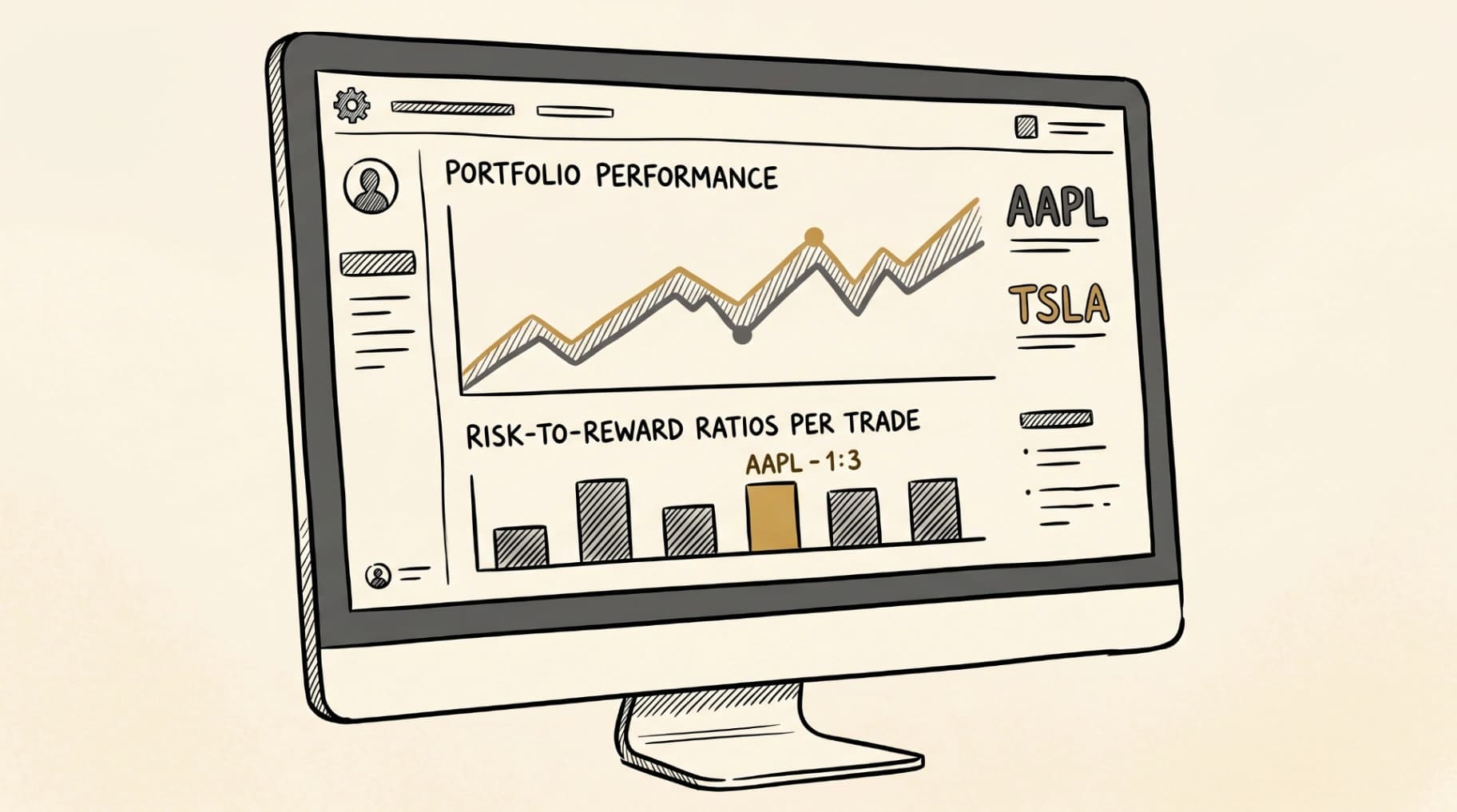 Trade Analyzer
Trading Performance Analysis: How to Read Your Trading Data
Most traders look at one number after a losing week, and it's usually the wrong one. Here's how to actually read your trading performance data, what it's telling you, and what to do about it.
Read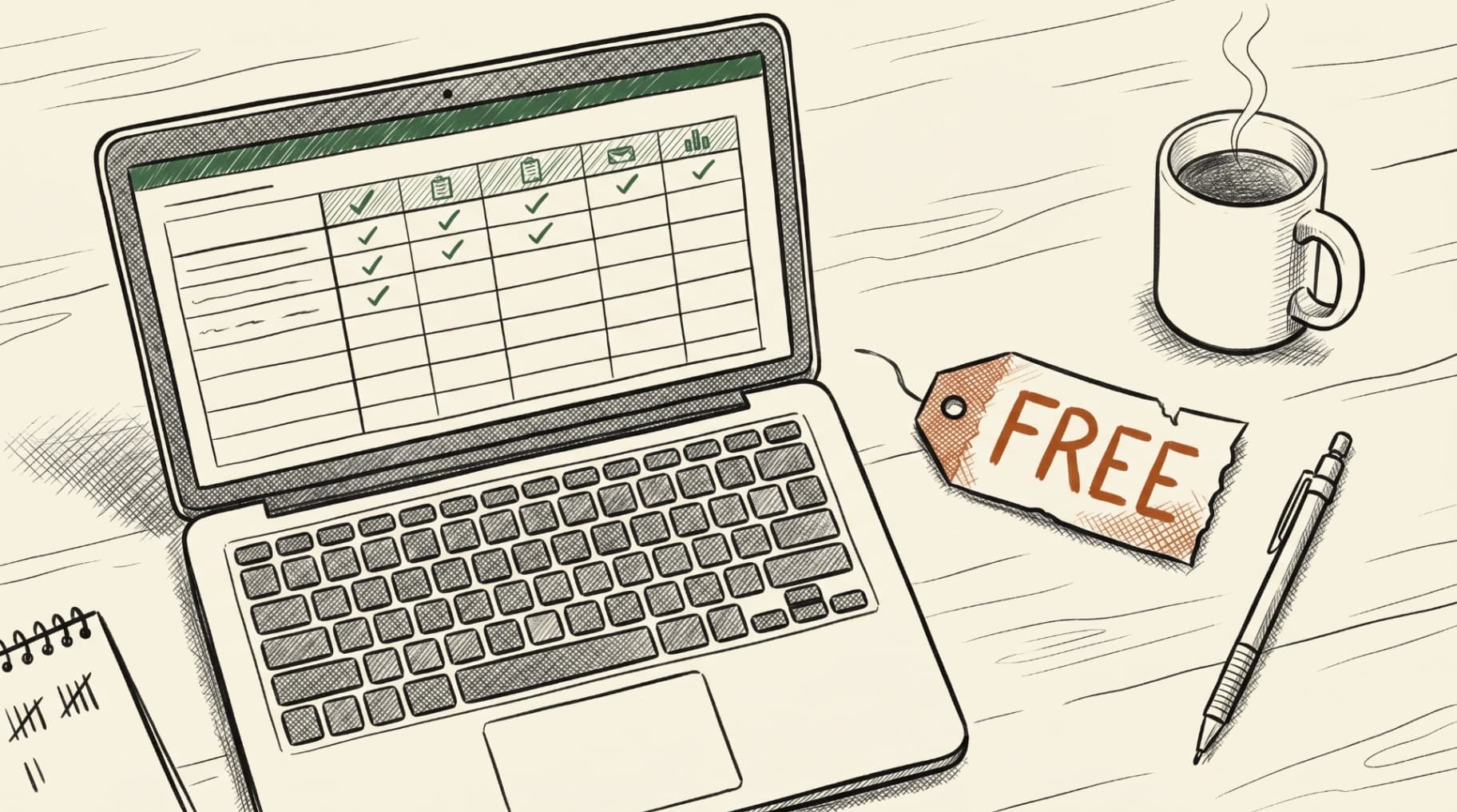 Trade Journaling
Free Trading Journal: What You Actually Get (And What's Missing)
A free trading journal can absolutely work — for a while. Here's what free tools actually cover, what disappears once you scale up, and how to know which stage you're at.
Read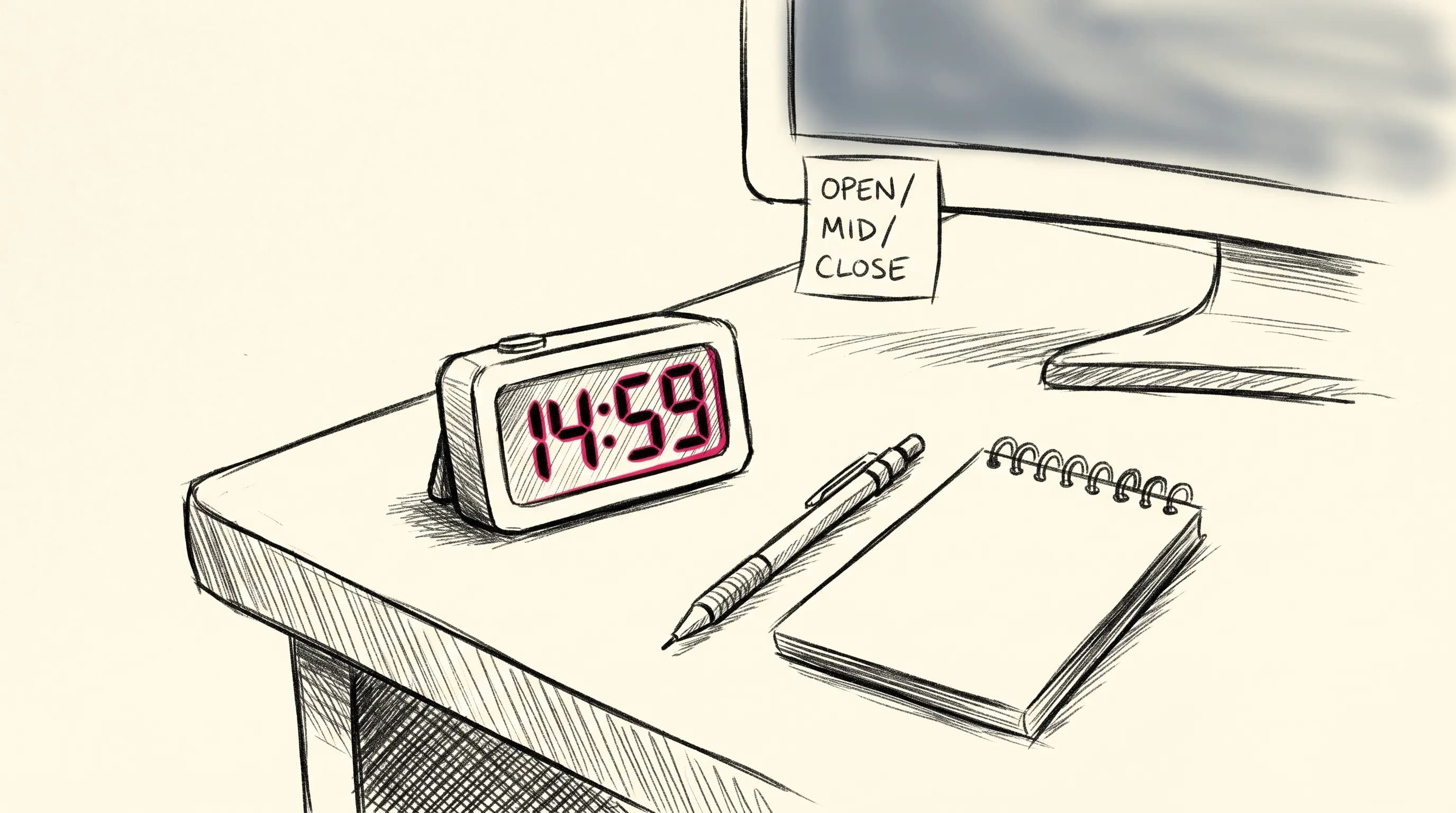 Trading Journal
Scalping Trading Journal: How to Track High-Frequency Trades and Build Real Edge
Scalping generates more trades in a single session than most strategies produce in a week. Without a purpose-built journal, the patterns that cost you stay permanently hidden.
Read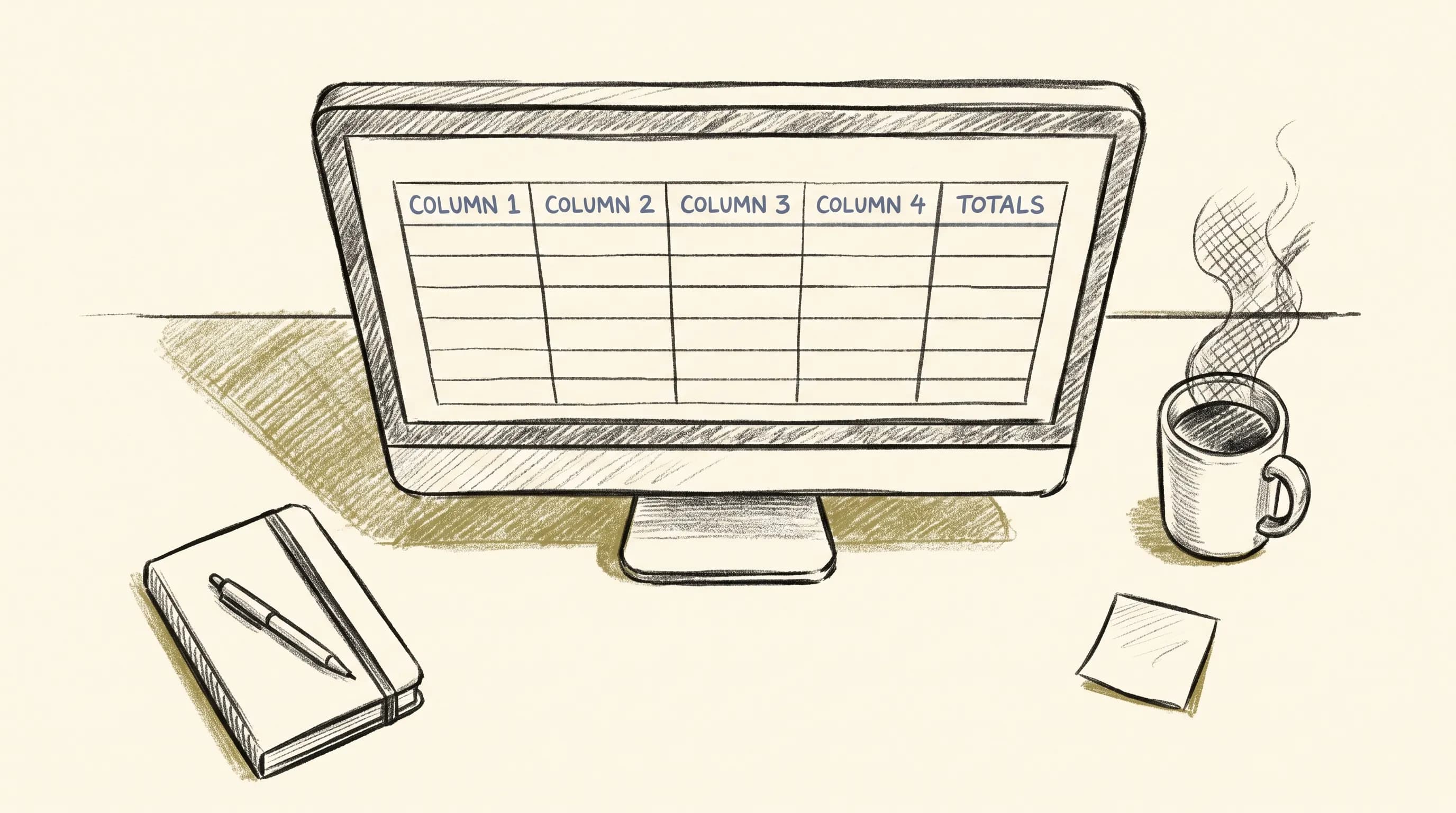 Trading Journal
Trading Journal Spreadsheet: A Guide for Serious Traders
A trading journal spreadsheet is where most traders begin — and for good reason. But it has a ceiling. Here's what it does well, where it runs out of road, and what serious traders use when they're ready for the next step.
Read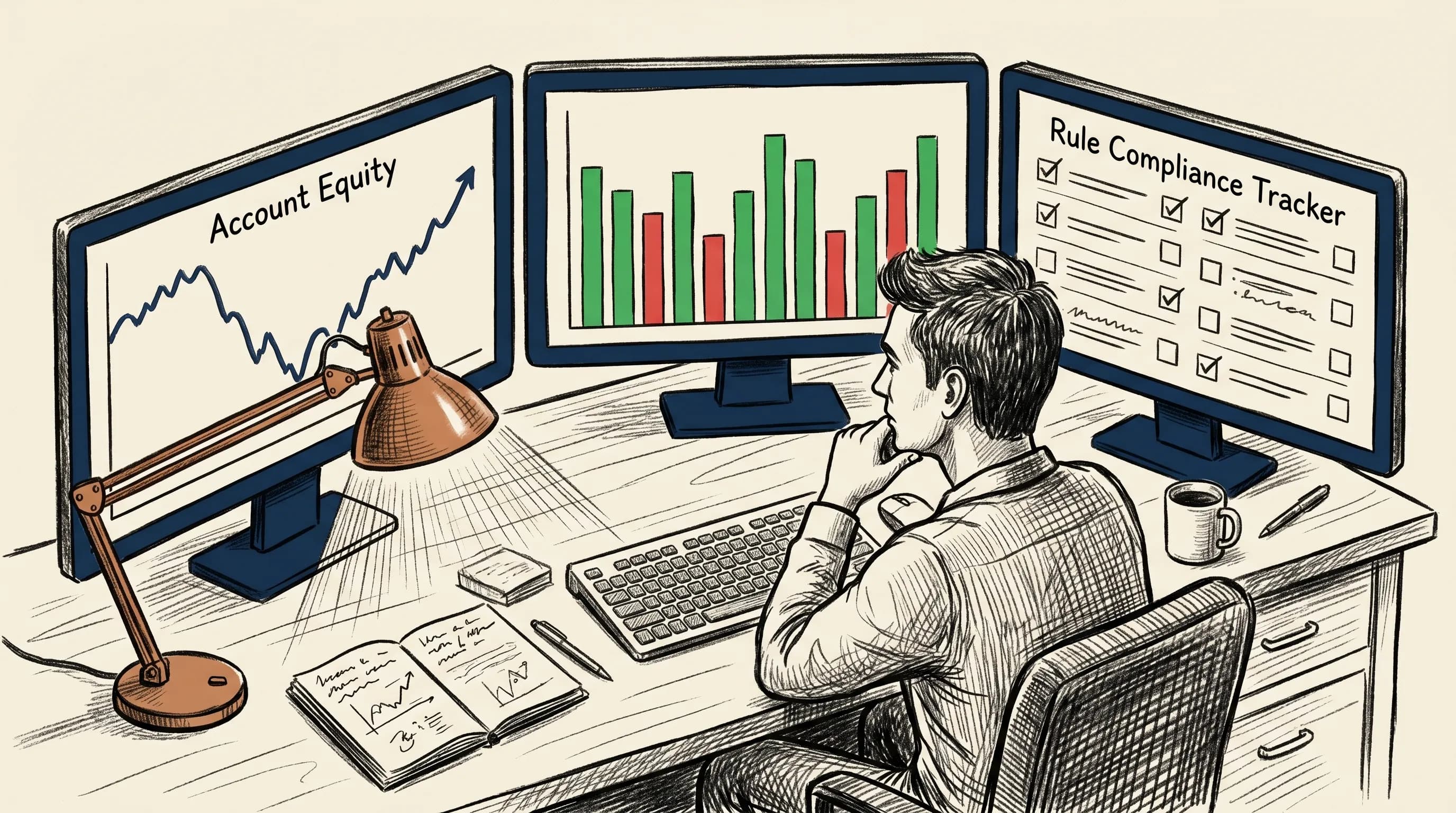 Trading Journal
The Prop Firm Trading Journal: How to Pass Your Challenge and Stay Funded
Most prop firm traders fail their challenge not from lack of skill, but lack of structure. Here's what your trading journal must track to pass, get funded, and stay funded.
Read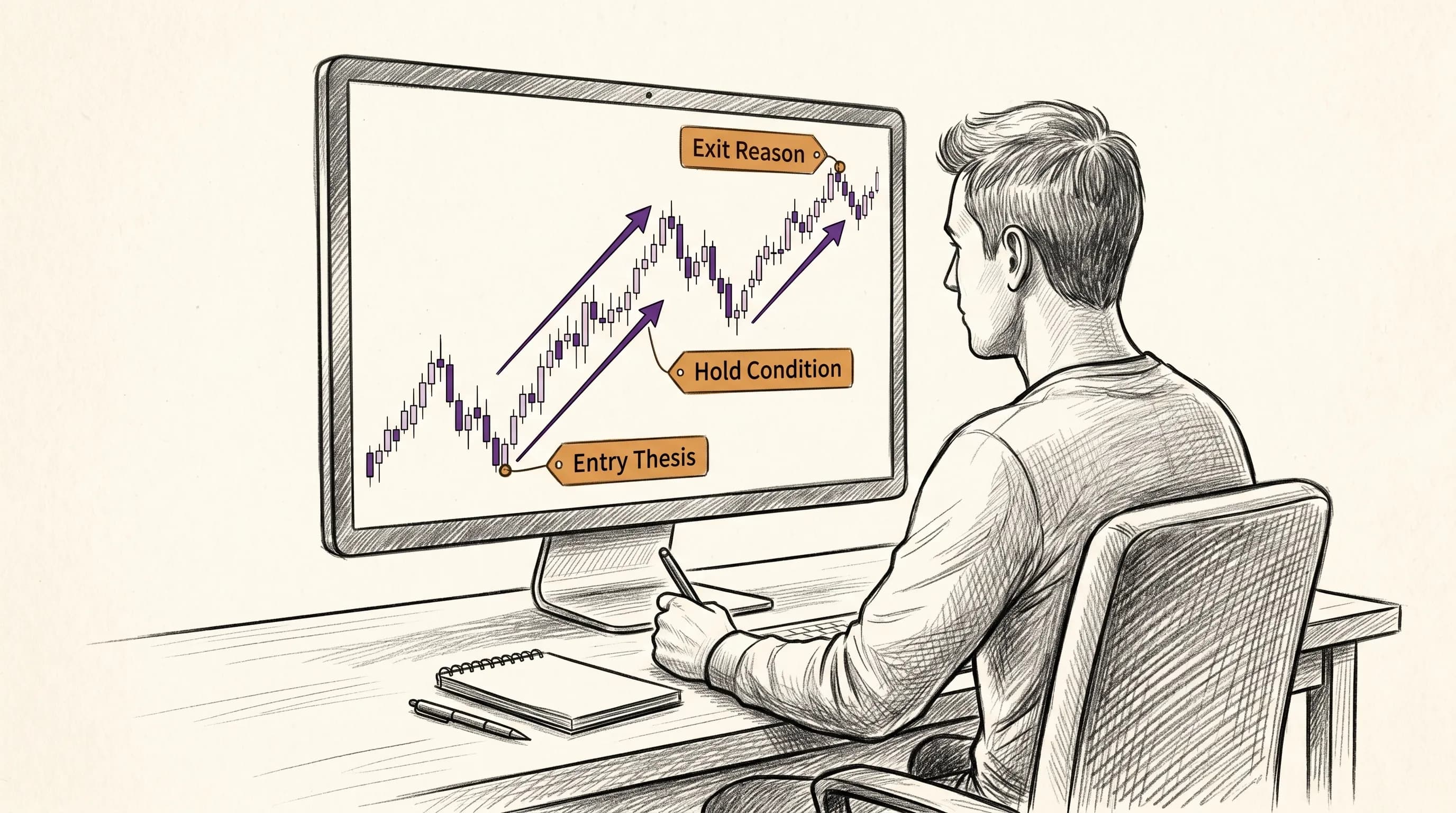 Trading Strategies
Swing Trading Journal: How to Track Multi-Day Trades and Build Your Real Edge
Most swing traders fail quietly — repeating the same exit mistakes for months without realising it. Here's how to build a swing trading journal that actually closes the feedback loop.
Read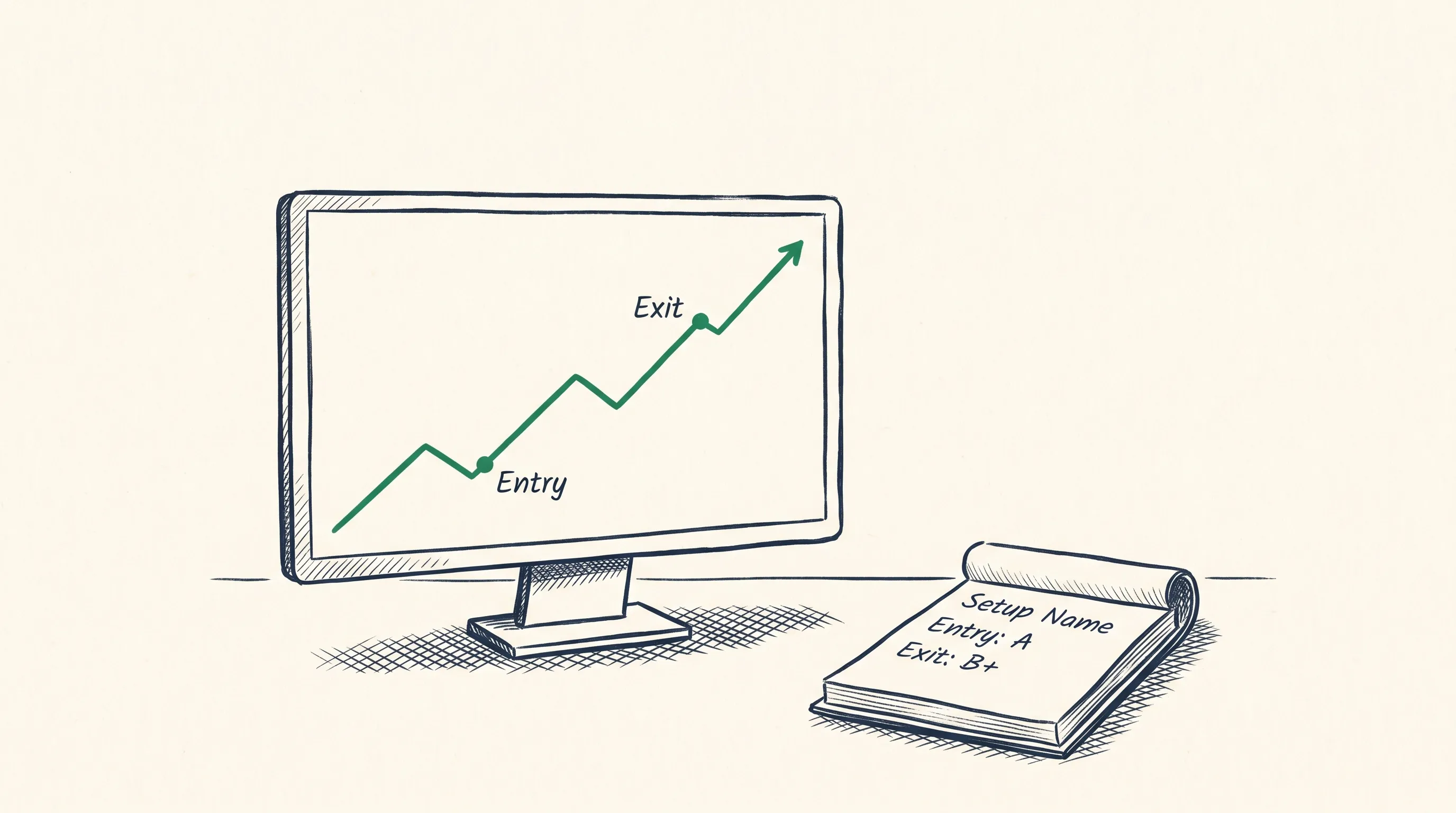 Trading Strategies
Stock Trading Journal: What to Track and Why It Transforms Your Performance
Most stock traders log entries and exits and call it a journal. It isn't. This guide breaks down exactly what a stock trading journal needs to capture — and how tracking the right details turns your trade data into a feedback system that actually makes you better.
Read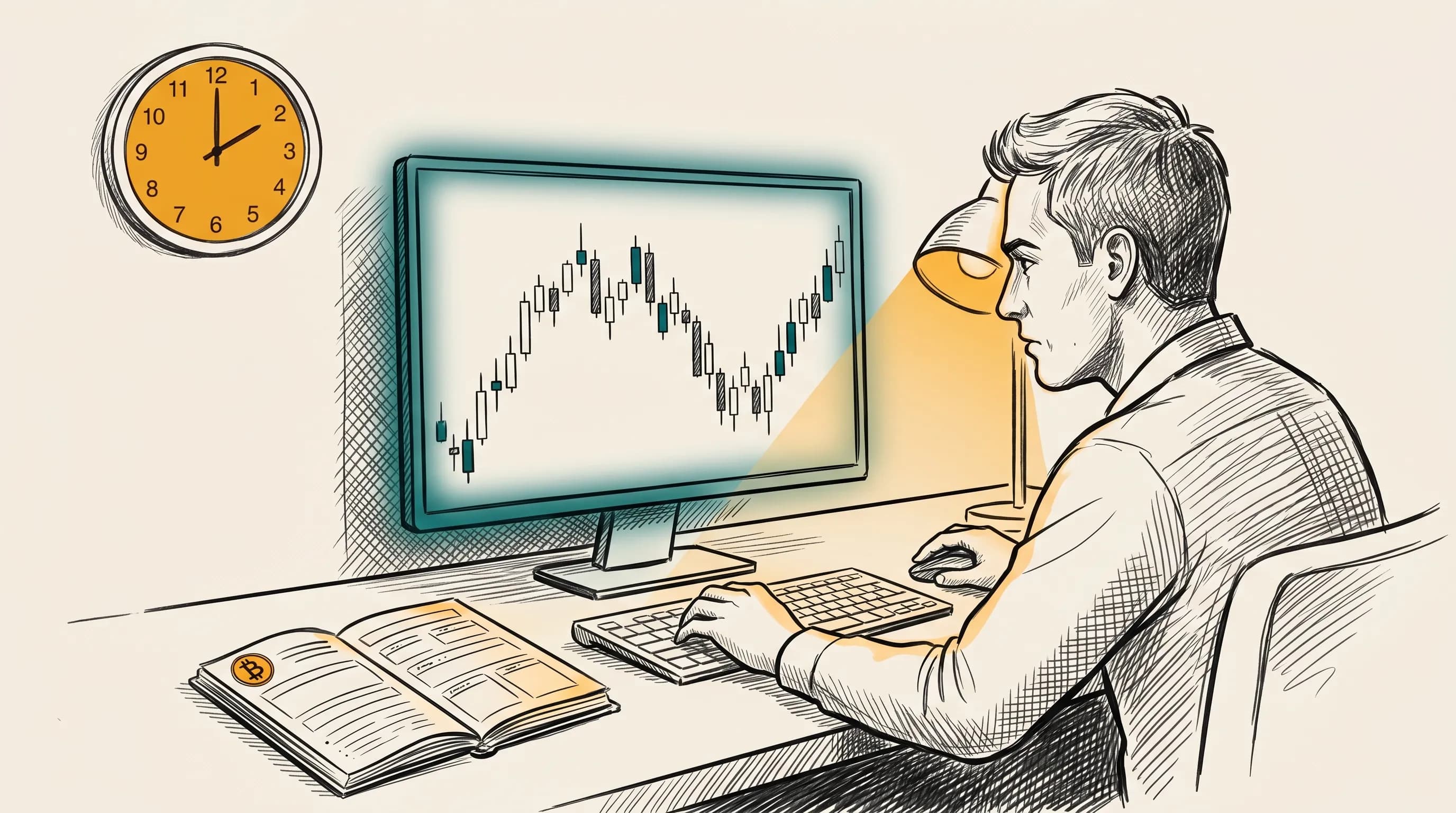 Trading Psychology
Crypto Trading Journal: How to Track and Improve Your Crypto Trades
Most crypto traders track price, not behavior. This guide shows you how to build a crypto trading journal that turns chaotic trade data into real, repeatable edge — so you stop making the same emotional mistakes in a market that never closes.
Read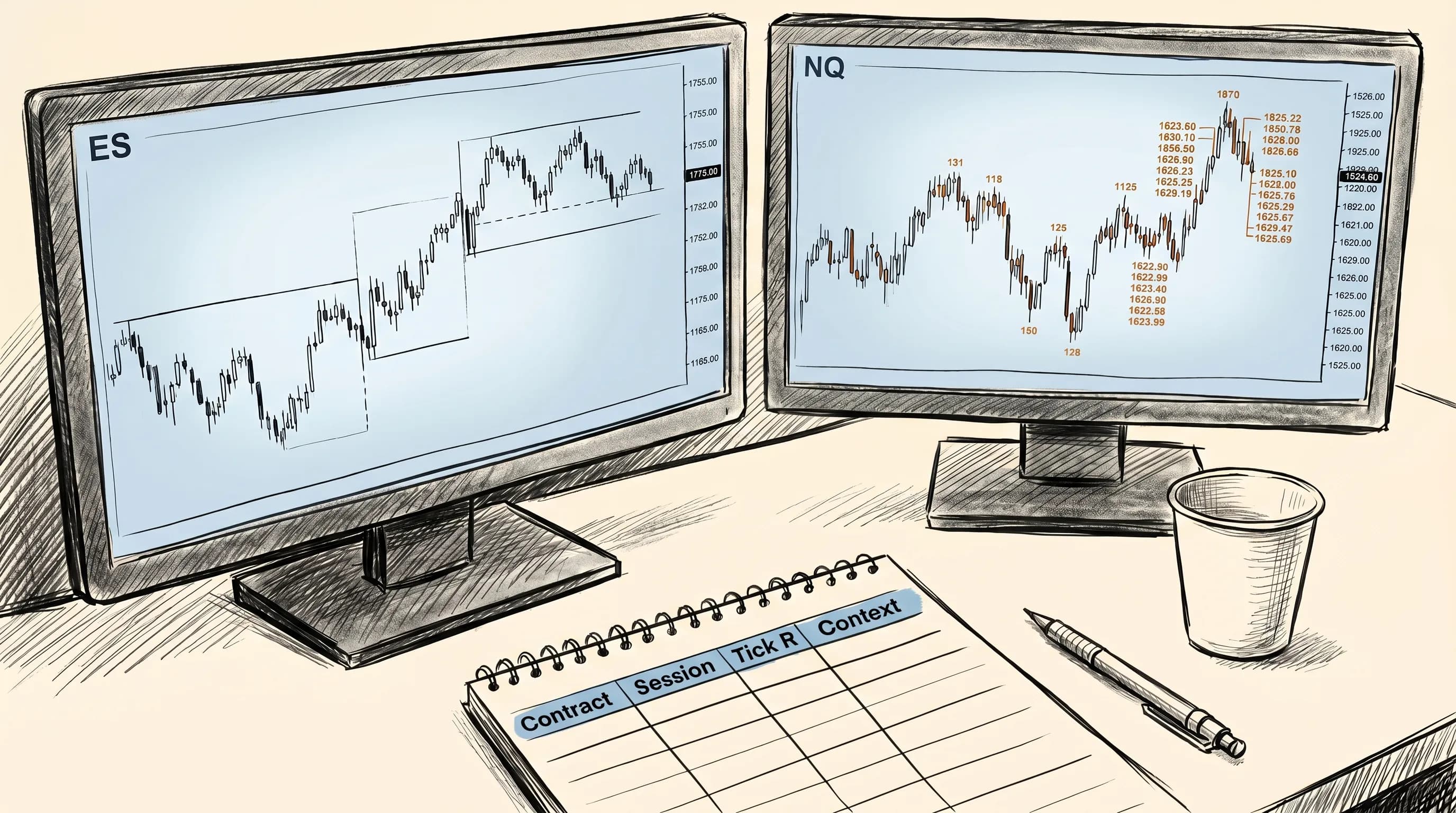 Trading Strategies
Futures Trading Journal: What to Track and Why It Matters
Most trading journals weren't built for futures. The contracts expire. The tick values change by instrument. The overnight session and the cash open behave completely differently. Here's what a futures trading journal actually needs to capture — and why the traders who get this right build an edge faster than everyone else.
Read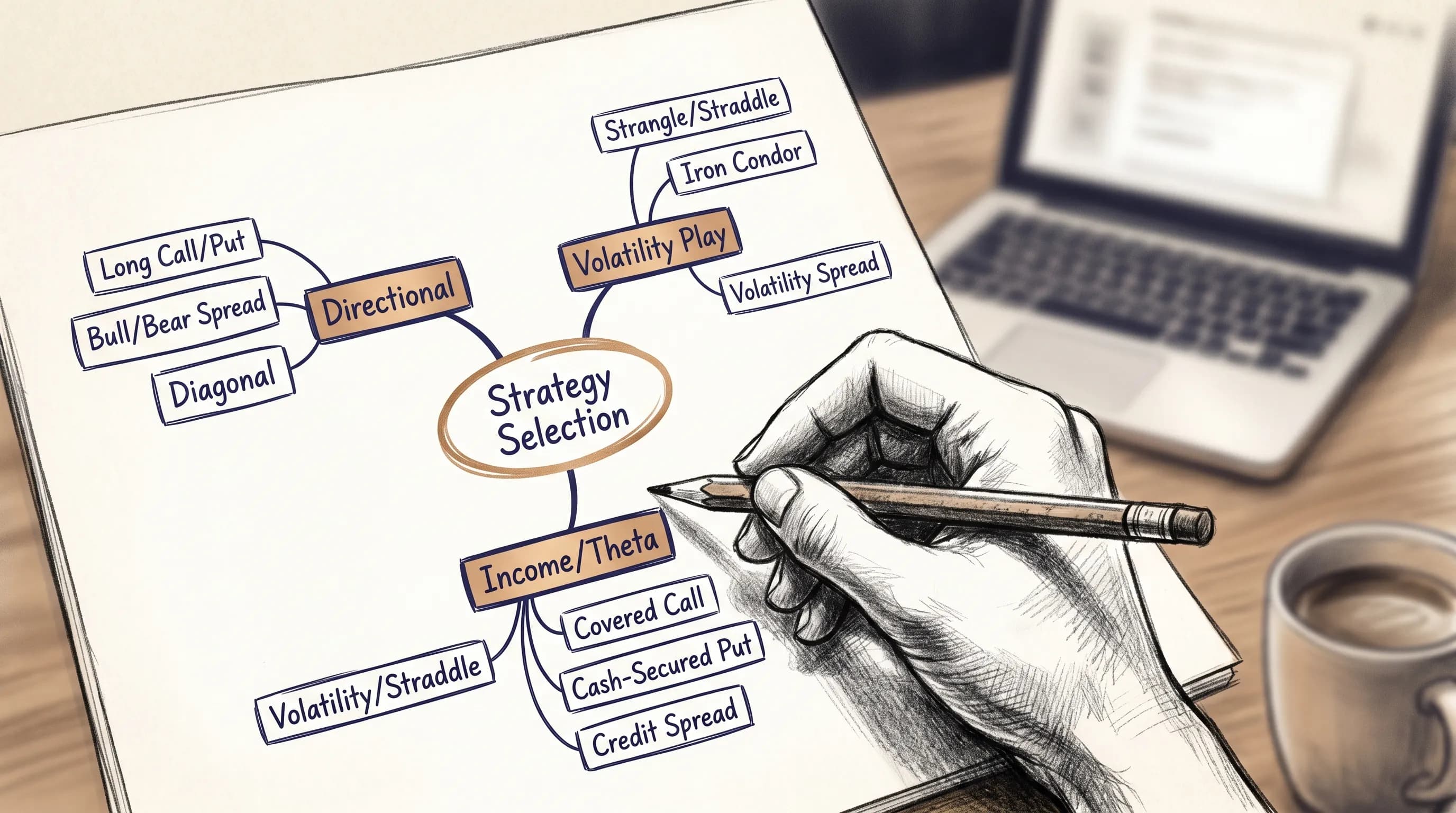 Trading Strategies
Options Trading Journal: What to Track and Why It Changes Everything
Most options traders track entries and exits and call it a journal. Here's what you actually need to log to understand your decisions and stop making the same expensive mistakes.
Read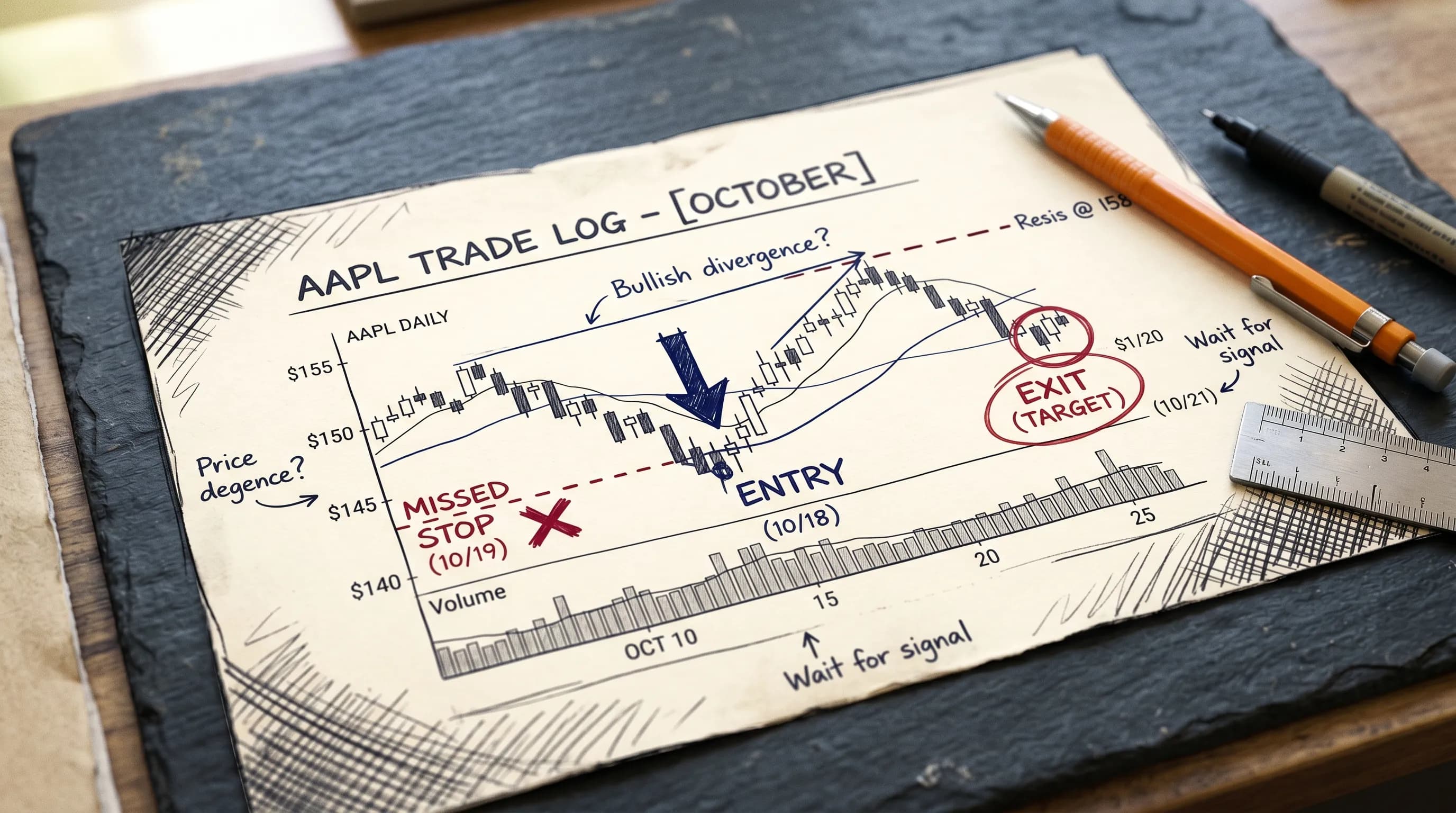 Trading Strategies
Trade Analyzer: How to Break Down Every Trade and Actually Improve
Most traders finish a trade and move on. A trade analyzer stops that cycle — by breaking down every entry, exit, and decision into data you can actually use. Here's what it measures, why it matters, and how to build a review process that compounds.
Read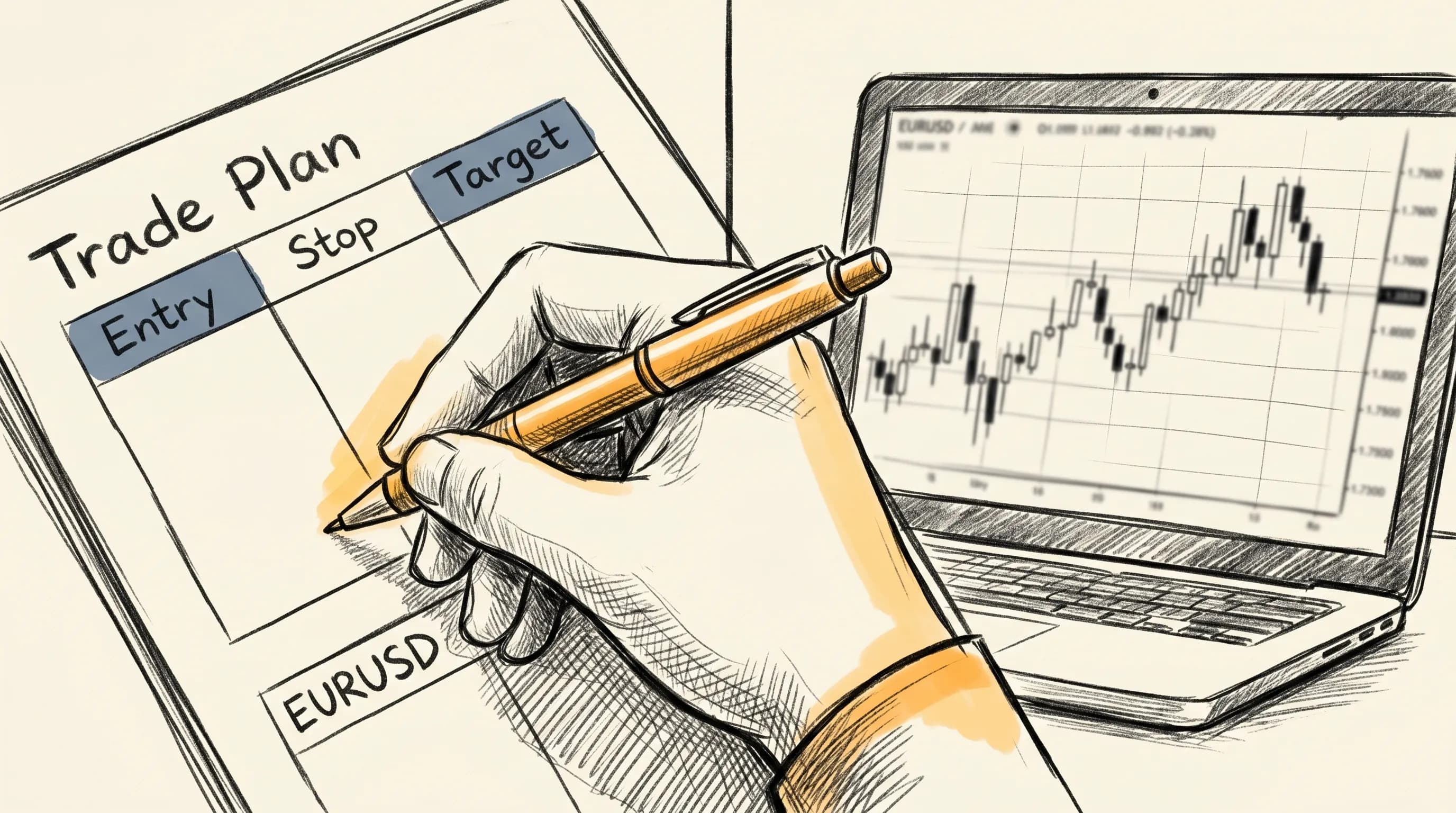 Trading Strategies
Pre-Trade Planning: The Habit That Separates Consistent Traders From the Rest
Most traders lose not because their setups are wrong, but because they enter without a plan. Pre-trade planning changes that — by forcing clarity on risk, context, and intention before a single position is opened.
Read Trading Strategies
Monte Carlo Simulation for Traders: How to Stress-Test Your Strategy Before the Market Does
Monte Carlo simulation runs your strategy through thousands of randomised trade sequences to show the full range of possible outcomes — including worst-case drawdowns — before live capital is ever at risk.
Read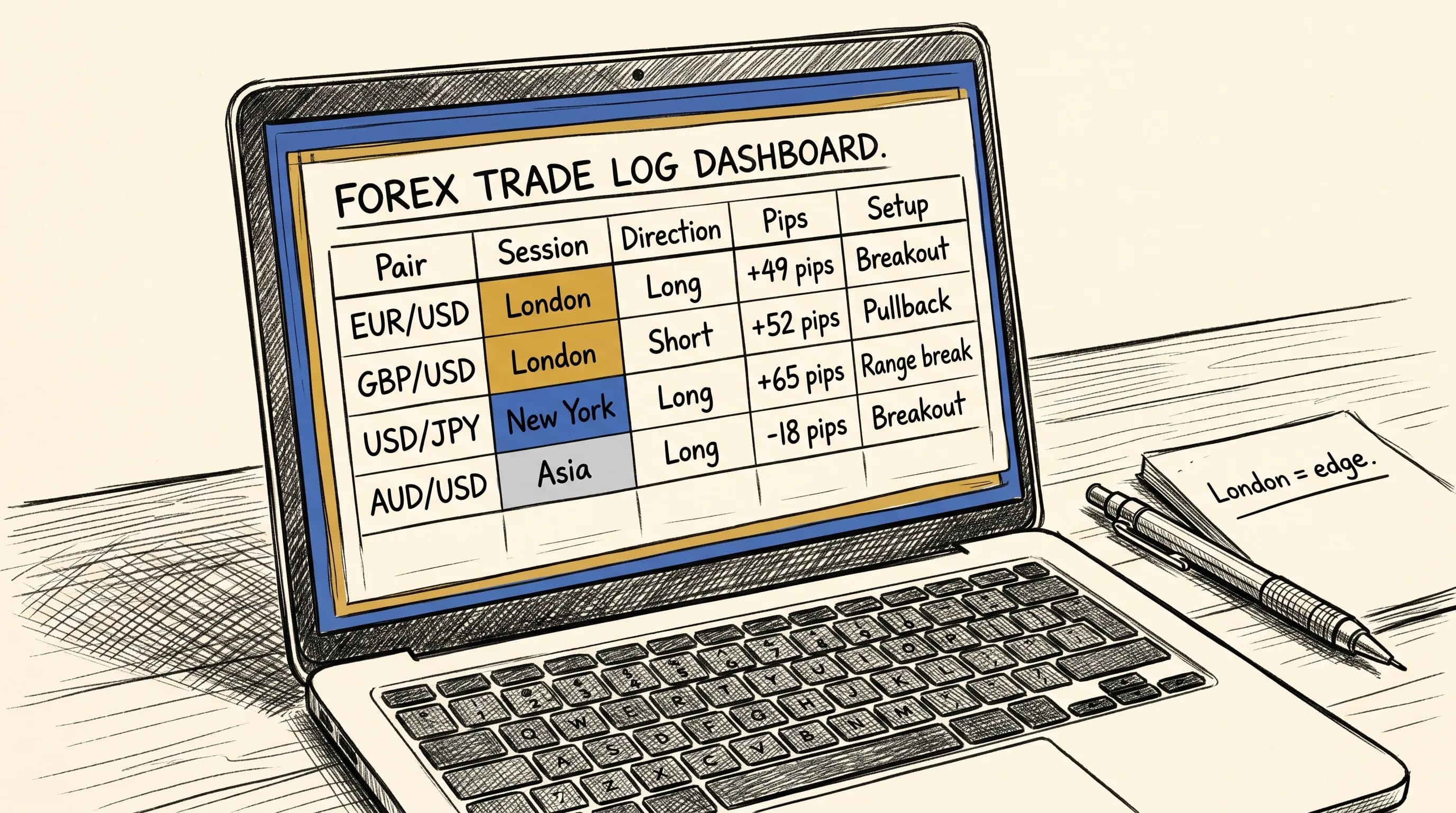 Trading Strategies
Forex Trading Journal: Sessions, Pairs, and Finding Your Edge
Most forex traders use a generic journal built for stocks. It logs their trades but misses everything that makes forex unique — sessions, pip values, pair-specific performance, swap fees, and the 24-hour market structure. This guide covers what a proper forex trading journal actually needs to track, and why the traders who improve fastest are the ones who treat their data like a forex analyst, not a bookkeeper.
Read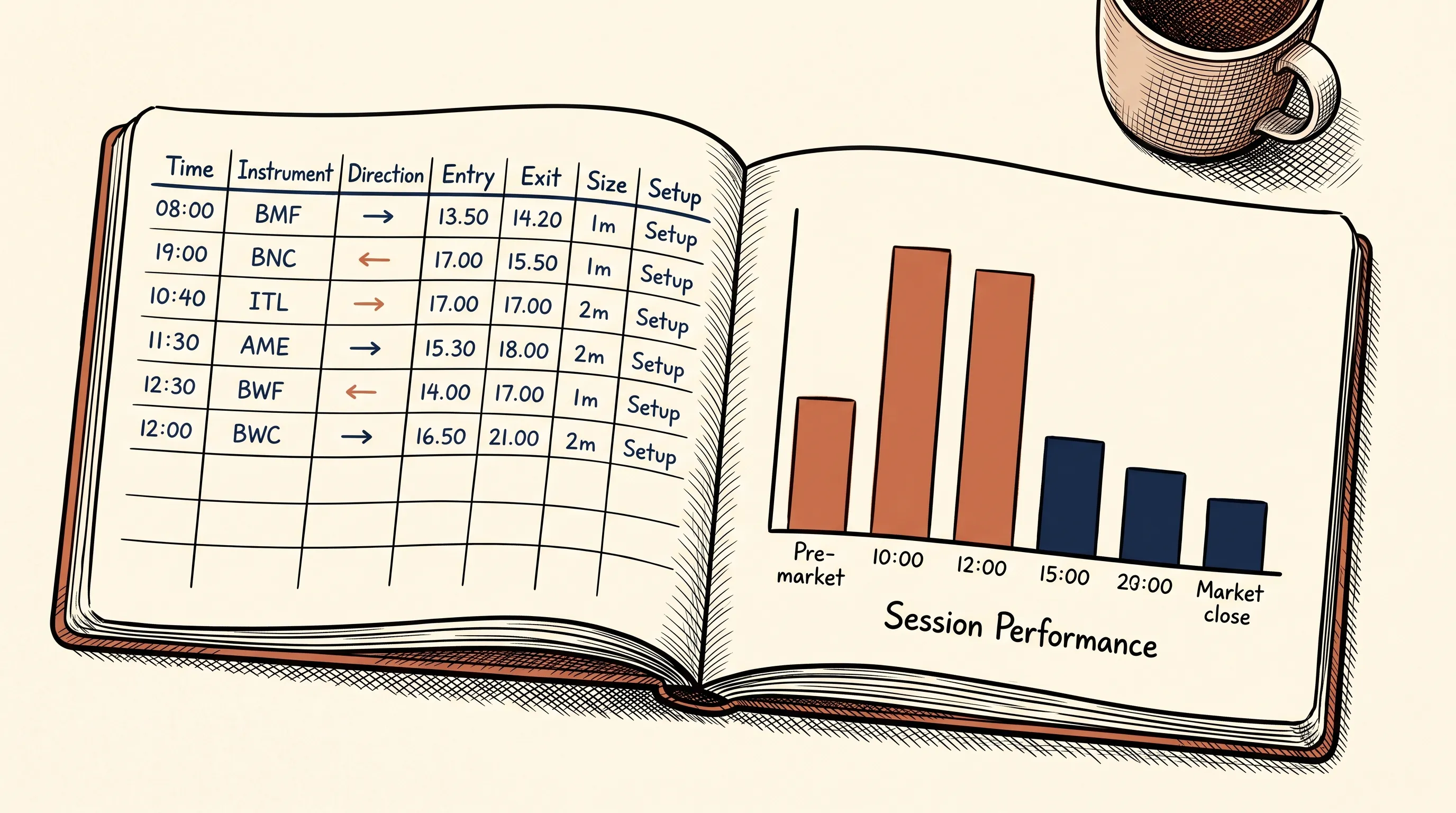 Trading Strategies
Day Trading Journal: How High-Volume Traders Actually Use One
Most day traders quit journaling within a week — not because they lack discipline, but because standard journaling wasn't built for their volume. This guide breaks down what a day trading journal actually needs to track, why generic templates fail active traders, and how AI changes what's possible when you're taking 10 trades before lunch.
Read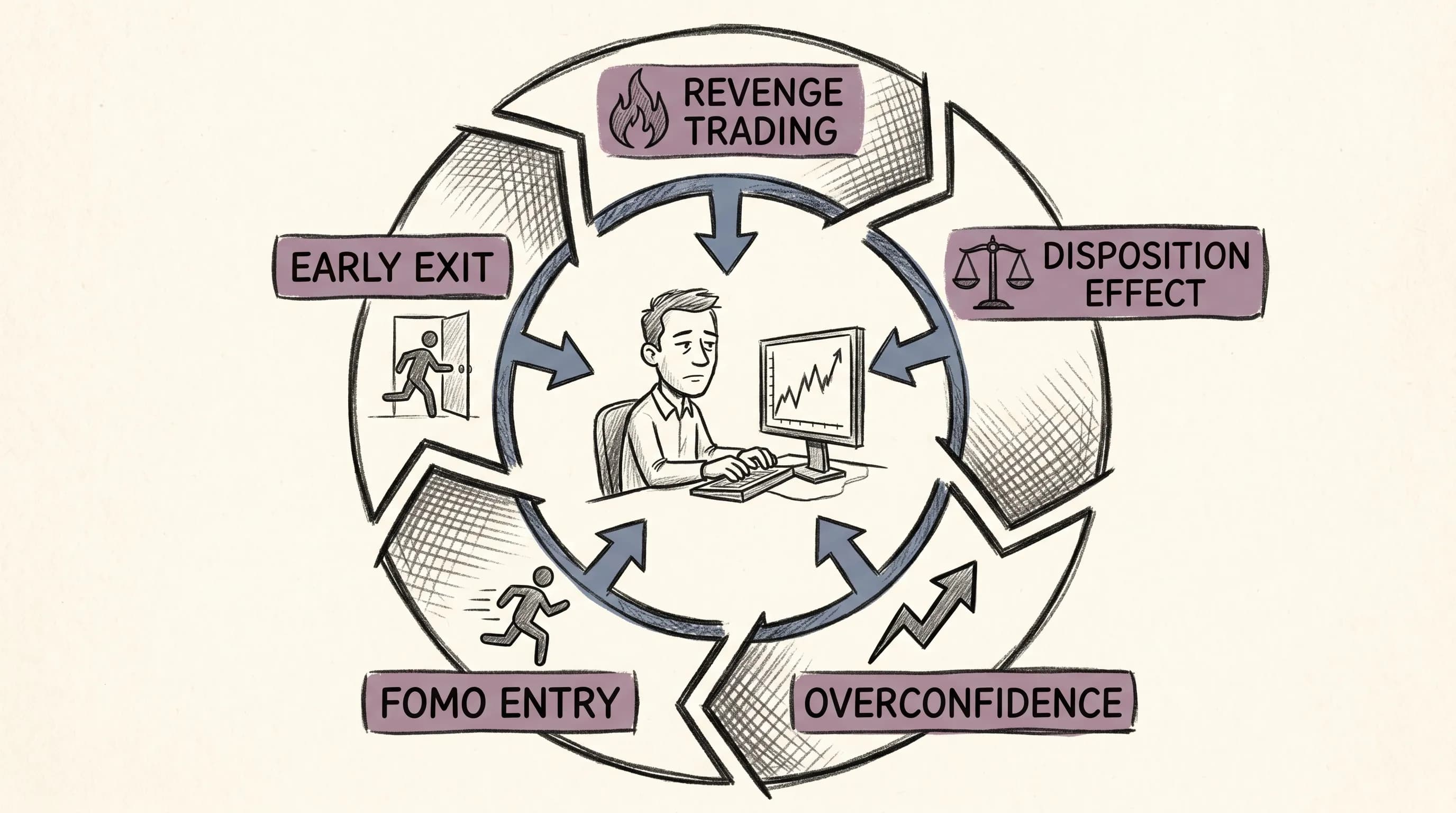 Trading Strategies
Trading Psychology Tools: What They Are and Why Traders Need Them
Most traders blame the market when they lose. But the data usually points somewhere else — at the decisions made under pressure, the trades held too long, the positions sized too big after a bad day. Trading psychology tools exist to make that pattern visible. Here's what they are, what to look for, and how they work.
Read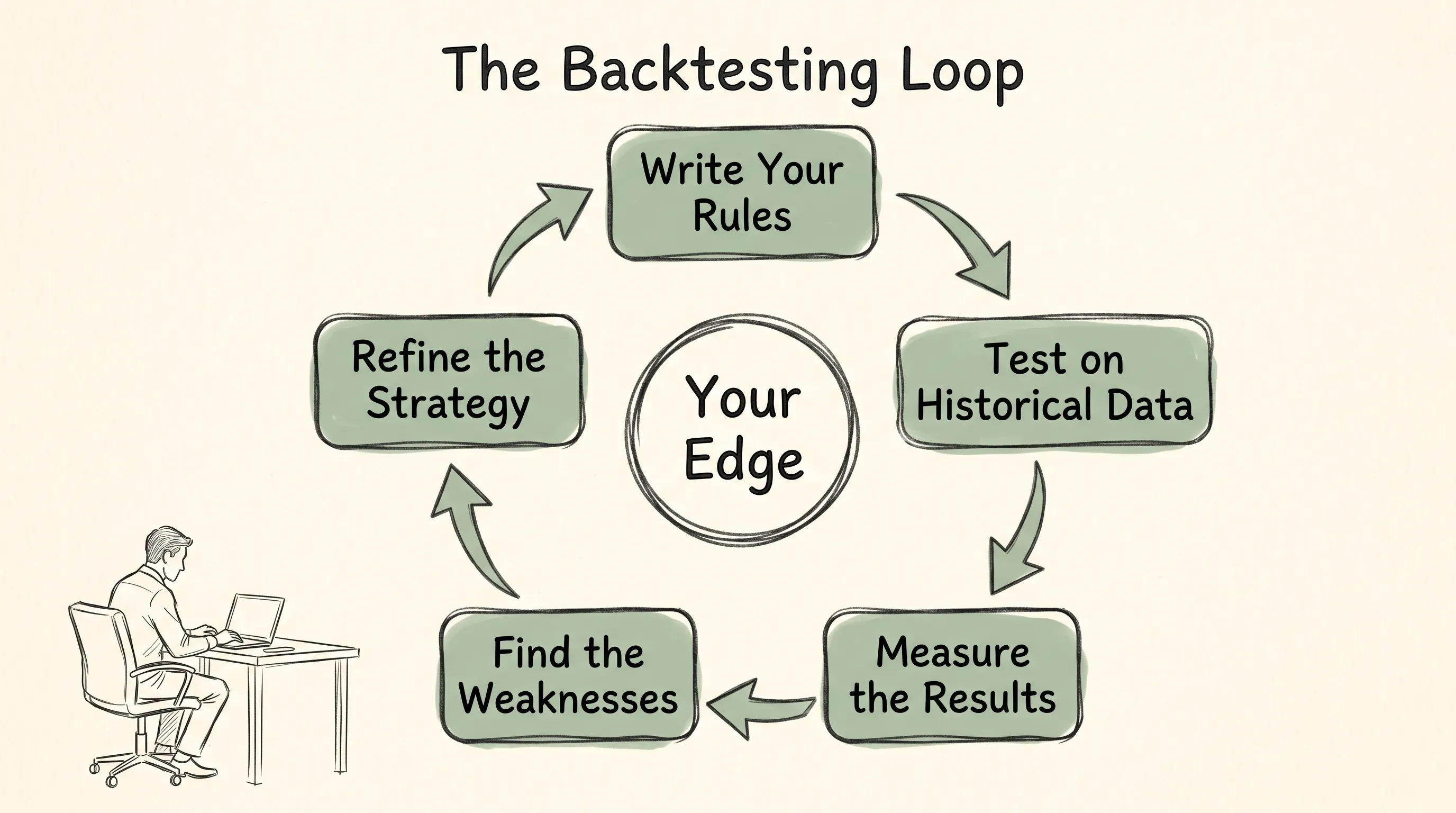 Trading Strategies
How to Backtest a Trading Strategy (And Actually Trust the Results)
Most traders skip backtesting or do it wrong. Here's a step-by-step process to test your strategy on historical data, measure what actually matters, and build a real edge before risking live capital.
Read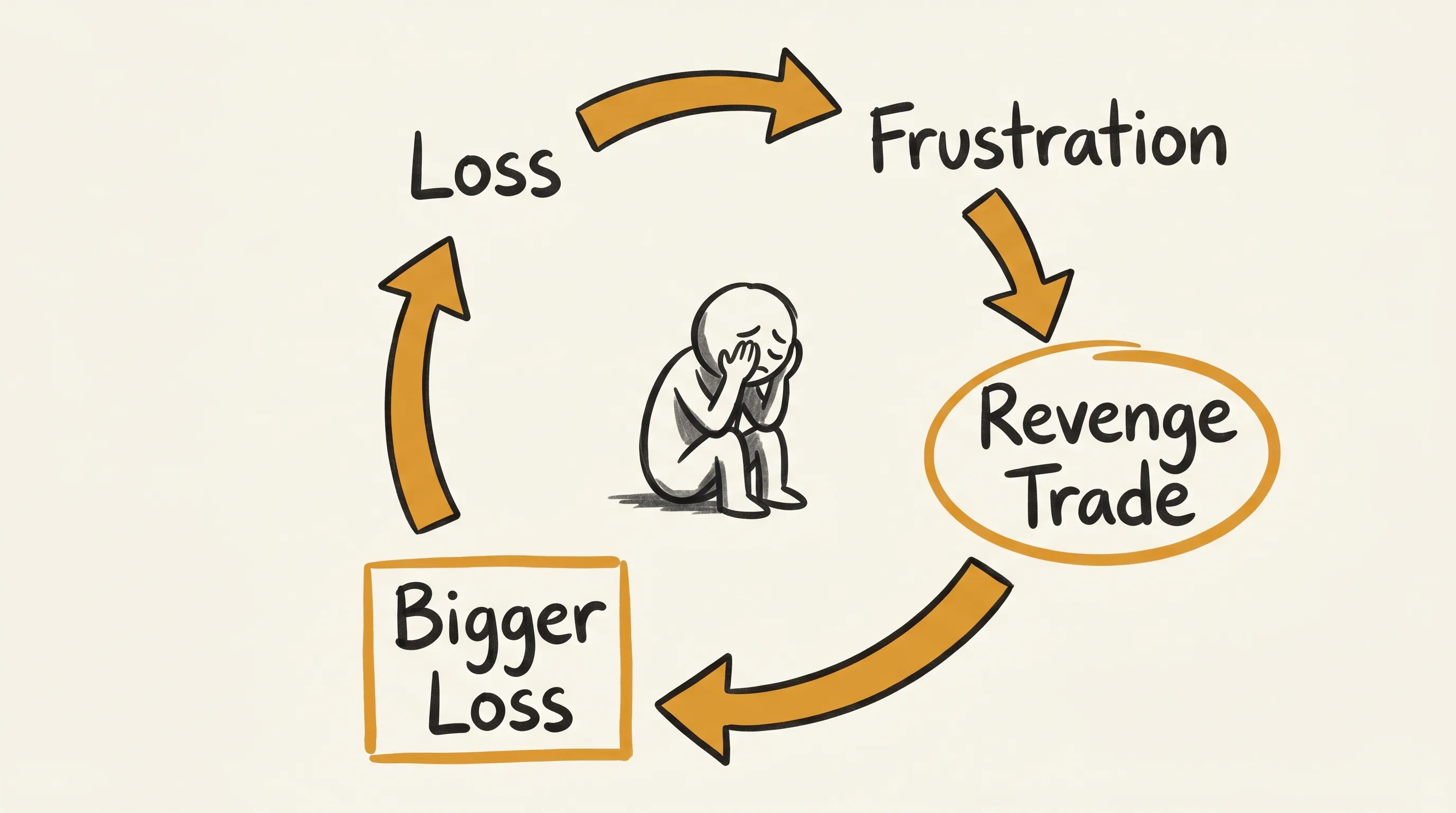 Trading Strategies
Behavioral Trading Analysis: Why Your Patterns Are Costing You More Than Your Setups
You've studied the charts. You know your setups. So why do the same mistakes keep happening? The answer isn't your strategy — it's your behavior. Here's how to actually analyse it.
Read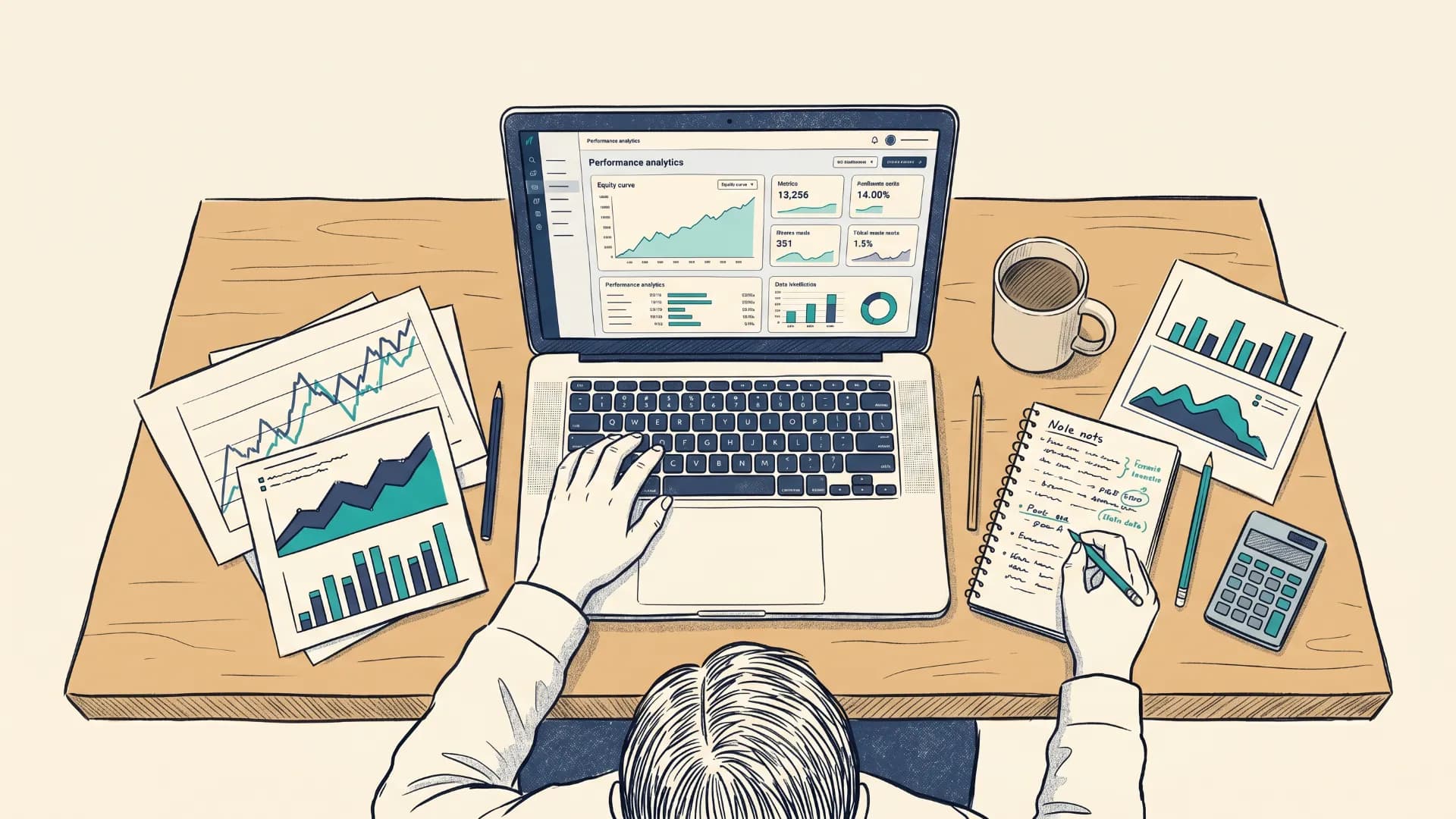 Trading Strategies
Trading Performance Tracker: What It Is, What to Track, and Why It Matters
Most traders log their trades and still don't improve. A trading performance tracker changes that — by turning raw data into patterns, insights, and a clear picture of your edge.
Read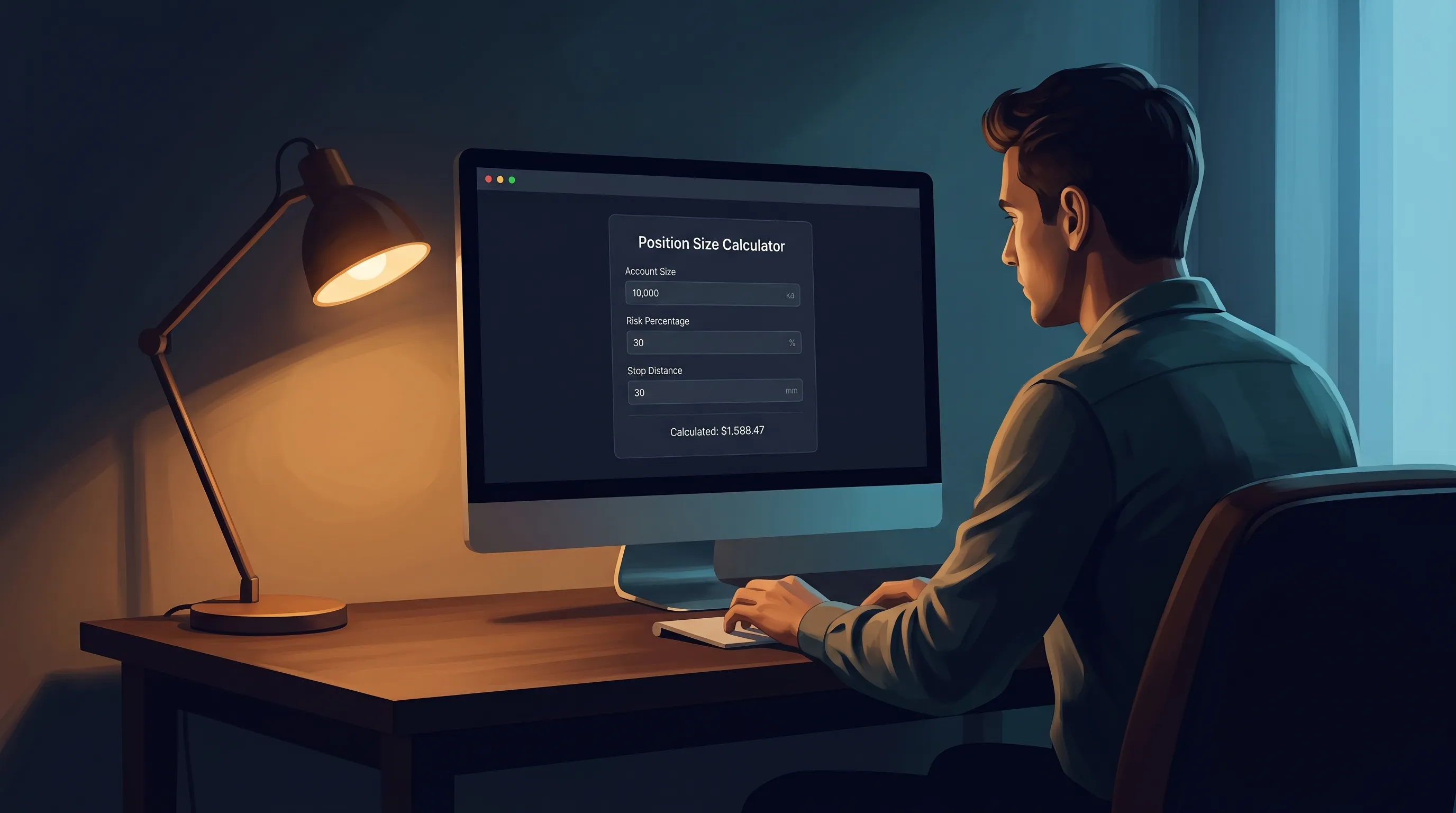 Trading Strategies
Position Sizing in Trading: The One Skill That Protects Everything Else
Most traders focus on entries and exits. Position sizing is the skill they overlook — and it's the one that decides whether they survive long enough to improve.
Read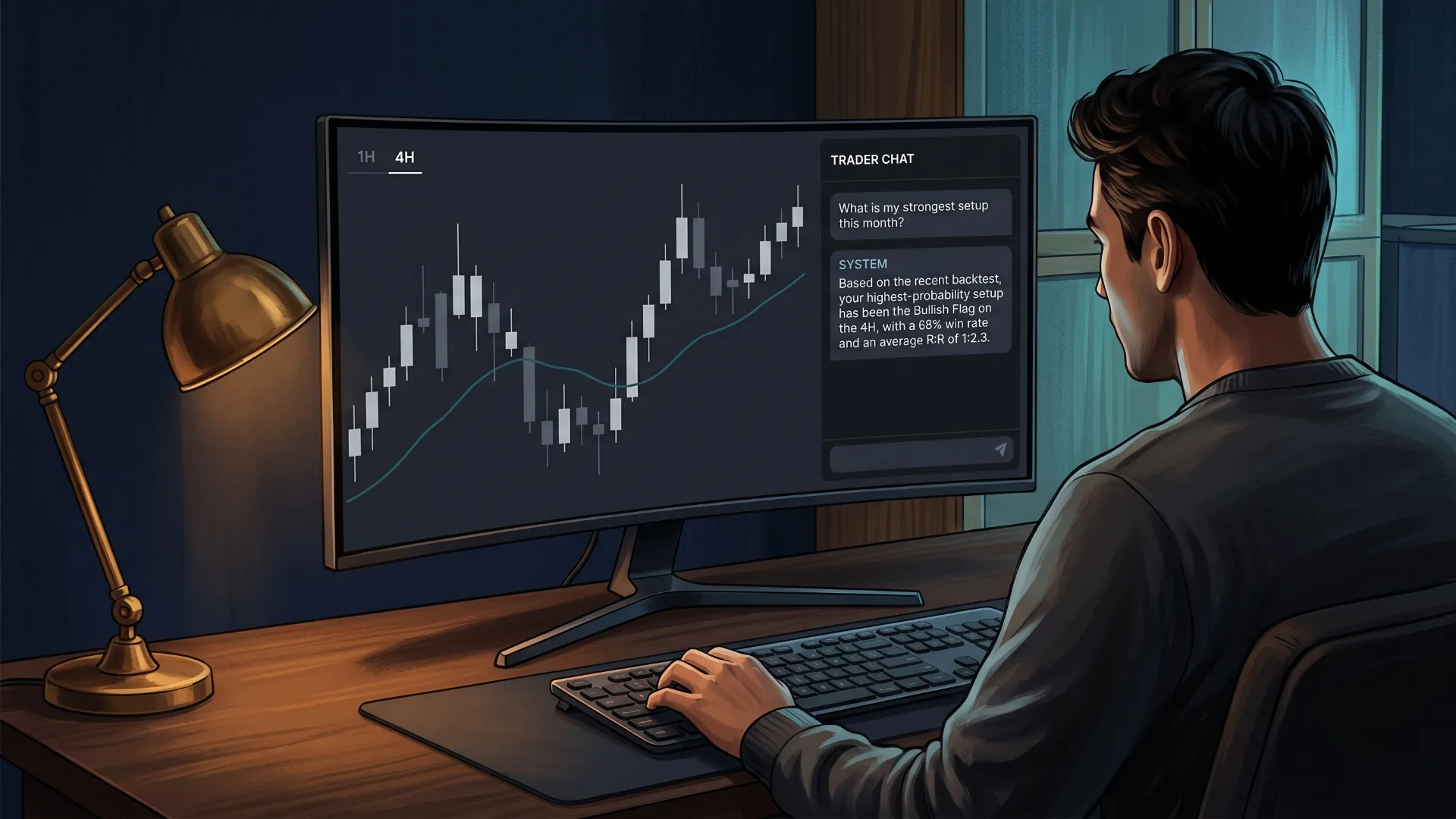 Trading Strategies
AI Trading Journal: What It Is and Why It Changes How You Trade
An AI trading journal goes beyond logging trades. Learn what it actually does, how it works, and why more traders are making the switch.
Read Technical Analysis
Common Candlestick Mistakes Traders Make (And How to Avoid Them)
Most traders misuse candlestick patterns and end up taking low-probability trades. Learn the most common candlestick mistakes and how to use them correctly for better trading decisions.
Read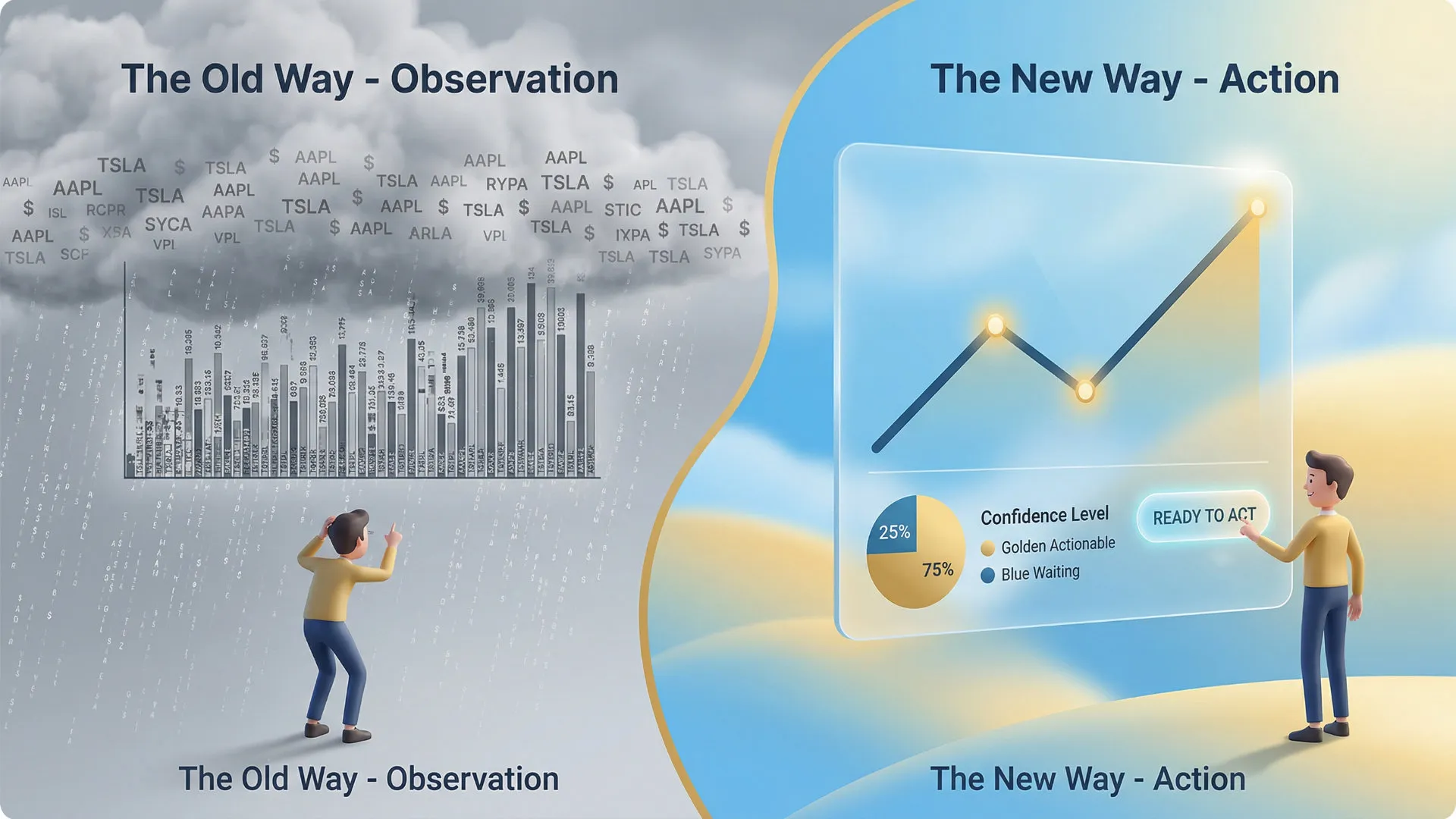 Technical Analysis
How to Build a Trading Watchlist That Actually Helps You Trade
Most traders build a trading watchlist to observe the market, not to act on it. Learn how to create a watchlist that improves decision-making, reduces confusion, and helps you take better trades with clarity.
Read Trading Strategies
Best Trading Journal: How to Choose the Right One (2026 Guide)
Most traders track trades but never improve. Learn how to choose the best trading journal software, compare options, and turn your data into real trading insights.
Read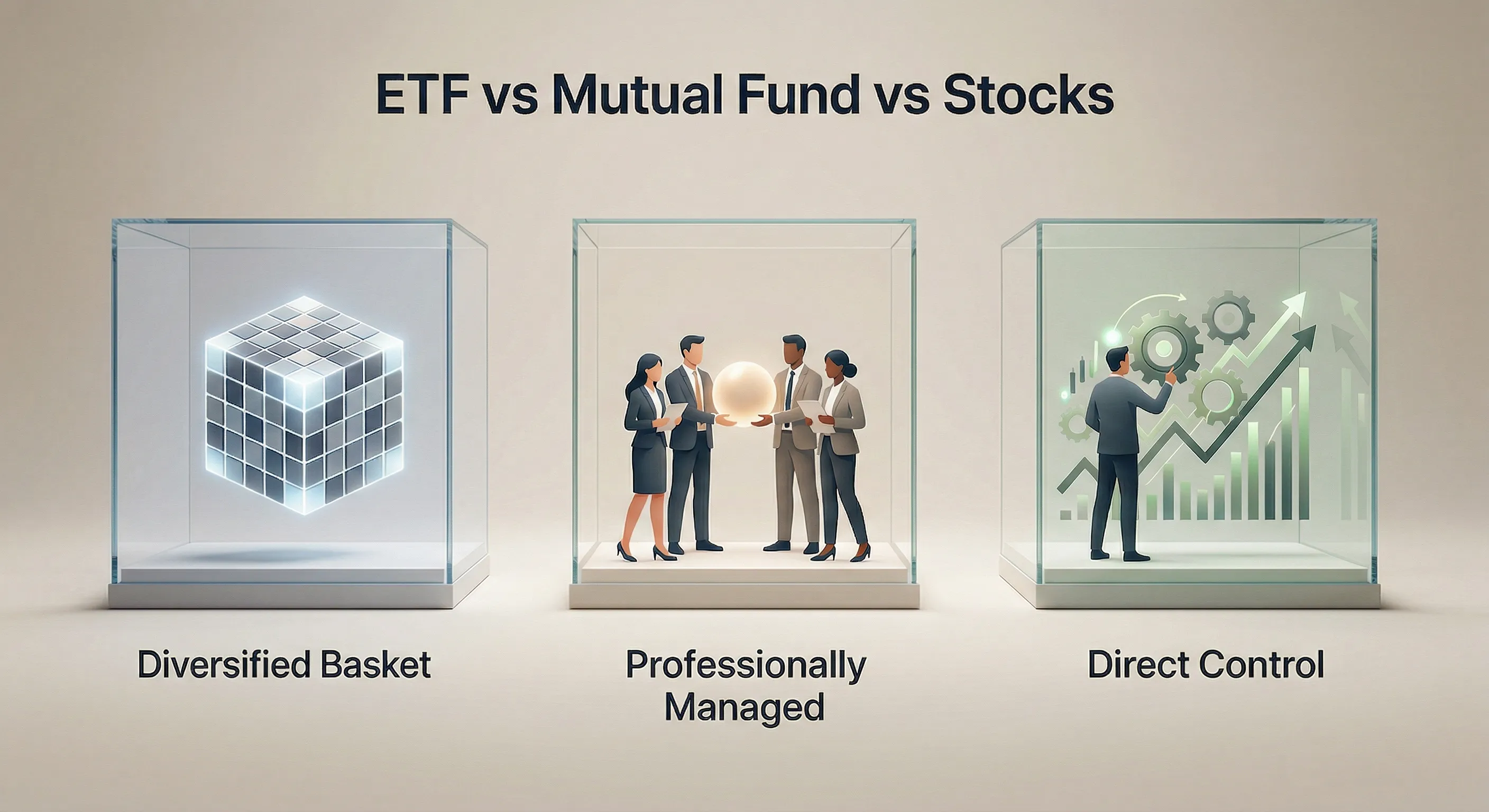 Investment Strategy
ETF vs Mutual Fund vs Stocks: How to Choose the Right Investment Strategy
Confused between ETFs, mutual funds, and stocks? This guide breaks down the key differences, risks, and strategies to help you choose the right investment approach based on your goals.
Read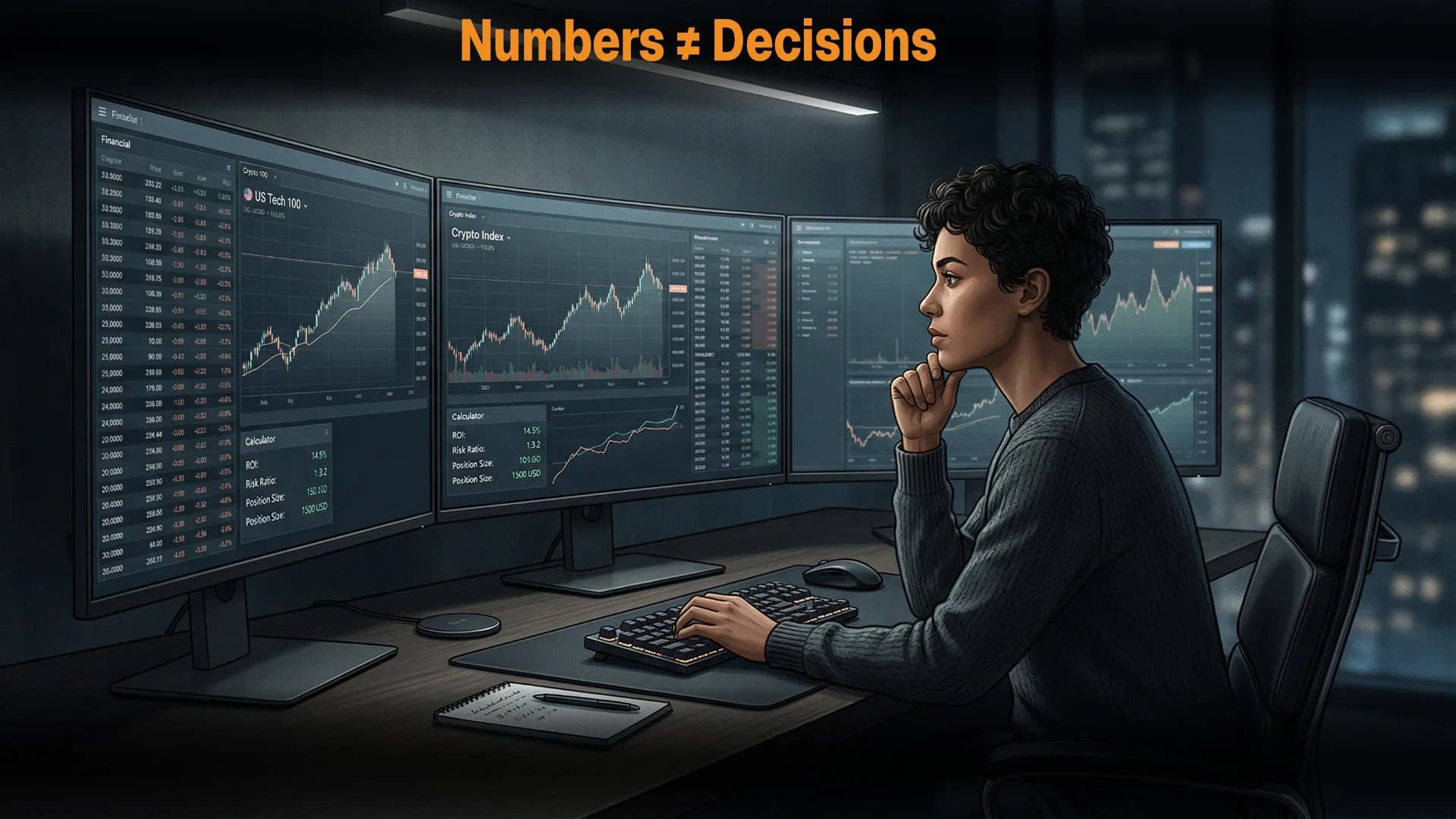 Trading Psychology
How to Use Calculators Without Letting Them Make the Decision for You
Investment calculators can bring clarity, but relying on them blindly can lead to poor decisions. Learn how to use calculators effectively without letting them take control of your investing process.
Read Trading Strategies
How to Find Long Term Stocks: A Smart Buying Checklist
Learn how to find long-term stocks using a smart buying checklist. Evaluate fundamentals, risk, and growth potential to make confident investment decisions.
Read Trading Strategies
Stock Research System: Build a Faster Stock Analysis Workflow
Learn how to build a stock research system using a stock screener strategy, structured watchlist process, and clear workflow for smarter long-term stock selection.
Read Trading Strategies
Risk-Reward Calculator: Position Size in 15 Seconds
Use a simple risk-reward calculator to determine position size in seconds. Learn how traders manage risk, protect capital, and build consistency.
Read Trading Strategies
Risk-to-Reward Ratio Explained: Key to Trading Success
Learn how the risk-to-reward ratio shapes profitable trading by balancing potential loss and gain, helping traders stay disciplined and succeed long term.
Read Trading Strategies
Trading Chart Patterns Explained: How to Spot High-Quality Setups
Learn how to filter trading chart patterns, improve context, and identify high-quality setups using smarter chart pattern trading.
Read Trading Strategies
Trading Journal Software vs Excel for Traders
Explore trading journal software vs Excel and see which helps traders improve discipline, spot patterns, and build consistency.
Read Trading Strategies
Trader Daily Routine for Stress-Free Trading
A trader daily routine with a clear morning review checklist and journaling workflow to improve focus and discipline.
Read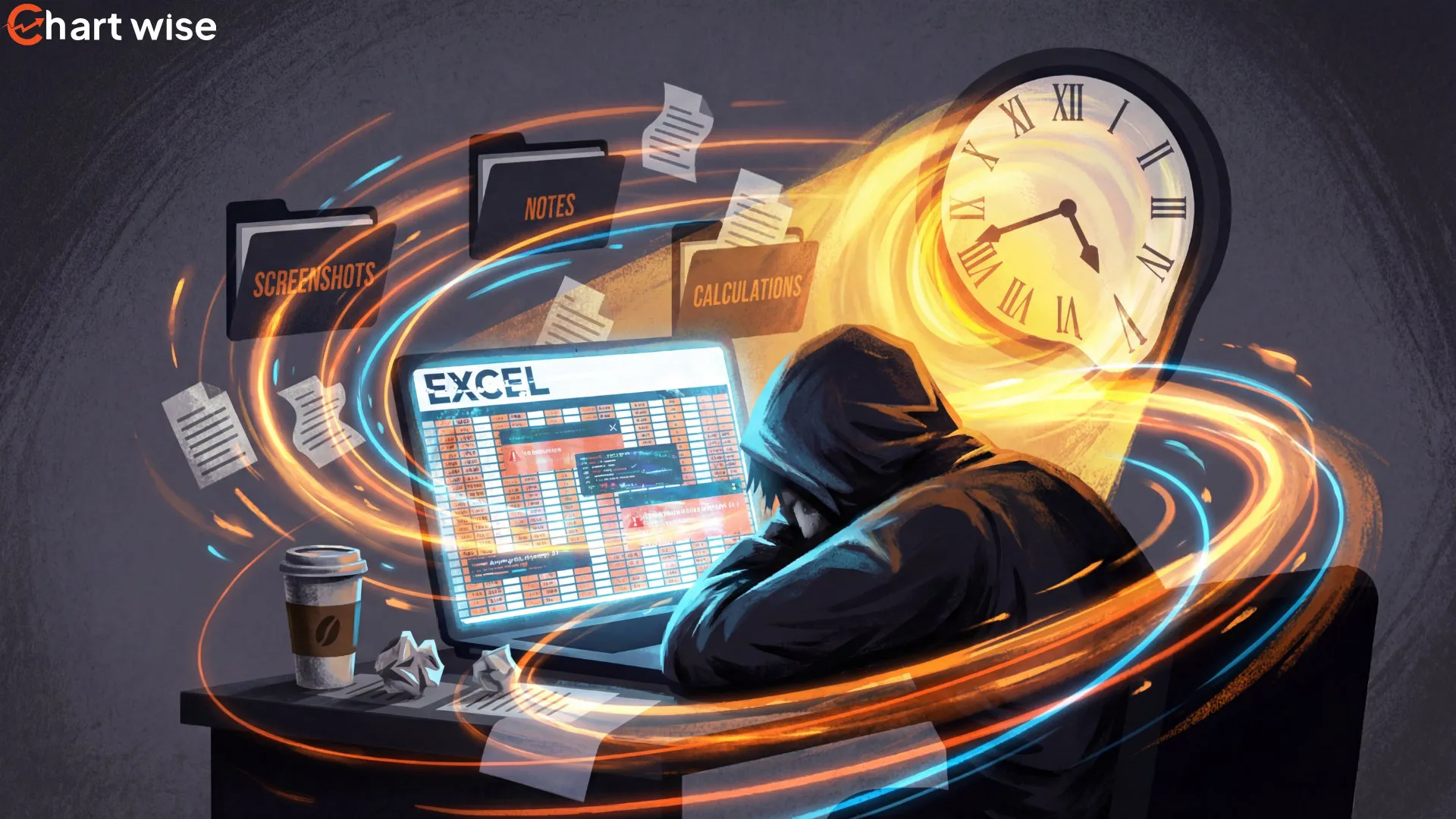 Trading Strategies
ChartWise Trading Journal vs Excel: Why Traders Switch
Compare ChartWise Trading Journal vs Excel—why serious traders ditch spreadsheets for deeper analytics, cleaner reviews, and consistent overall performance.
Read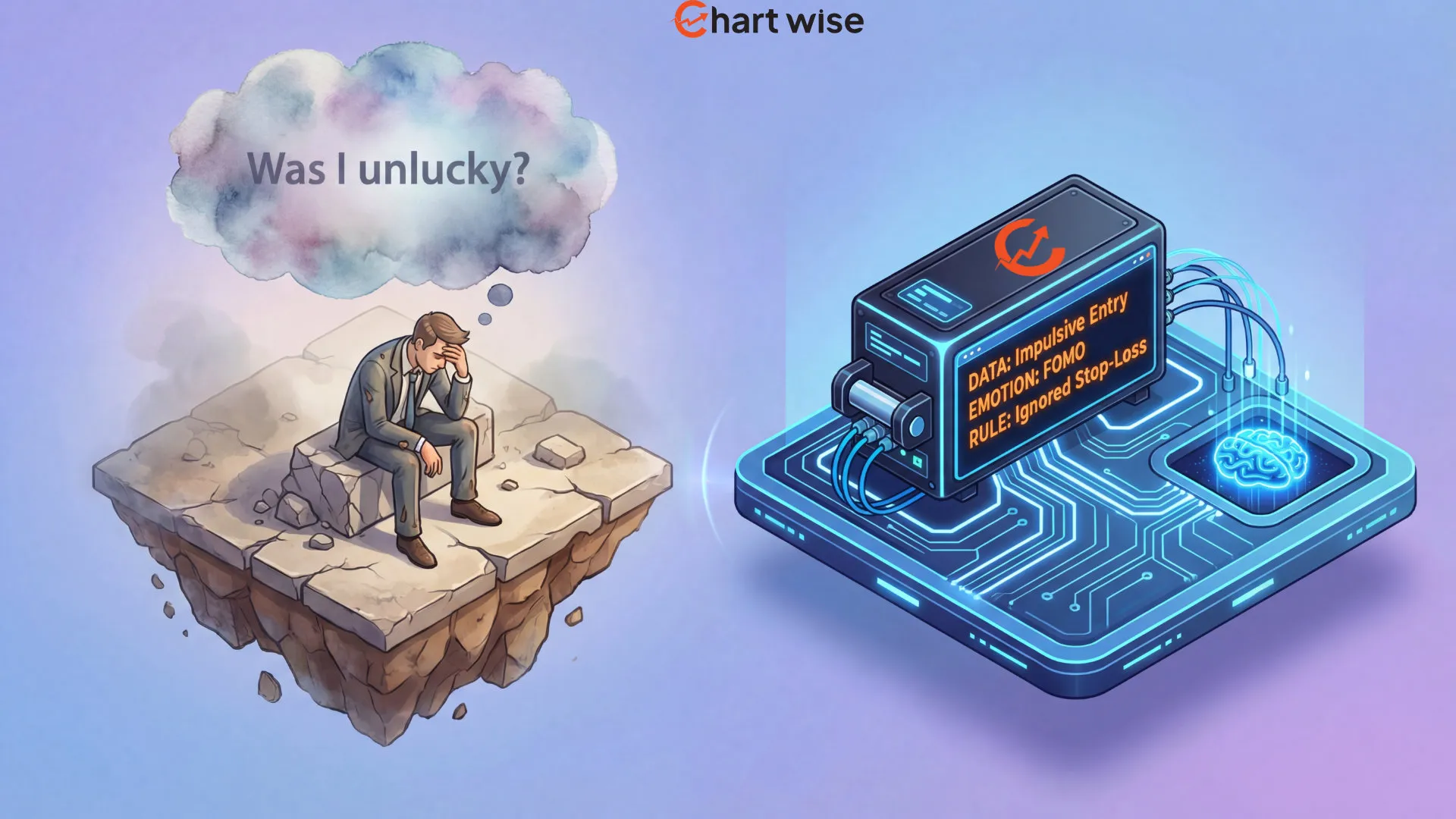 Trading Strategies
Emotional Trading Solutions for Consistent Psychology
Emotional trading solutions help build consistent trading psychology and strong trading habits for growth—reducing impulsive decisions and improving discipline.
Read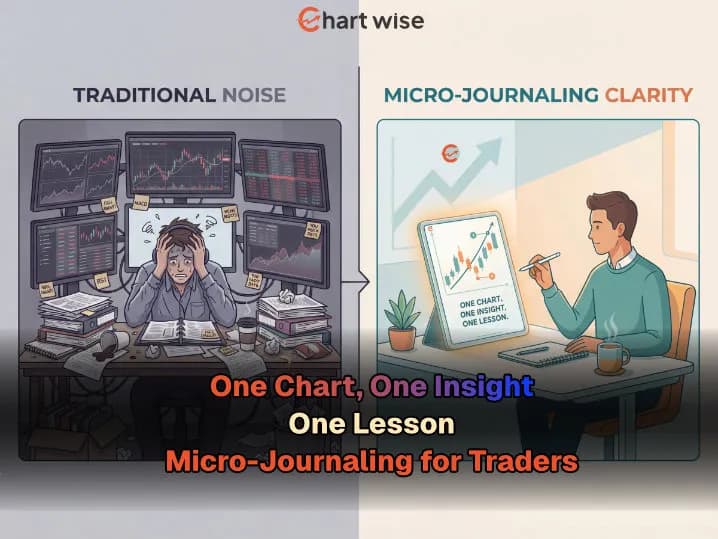 Trading Strategies
Trading Insights: One Chart, One Clear Decision
Trading insights come from focused chart review. Learn how extracting one clear insight per trade builds discipline, clarity, and consistent improvement.
Read Trading Strategies
Overtrading Solutions Traders Actually Stick To
Discover overtrading solutions traders actually stick to—simple rules and habits that reduce emotional trading, control risk, and improve consistency.
Read Trading Strategies
Beginner trading journal tips: Simple steps to get started
Learn how to start a beginner trading journal without overthinking. Discover simple tips, avoid new trader mistakes, and make journaling effortless.
Read Trading Strategies
How Journaling Helps Swing, Day, and Options Traders
See how journaling benefits swing traders, day traders, and options traders differently, improving discipline, risk control, and long-term performance.
Read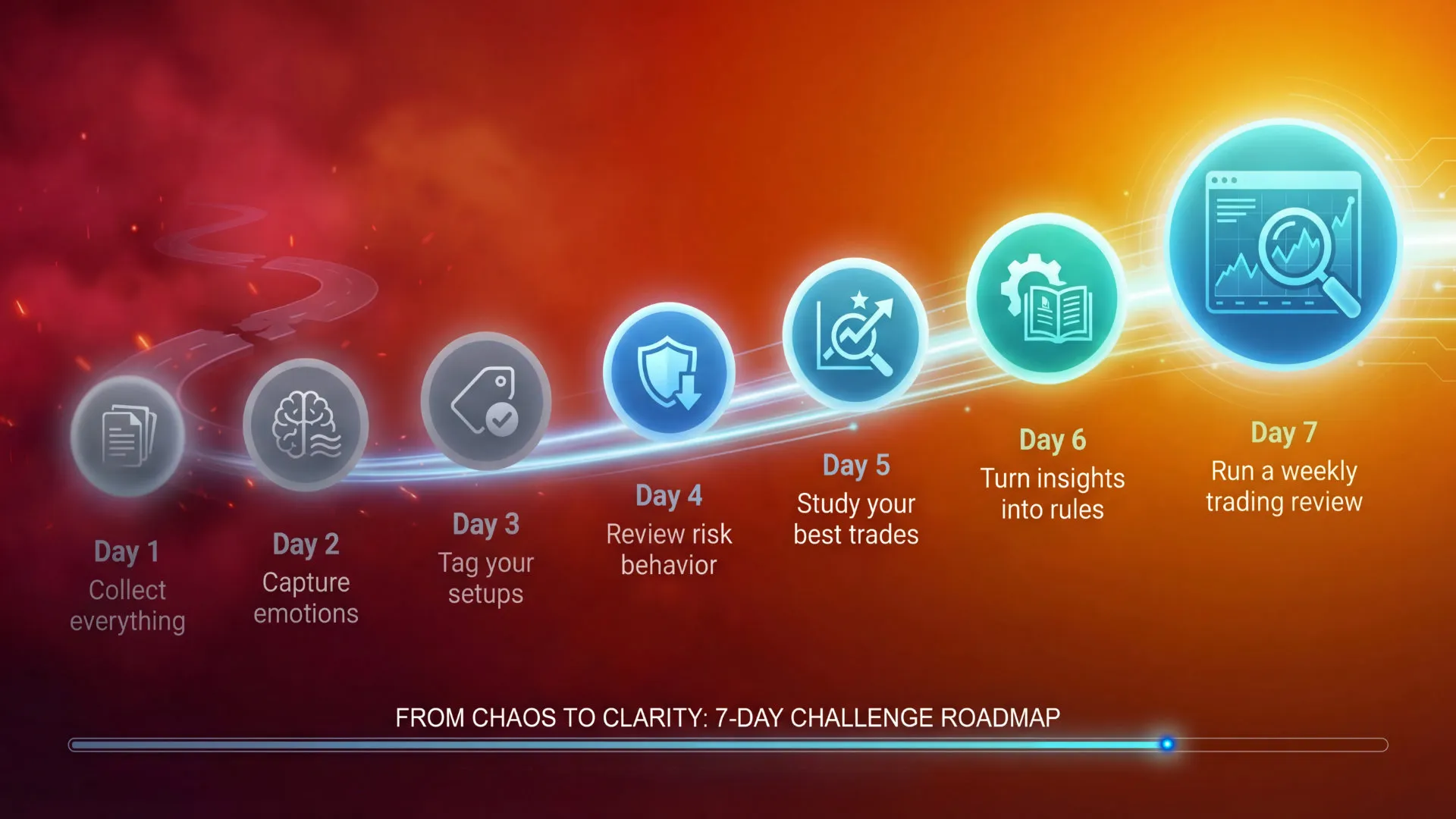 Trading Strategies
Trading Journal Challenge: Build Discipline in Just 7 Days
Join a trading journal challenge used by traders worldwide to improve discipline, review trades daily, spot patterns, and build consistent habits in one week.
Read Trading Strategies
The #1 Trading Mistake: Skipping the Trade Review Process
Skipping the trade review process is the #1 reason traders repeat mistakes. Learn how consistent reviews improve discipline, clarity, and long-term performance.
Read Trading Strategies
Top 10 Common Trading Mistakes Journaling Fixes to Prevent Losses
Learn the top 10 common trading mistakes traders make from emotional decisions to poor risk management and how to fix them for better consistency.
Read Trading Strategies
Trading Consistency: Habits and Journaling for Long-Term Wins
Trading consistency comes from trader success habits and long-term journaling—helping you track progress over time and build an evidence-based trading system.
Read Trade Journaling
Daily Trading Journal: Build Consistent Trading Habits
A daily trading journal helps traders build consistent trading habits and unlock compounding trader growth through reflection, discipline, and clarity.
Read Trading Strategies
Overtrading Solutions: Stop FOMO and Revenge Trading
Learn proven overtrading solutions that address revenge trading psychology and FOMO in trading, helping you regain control, discipline, and consistency.
Read Trade Journaling
Quick Trade Journaling: Fast Tracking for Productive Traders
Quick trade journaling helps traders log faster, stay consistent, and boost productivity. Learn how fast trade trackers reduce friction and improve focus.
Read Trading Strategies
Why Traders Lose Money: Common Mistakes & Fixes
Understand why traders lose money, the most common trading mistakes, and proven emotional trading solutions that help protect capital and improve consistency.
Read Trade Journaling Software
The Ultimate Guide to Trade Journaling: From Spreadsheets to Smarter Dashboards
Move beyond spreadsheets with smarter trade journaling dashboards that reveal patterns, improve discipline, and help you track performance with real clarity.
Read