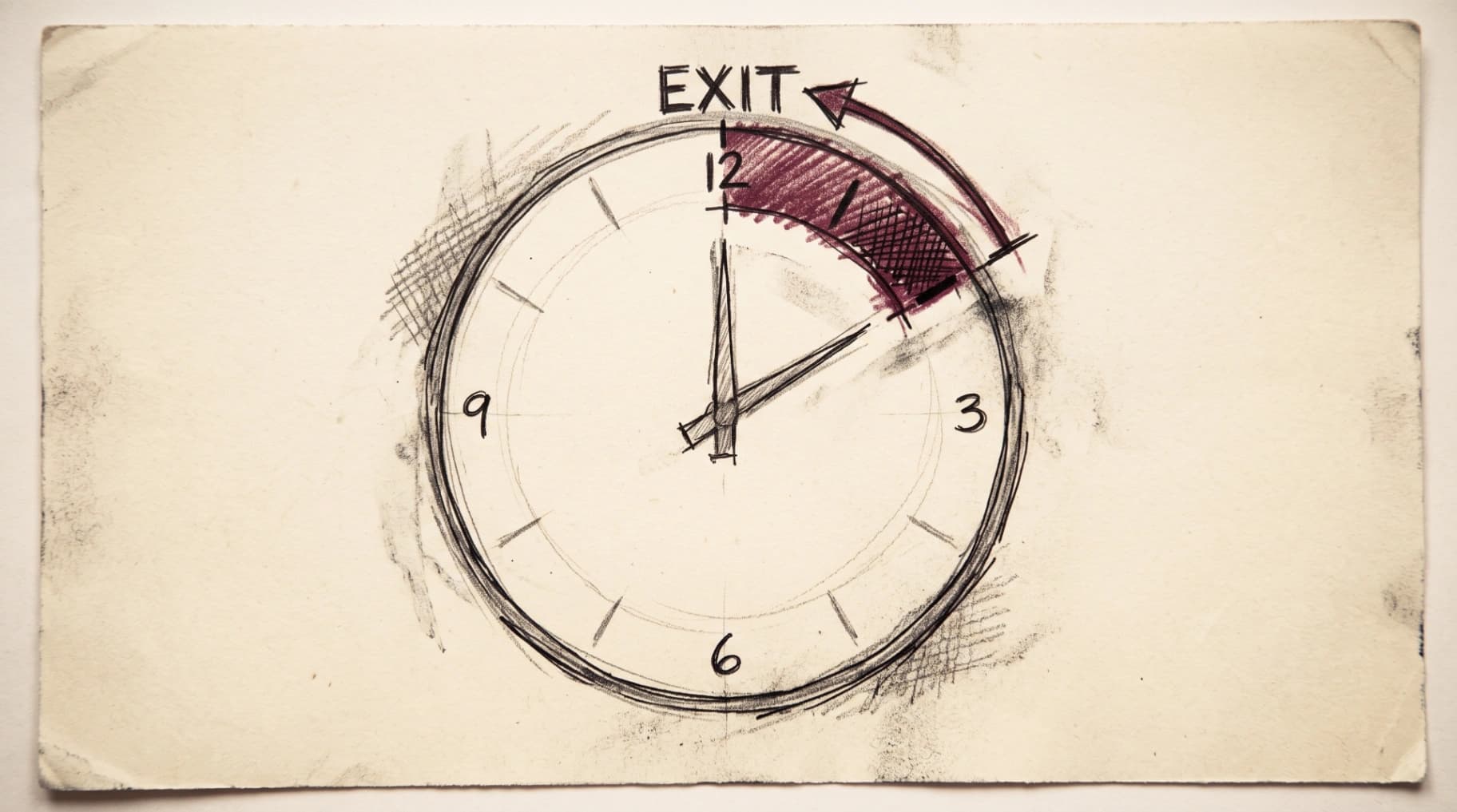
The Ten Minutes That Matter Most
The setup does not work out. The position closes, and there is a very specific, very familiar feeling that follows: a need to get back in immediately, to find the next trade right now, before the feeling of being behind has a chance to settle. This is the window where revenge trading actually happens, and it is almost never longer than ten or fifteen minutes.
Knowing that this window exists does not close it. Most traders can describe the pattern in detail and still find themselves inside it the next time a setup fails. The gap between recognizing a pattern and interrupting it in real time is where most advice about this quietly falls apart, because awareness is a slow tool and the urge to re-enter moves fast.
Why Willpower Alone Does Not Hold
The instinct to treat this as a discipline problem, something that better focus or more willpower could fix, misses what is actually happening physiologically in that window. The urge to re-enter is not a considered decision being weighed against the plan. It arrives already dressed as urgency, and urgency does not leave much room for a calm internal debate about whether the next trade is a good idea.
This is why a mechanism has to sit outside the decision entirely. Not a reminder to be careful, which competes with the urge and often loses, but something that physically or procedurally removes the option to act during that window. The difference between the two is the difference between a rule that works and a rule that sounds good on paper.
The Cooldown That Is Not Optional
The simplest mechanism is also the least glamorous: a fixed, non-negotiable cooldown timer that starts the moment a losing position closes, during which no new position can be opened, full stop, no exceptions written in.
The timer only works if it is external to willpower entirely, built into the platform, the broker's order restrictions, or an alarm paired with a hard personal rule that the platform stays closed until it goes off. A cooldown that can be skipped by simply deciding to skip it is not a cooldown. It is a suggestion, and suggestions are exactly what fail in that ten-minute window.
Fifteen to twenty minutes tends to be enough for the urgency to lose its edge without being so long that it becomes impractical for an active session. The exact number matters less than the fact that it cannot be negotiated with once it starts.
The Size Lock
A second mechanism addresses what happens after the cooldown ends, because the urge to recover a setback quickly does not disappear after fifteen minutes, it usually just becomes quieter and re-enters through position size instead of impulsive timing.
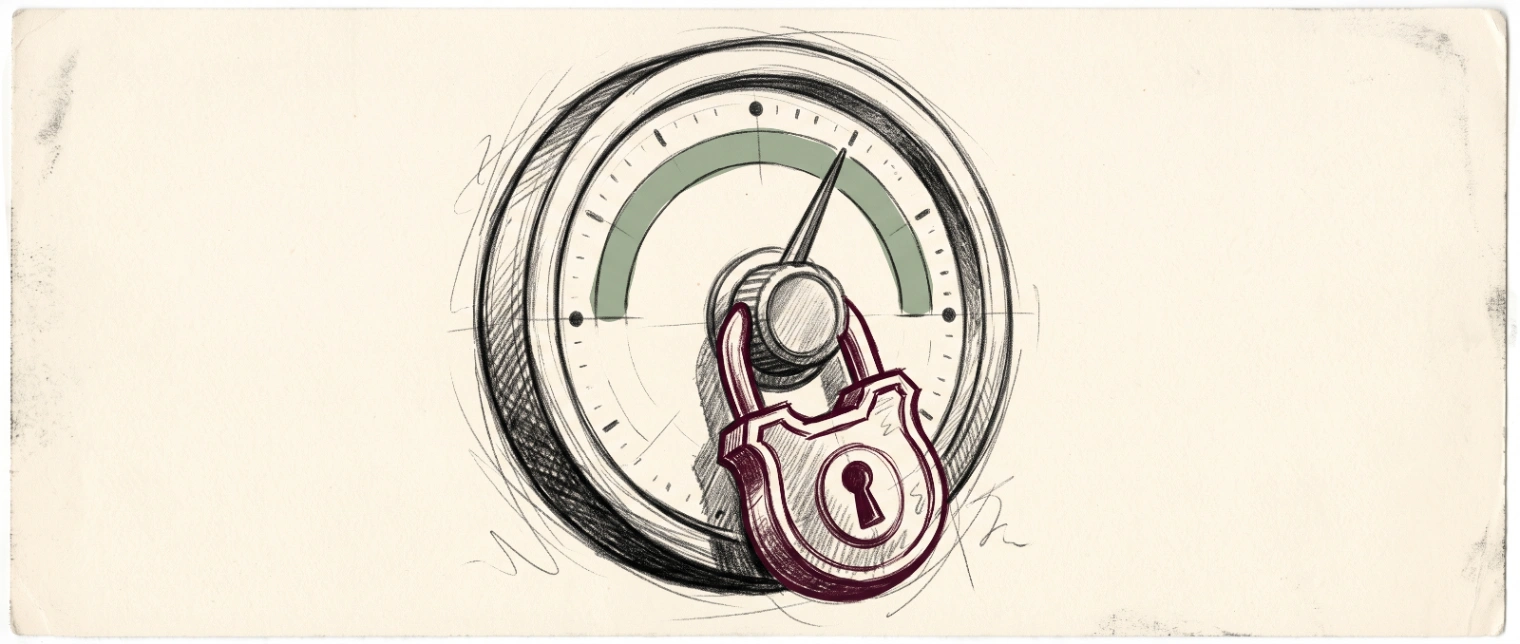
A size lock sets a hard ceiling on position size for the remainder of the session after any losing trade, one that cannot be adjusted upward regardless of how confident the next setup looks. This directly targets the quiet, gradual sizing creep that usually accompanies an attempt to make a setback back in fewer trades, which is a different and slower-moving version of the same underlying pattern as the initial impulsive re-entry.
Writing this rule down before a session starts, as part of the plan rather than as a reaction to what just happened, is what gives it enough weight to hold once the moment actually arrives.
The Walk-Away Trigger
The third and most effective mechanism is also the hardest to accept: a predefined number of trades that ends the session entirely, no matter how the day looks afterward. Two consecutive losing trades where entries did not follow the written plan is a workable threshold. Once it is hit, the session is over, not paused, over.
This one works because it removes the highest-risk window from the equation completely rather than trying to manage behavior inside it. There is no cooldown to wait out and no size to police, because there is no more trading happening that day. It is also the mechanism traders resist most, because it means walking away while the market is still open and still moving, which feels like giving something up even when it is actually the rule doing exactly what it was built to do. Ignoring that hard stop is usually where revenge trading quietly turns into a broader overtrading solutions problem, one extra trade becoming five before the session ends.
Building the Rules Before the Moment Needs Them
None of these three mechanisms work if they are decided in the moment they are needed. A cooldown timer negotiated with in real time is not a cooldown. A size lock reconsidered after a setback is not a lock. A walk-away trigger that gets one more exception is not a trigger, it is just the old pattern with an extra step.
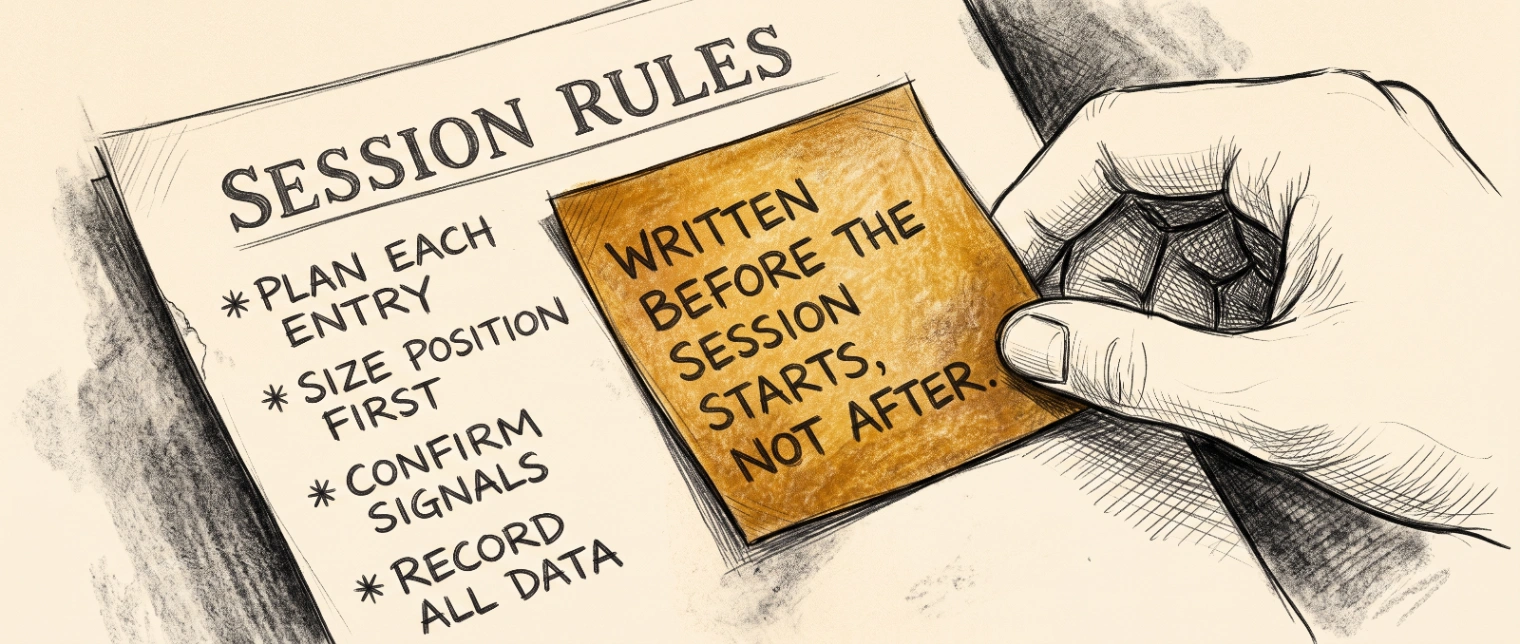
The only place these rules have any real power is on paper, written down before the session opens, alongside the rest of the plan. This is also where trading psychology tools built around structured, dated logging earn their place, not because logging alone stops the pattern, but because a rule that gets written down and checked against afterward tends to survive contact with the moment far better than one that only ever lived as an intention.
What This Looks Like Over Time
revenge trading is really just the fastest, most visible expression of trading tilt, the ten-minute window where a quieter state turns into an actual decision. As a pattern it rarely disappears entirely just because three mechanisms are in place. What changes is how often it gets the chance to actually run its course. A cooldown that holds, a size that does not creep, and a session that ends on schedule instead of on emotion, together, function less like willpower and more like a fence around the moments where willpower was never going to be enough anyway.
Over weeks, this shows up as fewer sessions that end worse than they needed to, and a growing, evidence-backed sense that the mechanisms are doing quiet work even on days they never get triggered at all. That is a different kind of trading discipline than the kind built on remembering to be careful. It does not depend on remembering anything in the moment it matters most.
FAQ
Why does awareness alone not stop revenge trading?
Because the urge to re-enter after a setback arrives as urgency rather than as a considered decision, and urgency moves faster than the kind of calm reflection that awareness relies on. A mechanism that sits outside the decision entirely tends to hold where willpower does not.
How long should a cooldown period last?
Fifteen to twenty minutes is generally enough for the initial urgency to fade without disrupting an active session too heavily. The specific length matters less than making it genuinely non-negotiable once it starts.
What is a size lock and why does it matter?
A size lock is a hard ceiling on position size for the rest of a session after a losing trade, one that cannot move upward regardless of how the next setup looks. It targets the slower, quieter version of the same pattern that shows up as sizing creep rather than impulsive re-entry.
Why is a predefined walk-away trigger considered the strongest mechanism?
Because it removes the highest-risk window entirely rather than trying to manage behavior inside it. Once a session ends, there is no cooldown to negotiate and no size to police, since no more trading is happening that day.
Do these mechanisms need to be written down in advance?
Yes. A rule decided or adjusted in the moment it is needed is not really a rule, it is just the original pattern with an extra step. These mechanisms only hold power when they are written into the session plan before trading starts.