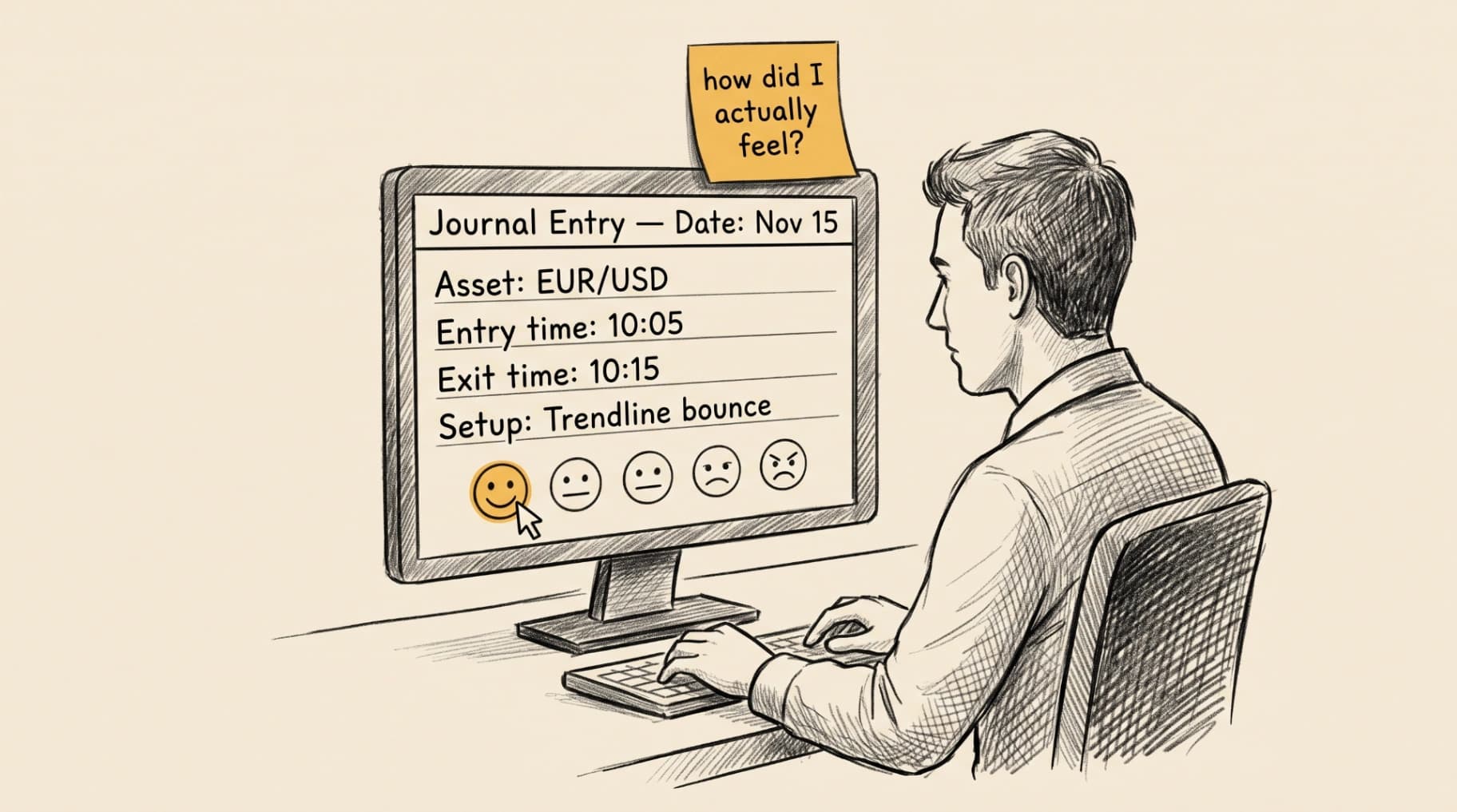
Most trade logs capture the setup in detail. Instrument, entry, exit, the reasoning behind the idea. What they rarely capture is how you felt walking into it, and that gap is exactly where a lot of avoidable mistakes hide.
You can write down that you took a breakout on a strong volume signal. What that entry doesn't show is that you were still frustrated from the trade before, and took this one faster than you normally would to make up for it. A week later, reviewing the log, the entry looks clean. Nothing in the data hints at the state you were actually in. The feeling evaporated the moment you moved on, and with it, one of the most useful pieces of information about why that particular trade happened the way it did.
What mood tracking actually captures
Mood tracking is a simple addition to your journal entry: a place to log the psychological state you were in around a trade, using either a quick tag or a short written note. Common states include fear, greed, anxiety, confidence, focus, and frustration, though you can define your own if those don't quite fit how you experience a session.
It takes seconds to log, usually right alongside the trade itself, so it doesn't turn journaling into a chore. Some traders prefer tapping a single tag. Others prefer writing a line or two, or dictating a quick voice note tuned to catch trading language rather than fumbling over ticker symbols and setup names. Either way, the point is the same: capture the state while it's still real, before hindsight has a chance to smooth it into something calmer and more rational-sounding than it actually was.
Why this is different from just remembering how you felt
The instinct might be that you don't need to log this, you'll just remember. In practice, this is close to how trade replay works for the visual side of a trade: memory reshapes things after the fact, and emotional memory is especially unreliable. A frustrating session tends to get remembered as "a rough day," a vague, generalized feeling, rather than the specific state, frustration at 10am, followed by overconfidence by noon, that actually drove the individual decisions inside it.
Logging the state in the moment keeps that specificity intact. Instead of one blurry impression of "a bad day," you end up with a record that shows exactly when frustration turned into forcing trades, or when a string of comfortable setups quietly turned into overconfidence. That level of detail is what makes the pattern visible later. Vague memory can't show you that.
What the pattern looks like once you can see it
On its own, one logged state doesn't mean much. A single "frustrated" tag next to one trade is just a data point. The value shows up once you have enough of them to look for a pattern across your trading psychology tools and journal history.
This is where AI-assisted review earns its place. Instead of scrolling back through weeks of entries trying to remember which sessions felt off, sentiment analysis on your written notes and correlation across your logged states can surface things like: the state you tag as "anxious" tends to show up most often in the first 30 minutes after a losing streak, or "confident" entries cluster on days that follow two or three clean sessions in a row, right before a setup that didn't hold up as well.
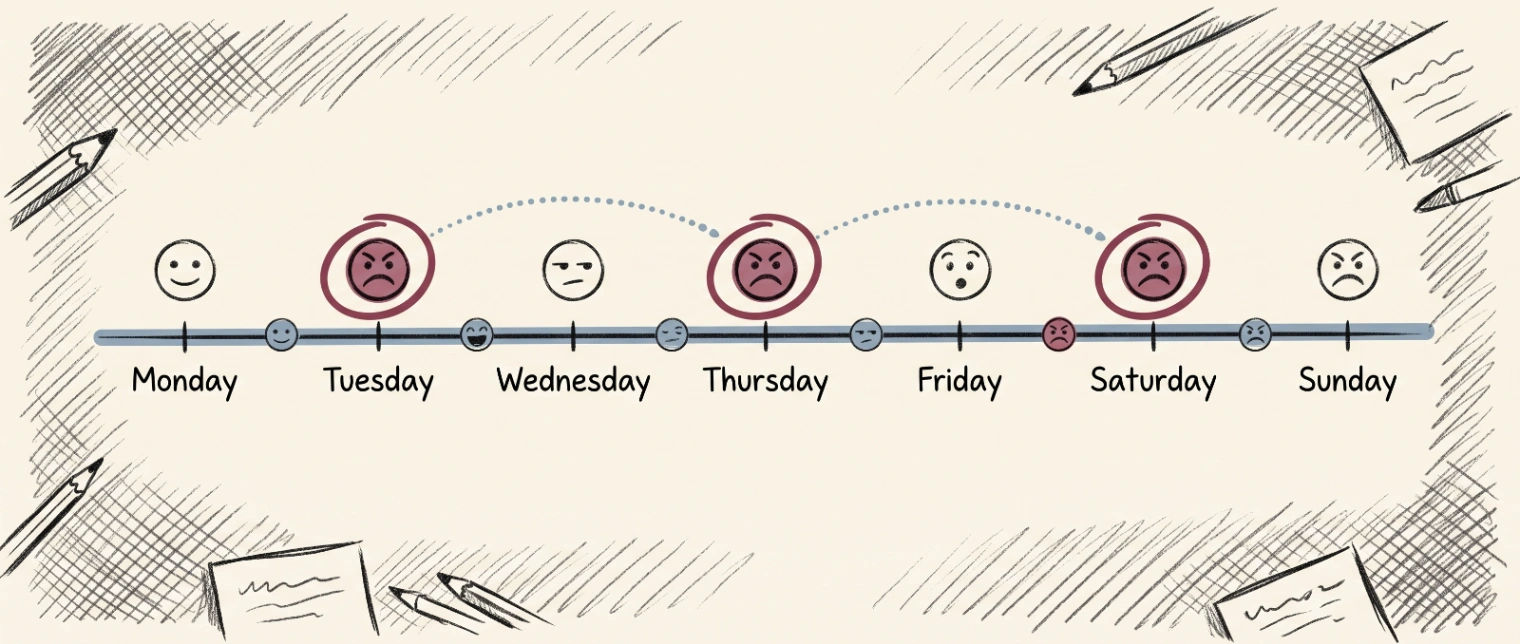
It's worth being clear about what this is and isn't. This kind of correlation shows you patterns worth reflecting on, not a proven cause. Feeling anxious doesn't automatically cause a particular result, and the platform won't claim it does. What it can do is put the pattern in front of you clearly enough that you can decide for yourself whether it's something worth addressing, the same way it would if a mentor pointed it out after watching you trade for a month.
Where this connects to the mistakes you already know about
A lot of the common trading mistakes traders already recognize in themselves have an emotional signature attached, even if it doesn't always get named that way. Revenge trading almost always has frustration or urgency sitting underneath it. Oversized entries taken without much thought often trace back to overconfidence built up over a good stretch. Hesitating on a setup that matched every rule in the plan is frequently anxiety, not indecision about the chart itself.
Mood tracking doesn't diagnose these for you. What it does is give you the raw material, state tagged next to trade, session after session, so that when you sit down to reflect, you're working from an actual record instead of trying to reconstruct how you felt weeks after the fact.
Building it into a routine that doesn't feel like extra work
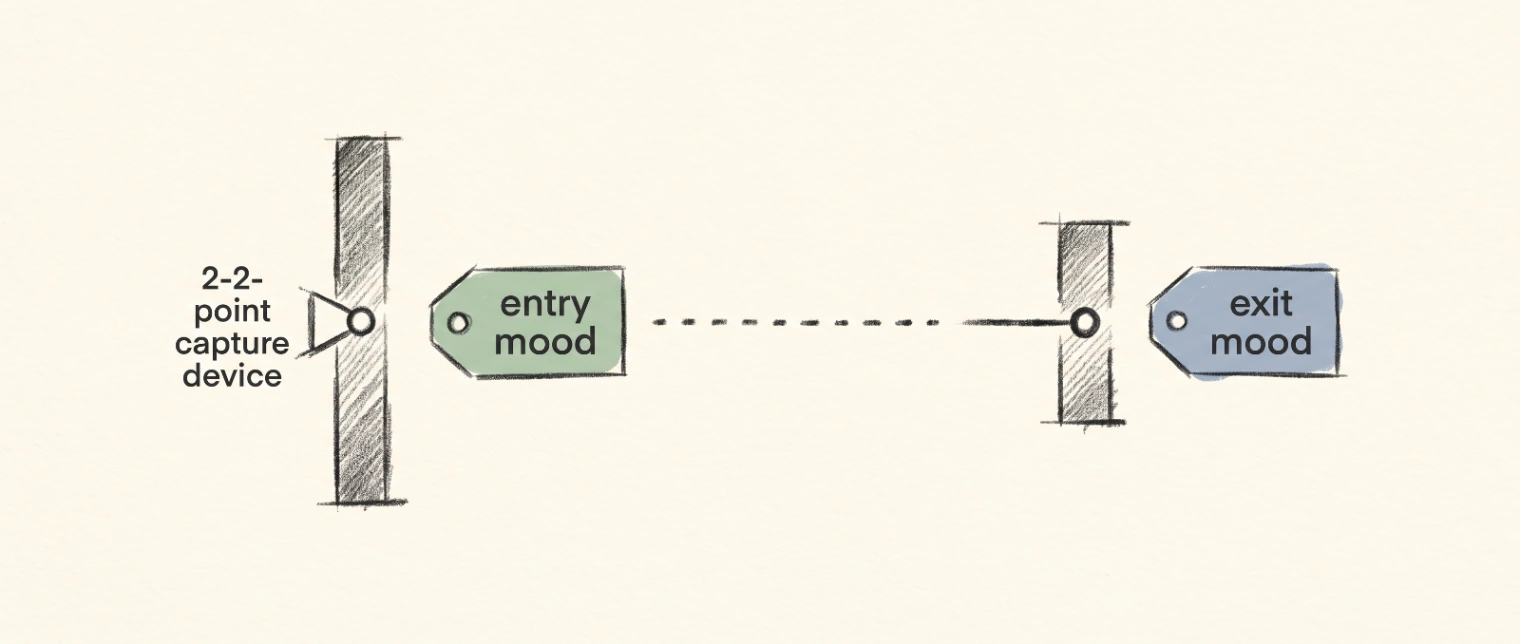
The easiest way to start is to tag your state at the two moments that matter most: right before you take a trade, as part of your pre-trade planning, and right after you close it. Those two data points alone, entry mood and exit mood, are often enough to start noticing shifts.
If a tag isn't enough some days, add a line. You don't need a paragraph, just enough to capture what was actually going on. Over a few weeks, resist the urge to interpret every single entry in the moment. Let them accumulate, then review the pattern as a whole during your weekly session review, the same way you'd review your setups or your entries. The goal isn't to catch every emotional trade the day it happens. It's to notice, over time, which states tend to precede your best sessions and which ones tend to precede the ones you'd rather not repeat, so you can start recognizing the state itself before it turns into the decision.
FAQ :
What is mood tracking in a trading journal?
Mood tracking is a journal feature that lets you log the psychological state you were in around a trade, such as fear, greed, anxiety, confidence, or focus, so that emotional context is captured alongside the setup rather than relying on memory later.
How is mood tracking different from writing free-form journal notes?
Free-form notes capture whatever you choose to write, which can vary a lot from entry to entry. Mood tracking uses consistent tags or short prompts specifically for psychological state, which makes it easier to spot patterns across many entries over time.
Does mood tracking use AI?
Yes. Sentiment analysis can read the language in your written entries to help identify emotional tone, and pattern correlation can show how your logged states tend to line up with certain times, setups, or sessions.
Does logging a mood mean that emotion caused a specific result?
No. Mood tracking surfaces patterns and correlations for reflection, not proof of cause and effect. It's meant to show you what tends to show up together, so you can decide for yourself whether it's worth addressing.
How often should I log my mood?
Most traders get the most value from logging at two points, right before taking a trade and right after closing it. That's usually enough to start noticing shifts without turning journaling into extra work.
Can I use voice-to-text for mood tracking?
Yes. Voice dictation tuned for trading language makes it faster to log a quick note about your state without breaking your focus to type it out.