A Setup That Used to Feel Automatic
The same setup that used to take a few seconds to recognize now takes noticeably longer to commit to. Nothing about the setup itself has changed. The chart looks the same as it always has in this configuration. What has changed is something underneath the decision, a kind of resistance that was not there a few months ago, and it shows up as hesitation on trades that once felt automatic.
This is not the same thing as a bad stretch or a string of setbacks. Burnout does not announce itself through the results. It shows up first in how much effort ordinary decisions start to require, long before it shows up anywhere a performance report would catch it.
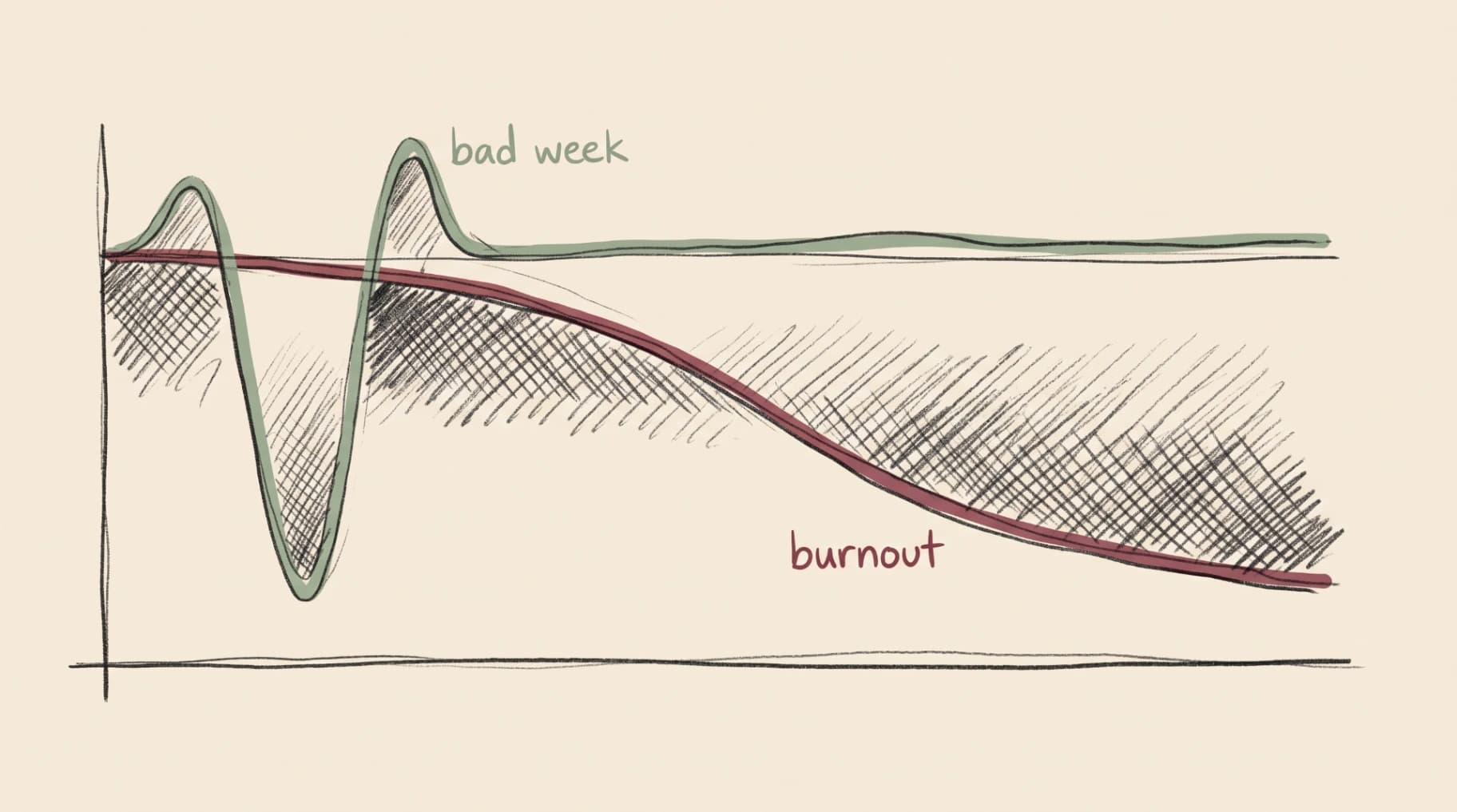
The Difference Between a Bad Week and Burnout
A bad week has a clear edge to it. Something specific went wrong, a setup failed, a read was off, and there is a reasonably clear story about what happened and why. The feeling passes once the week does.
Burnout does not have that shape. It is not a dip that recovers once the week turns over. It is a slow flattening that spreads across weeks, showing up as reduced patience for the parts of trading that require waiting, reduced tolerance for a setup that needs a few more minutes to confirm, and a growing pull toward closing positions early just to be done deciding for a while.
The tell is not in any single session. It is in how the same routine, unchanged on paper, keeps requiring more from someone who has less of it left to give each week.
Where It Actually Starts
Burnout in trading rarely starts with trading itself. It usually starts with the layer just underneath it, the constant low-level monitoring that a serious trading practice requires: watching levels that have not been hit yet, replaying a setup that already closed, checking a position outside of market hours out of habit rather than necessity.
None of that shows up as a mistake. It shows up as a kind of standing tax on attention that never fully turns off, even on days with no open positions at all. Over enough weeks, that constant low hum of monitoring is what drains the reserve that patience and discipline actually draw from.
How It Shows Up in the Actual Decisions
The clearest signs of burnout are not emotional, they are procedural, and they tend to cluster around three places in a session.
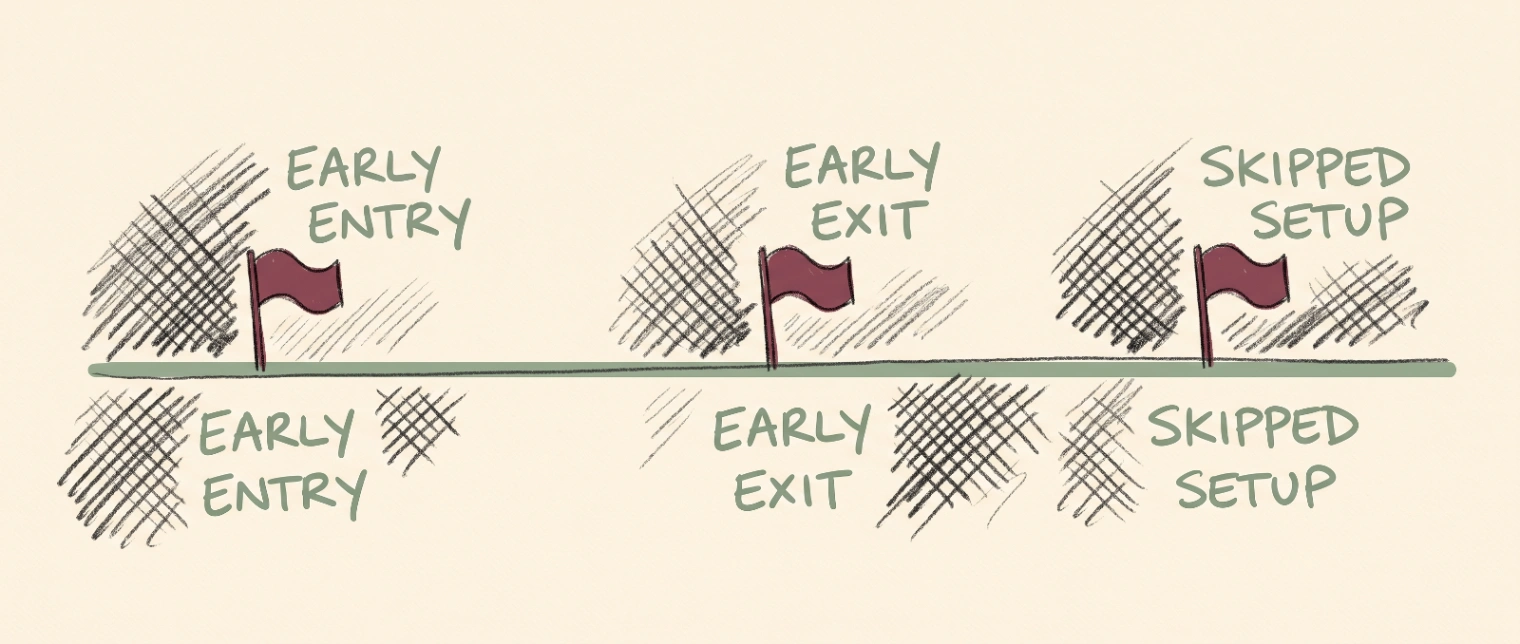
Entries start happening earlier than the plan calls for, not from excitement but from an urge to stop deliberating and just act. Exits start happening early as well, closing a position that is working simply to remove one more thing that requires ongoing attention. And valid setups start getting skipped entirely, not because they fail the criteria, but because engaging with them feels like more than there is energy left to give that day.
None of these three, on their own, look like burnout from the inside. They look like small, defensible judgment calls. The pattern only becomes visible when they are tracked together over time rather than examined one session at a time.
Why Pushing Through Makes It Worse
The instinct when a routine starts feeling heavier is usually to add more structure, more rules, more checklists, on the theory that better process will restore the discipline that seems to be slipping. This often backfires, because burnout is not a discipline problem in the way trading tilt is. Tilt is an acute state that a hard rule can interrupt in the moment. Burnout is a depleted reserve, and a depleted reserve does not refill because a new rule asked it to.
Adding structure onto a reserve that is already running low tends to accelerate the flattening rather than reverse it, because now there is more to track with even less capacity available to track it with.
What Actually Helps
Recovery from burnout looks less like a new strategy and more like a deliberate reduction, at least for a defined stretch. A shorter trading day, a smaller universe of setups actively watched, or a scheduled full day away from the screen entirely, not as a reward but as a structural part of the plan, tend to do more than any added checklist.
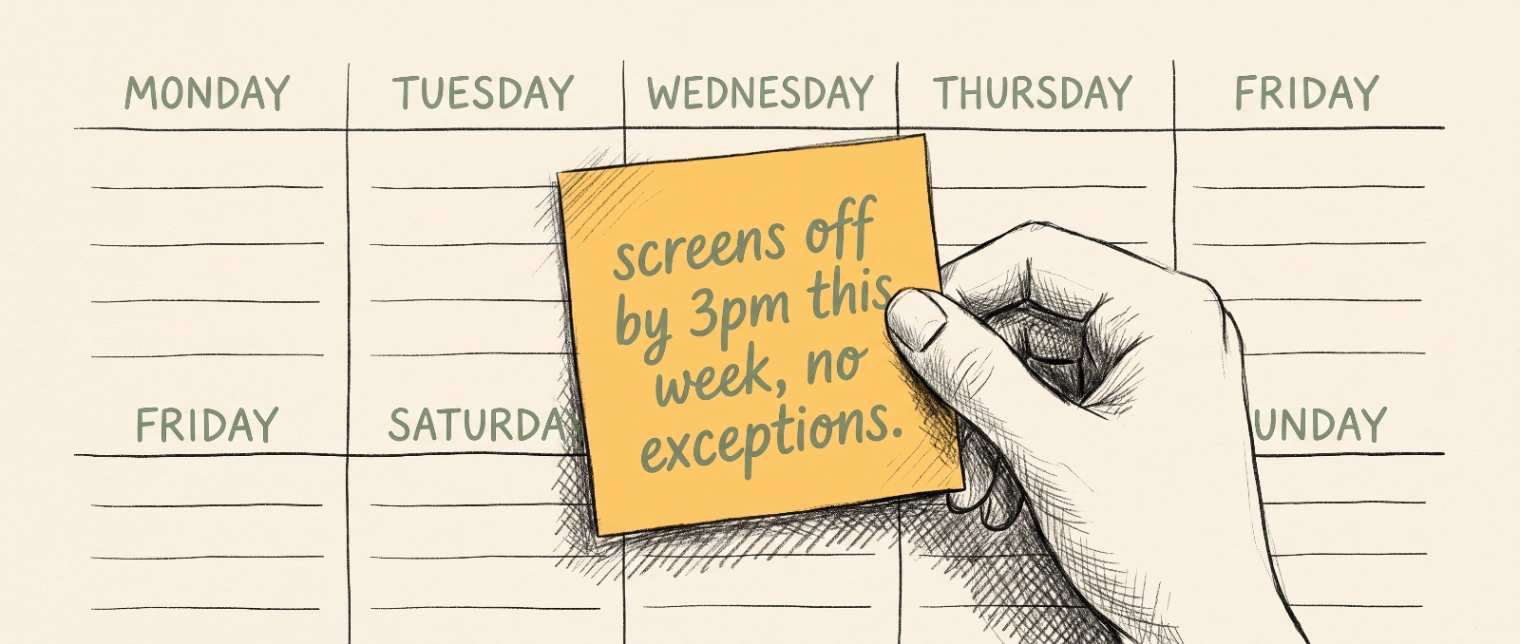
The key difference from simply pushing through is that this reduction gets written into the plan in advance, the same way a trader daily routine gets built around fixed hours rather than however long feels right on a given day. A boundary decided in advance holds. A boundary considered only once the fatigue has already set in usually does not.
Tracking the Slow Version of the Pattern
Because burnout moves slowly and rarely announces itself in any single session, it is one of the harder patterns to catch through memory alone. A mood tracking journal that records energy and willingness to wait, not just entries and exits, tends to surface the flattening weeks before it would otherwise become obvious through results.
Reviewing that record on a fixed schedule, watching for the same signs across sessions rather than judging each one individually, is what turns a vague sense of being tired of trading into a specific, addressable pattern. That kind of structural trading discipline, built around recognizing the slow version of a problem rather than only the fast one, is what actually protects the steady, repeatable rhythm behind real trading consistency from eroding over a season rather than a single bad week.
FAQ
How is trading burnout different from a normal losing stretch?
A losing stretch has a clear cause tied to specific trades and tends to resolve once conditions change. Burnout is a slow, procedural flattening that shows up as reduced patience and increased hesitation across weeks, independent of how any single session actually turns out.
What are the earliest signs of trading burnout?
Entries taken earlier than planned, exits taken earlier than planned, and valid setups skipped out of fatigue rather than analysis are the three clearest early signs, especially when they start showing up together across multiple sessions rather than as one-off decisions.
Why does adding more rules sometimes make burnout worse?
Because burnout reflects a depleted reserve of attention and patience rather than a lapse in discipline. Adding more structure increases what needs to be tracked without addressing the underlying depletion, which can accelerate the flattening instead of reversing it.
What actually helps with trading burnout?
A deliberate, planned reduction, shorter sessions, a smaller set of actively watched setups, or scheduled full days away from the screen, tends to help more than additional checklists. The reduction needs to be decided in advance rather than considered only once fatigue has already set in.
Can a trading journal help catch burnout before it becomes obvious?
Yes, particularly one that tracks energy and willingness to wait alongside entries and exits. Because burnout moves slowly, a dated record reviewed on a fixed schedule tends to surface the pattern well before it would show up clearly in results alone.