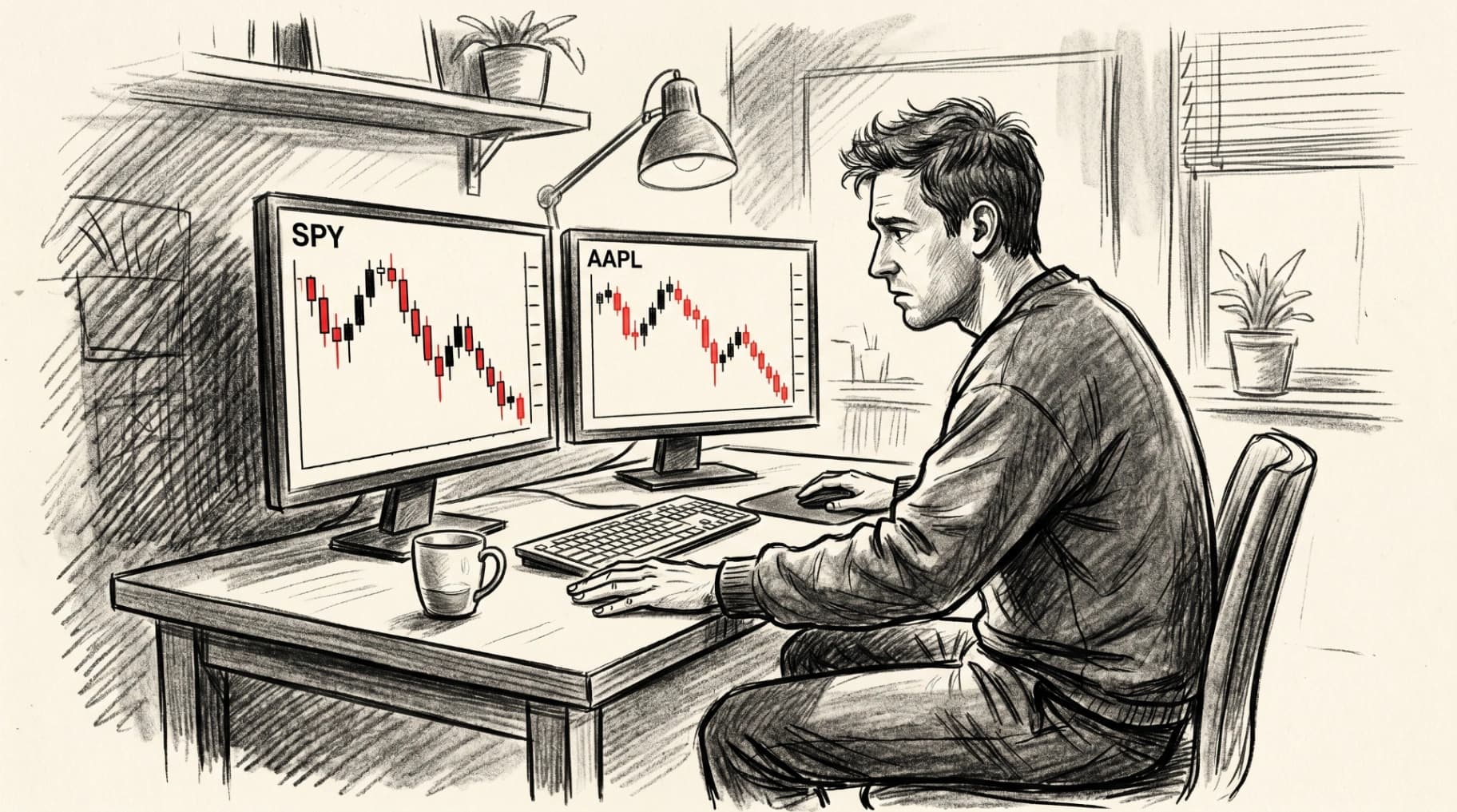
The trade didn't go the way you planned. It rarely announces that it will. One moment you're in a position, the next you're watching it move against you. You take the loss, close the trade, and sit back.
And then something happens.
You're still watching the charts. The market is still moving. A part of your brain starts doing math that isn't really math. If you get back in now, and it works, the loss doesn't count. That thought, quiet and convincing, is where revenge trading begins.
Revenge trading doesn't look like a mistake when you're in it. It looks like a second chance. You feel alert, focused, almost strategic. But the goal has shifted without you noticing. You're no longer trading to execute your plan. You're trading to undo a feeling.
What Revenge Trading Actually Is
Revenge trading is the act of entering a new trade immediately after a loss, not because a valid setup appeared, but because you want to recover what you just gave back to the market. It is emotionally driven re-entry disguised as logical decision-making.
The word "revenge" is accurate. It captures the intent: not a trade, but a reaction. Not a setup, but a statement. The market took something and you are going back in to reclaim it.
But markets don't work that way. They don't owe you a recovery. They don't respond to your frustration. The trade you are about to enter in that state faces the exact same conditions as any other trade. Except now you are entering it without your normal process, without patience, and often with more size than your rules allow, because a larger position means a faster path back to even.
Why It Feels Rational
What makes revenge trading particularly difficult to catch in the moment is that it doesn't feel irrational. It feels like a logical response.
Your brain is running a loss-recovery calculation. Another trade in the same direction, or a larger one in the opposite direction, could neutralize the damage. The math looks simple. The market is still moving. You are still watching. Why not try again?
The problem is that none of this calculation accounts for your actual mental state. It doesn't account for the fact that you are still processing the previous trade, not fully present for this one. It doesn't account for whether the current setup actually meets your criteria. And it doesn't account for the fact that the sizing you are considering is higher than your standard rules, because a standard position won't recover the loss fast enough for how you are feeling right now.
This is where the real cost begins, before you even enter the trade.
The True Cost of Revenge Trading
The financial cost is the obvious one. A loss followed by a larger impulsive trade that also fails creates a drawdown that is much harder to recover from across a session. What started as a clean, manageable loss becomes a situation that takes far more time and composure to work through.
But there is a cost that is harder to quantify. Revenge trading erodes your relationship with your own process. Each time you break your rules to chase a recovery, you are reinforcing the belief that your rules are optional. That when you feel certain enough, it is acceptable to override your system. That emotional urgency counts as edge.
It doesn't. The traders who build real consistency over time are the ones who recognize that strong conviction immediately after a loss is often a warning signal, not an edge. They have seen the pattern too many times to mistake urgency for clarity.
How to Recognize It When It's Happening
The tricky part is that revenge trading doesn't announce itself. You don't tell yourself you are about to revenge trade. You tell yourself you see an opportunity. You tell yourself the conditions are right. You tell yourself one more trade makes sense.
The signals are more subtle:
You enter a trade within minutes of a loss without running through your normal setup criteria.
Your position size is larger than your standard risk parameters.
You are still thinking about the previous trade while trying to execute this one.
You feel urgency that has nothing to do with the market structure in front of you.
The trade doesn't match your strategy, but you're entering it anyway.
Any one of these in isolation might be unremarkable. Several of them appearing together immediately following a loss is a pattern. And like most behavioral patterns in trading, it is far easier to see in hindsight than in the moment.
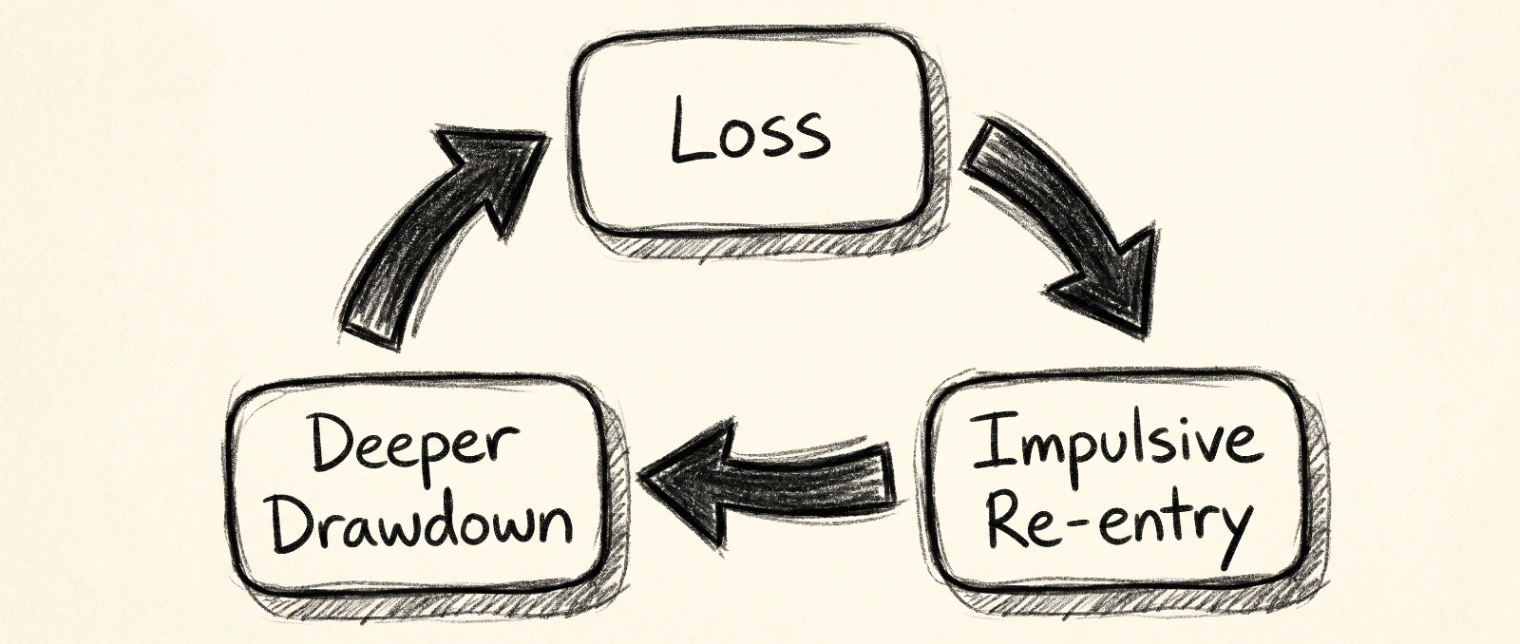
This is why traders who study their emotional trading solutions often find that the most damaging session doesn't start with the first losing trade. It starts with the second one, entered too quickly, sized too large, with too little consideration of whether the setup was actually there.
The Missing Feedback Loop
Most traders know revenge trading is a problem. Knowing is not enough.
What helps is having a record of what you actually do when it happens. Not a general sense that you tend to overtrade after losing, but specific data. Which sessions did it occur in? How long after the original loss did the revenge trade follow? How did the sizing compare to your standard approach? What was the outcome?
This is where structured journaling changes the equation. Not because writing things down is magical, but because it creates a behavioral map that memory alone cannot hold.
Without a record, your brain fills in the gaps. You remember the loss, but the sequence gets blurry. You remember feeling frustrated, but the details of what trade followed it, and how the sizing compared to your norm, fade fast. The pattern stays invisible.
With consistent entries, you start to see it clearly. You notice that certain sessions follow a recognizable sequence. That a particular instrument tends to trigger impulsive re-entries. That the trades where you sized beyond your rules almost always came after a stop-out, not from a position of genuine confidence.
That visibility is where behavioral change becomes possible. Not through willpower. Through awareness.
If you have been working through overtrading solutions and finding that advice to "just stop" isn't sticking, revenge trading is likely at the center of it. Overtrading and revenge trading often run together. The pattern isn't random impulsiveness. It is a predictable emotional sequence that repeats until you can see it clearly enough to interrupt it.
How ChartWise Helps You Track and Break the Cycle
ChartWise is built around the idea that behavioral data is as important as trade data. The platform's behavioral analysis tools let you tag entries by emotional state, flag impulsive re-entries, and track what follows a losing trade across your full trading history.
Over time, you stop guessing what triggers your worst decisions. You see it in your own data. You see the sessions where the trade after the loss cost more than the original. You see the pattern of oversizing that follows a drawdown. You see the gap between your intended behavior and your actual behavior, and you begin to close it.
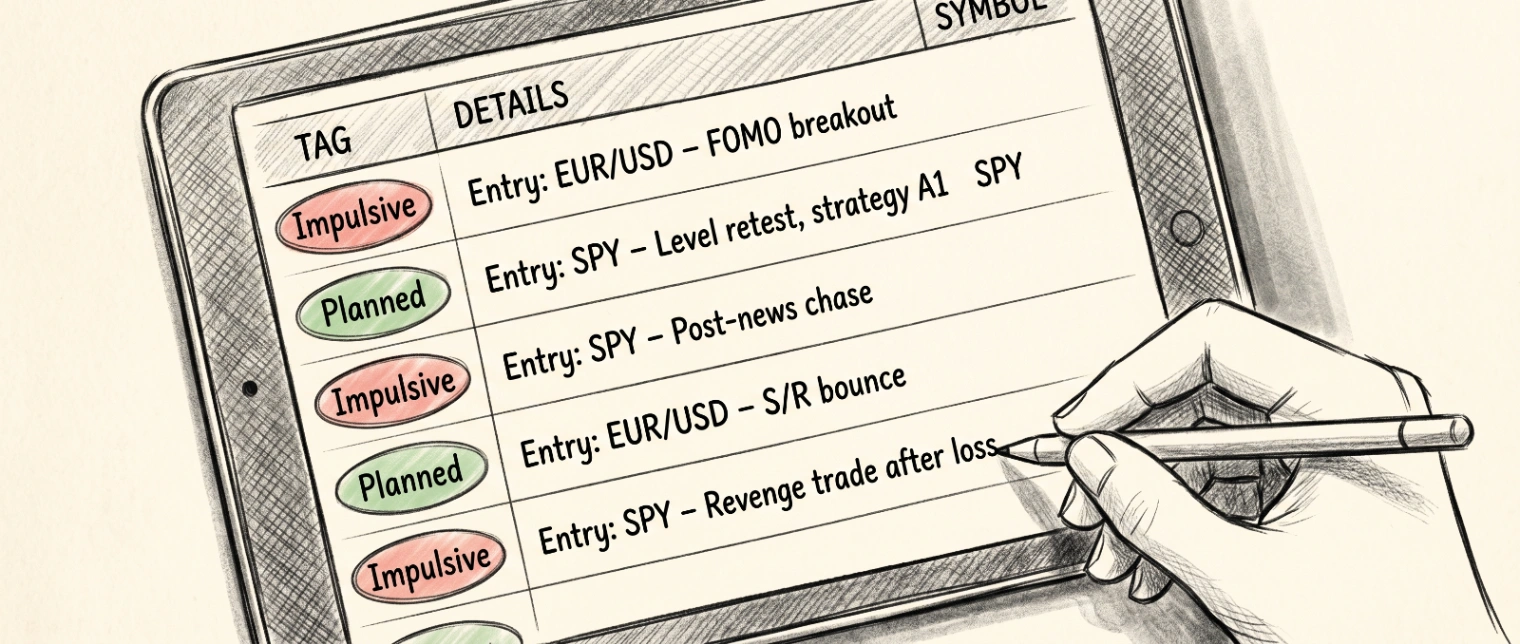
This is what trading journal software is actually for. Not just recording entries and exits. Not just calculating win rate and risk-reward. But building the kind of self-knowledge that makes impulsive decisions less likely and behavioral consistency more achievable.
If you have been looking at your results and wondering why certain sessions go wrong so fast, revenge trading is worth examining closely. It is a pattern, and patterns can be identified, tracked, and changed once you can see them clearly.
Start by reviewing your last ten losing sessions. Look at what happened in the thirty minutes after each loss. Look at whether a second trade followed quickly, and what the sizing looked like compared to your usual approach. What you find may tell you more about your trading than any technical review ever has.
And if you want a structured way to do that, explore how ChartWise can help you build the trade review process that surfaces these behavioral patterns consistently, before they compound into a session you can't come back from.
FAQ
Q1: What is revenge trading in simple terms?
Revenge trading is when a trader enters a new position immediately after a loss, not because a valid setup appeared, but because they want to recover what was just lost. It is an emotionally driven decision that feels strategic but bypasses the normal trading process entirely.
Q2: Why do traders revenge trade even when they know it's harmful?
Because it feels rational in the moment. A loss creates a strong emotional pull toward immediate recovery. The brain runs a loss-recovery calculation that appears logical but doesn't account for mental state, setup quality, or the fact that position sizing tends to be larger than normal. Recognizing this in real time is much harder than spotting it afterward.
Q3: How is revenge trading different from a legitimate re-entry after a loss?
A legitimate re-entry is based on a new setup that meets your criteria, independent of the previous trade. Revenge trading is driven by the desire to recover a loss. The key distinction is intent and process: did you run through your normal checklist, or did you skip it because urgency felt like conviction?
Q4: What are the most common signs of revenge trading?
Entering within minutes of a loss without checking your normal setup criteria. Sizing larger than your standard risk rules. Feeling urgency unrelated to market structure. Thinking about the previous trade while executing the current one. Entering setups that wouldn't normally meet your threshold. Multiple signals appearing together immediately after a loss is the clearest indicator.
Q5: How does a trading journal help reduce revenge trading?
A journal creates a behavioral record that memory cannot hold reliably on its own. Over time, you stop relying on a general sense of what happened and start seeing actual patterns: which sessions trigger impulsive re-entries, how sizing compares before and after a loss, and what the aggregate outcome of those trades looks like as data rather than isolated memories.
Q6: Can revenge trading ever lead to a profitable result?
Occasionally, yes. But consistency cannot be built on outcomes that require abandoning your rules. Even when a revenge trade works, it reinforces the behavior and makes it more likely to repeat in conditions where it will not work. The quality of your process matters more than any individual result.
Q7: How does ChartWise help traders identify and reduce revenge trading?
ChartWise's behavioral analysis tools let traders tag trades by emotional state, flag impulsive re-entries, and track what follows a losing trade across their full trading history. This creates a data-based view of behavioral patterns behind performance, making it possible to see the revenge trading sequence clearly and work to interrupt it before it compounds into a larger drawdown.