Introduction
Candlestick patterns look simple.
Too simple.
That’s exactly why most traders get them wrong.
You learn a few patterns.
You start spotting them everywhere.
You take trades based on them.
And then… they fail.
Not because candlesticks don’t work.
But because they’re being used the wrong way.
Candlesticks are not signals. They are context.
Most traders don’t realize this at first.
They learn patterns before they understand how the market actually behaves — how trends form, how liquidity moves, and how price reacts at key levels.
And that’s where the mistakes begin.
What Are Candlestick Patterns?
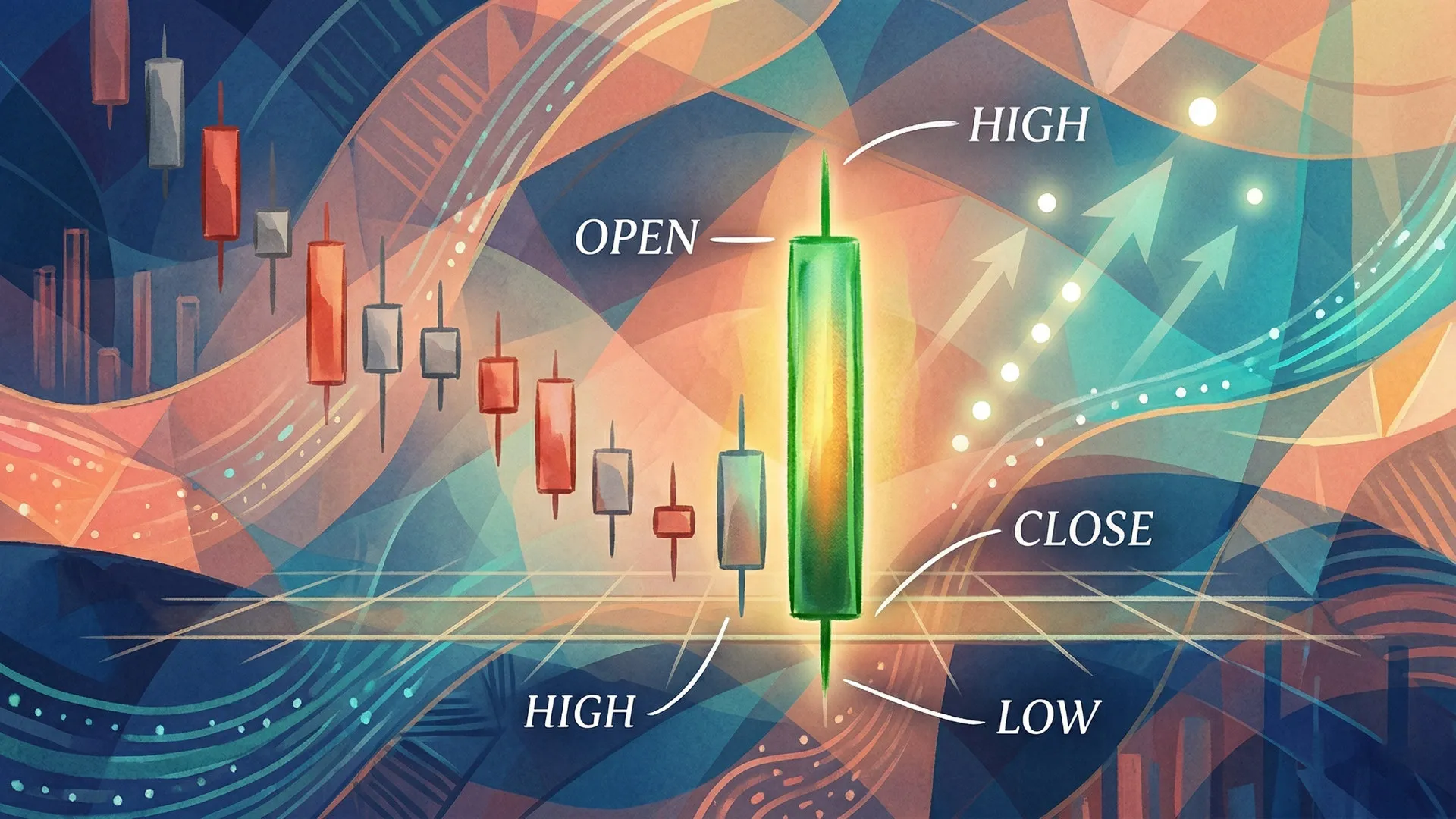
Candlestick patterns are visual representations of price movement within a specific time period.
They show:
Open price
Close price
High and low
At a basic level, they help traders understand who is in control — buyers or sellers — during that period.
Patterns like Doji, Engulfing, and Hammer are often used to interpret market sentiment and possible reversals.
But here’s the important part:
Candlesticks don’t predict the market. They reflect what just happened.
They are a reaction to price, not a guarantee of what comes next.
This distinction is subtle, but it changes how you approach every trade.
Why Most Traders Misuse Candlesticks
The biggest mistake traders make is treating candlestick patterns as standalone signals.
They see a pattern → they enter a trade.
No context.
No confirmation.
No plan.
This usually comes from learning patterns in isolation — without understanding where they actually work.
Over time, this leads to frustration:
Trades don’t behave as expected
Losses feel random
Confidence drops
This is exactly how random losses start looking like “bad luck.”
In reality, it’s just poor interpretation.
Let’s break down where most traders go wrong — not just in theory, but in real trading decisions.
1. Trading Candlesticks Without Context
This is the most common mistake.
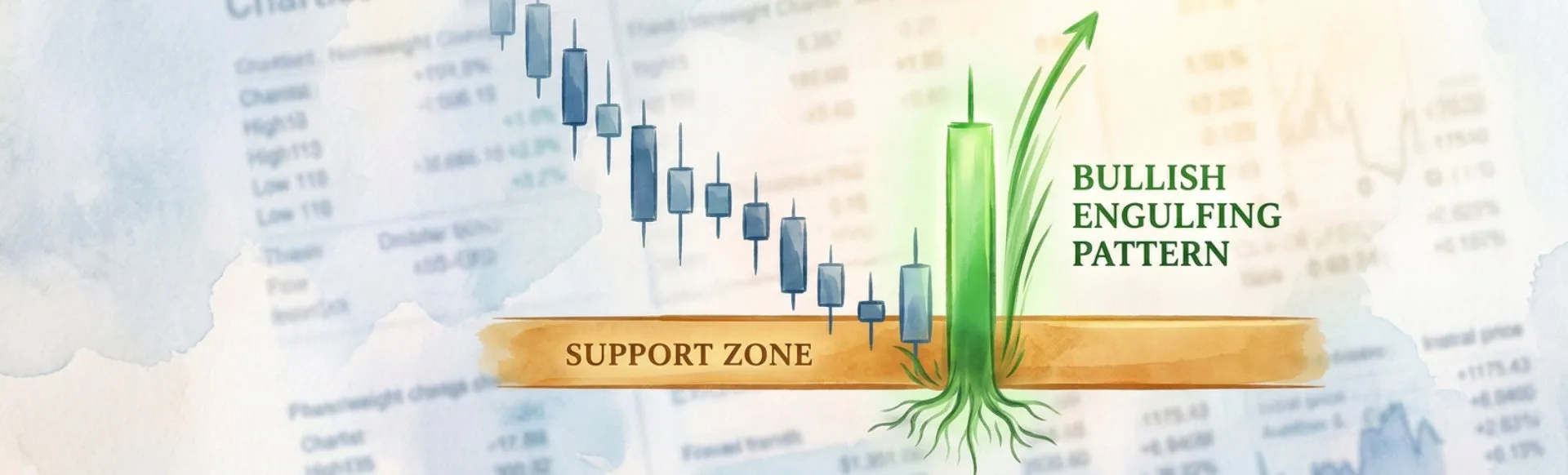
A bullish engulfing pattern in the middle of a sideways market doesn’t carry much meaning.
There’s no strong buyer intent behind it — just short-term movement.
Now compare that to the same pattern forming at a key support level, after a clear downtrend.
That’s not just a pattern anymore — that’s a potential shift in control.
Candlesticks only make sense when combined with:
Support and resistance
Trend direction
Market structure
Without these, you’re essentially reacting to isolated movements without understanding the bigger picture.
A pattern without context is just noise.
This is where things start to go deeper.
2. Ignoring Market Structure
Many traders focus only on individual candles.
But the market doesn’t move candle by candle.
It moves in structure.
Structure tells you:
Whether the market is trending or ranging
Where momentum is building
Where reversals are likely to occur
If you ignore structure:
You enter against trend
You mistake pullbacks for reversals
You take trades in weak zones
For example, a bullish candle inside a strong downtrend is often just a temporary retracement — not a reversal.
Candlesticks should support structure, not replace it.
And when structure is ignored, another problem shows up.
3. Overtrading Every Pattern
Once traders learn patterns, they start seeing them everywhere.
And that’s dangerous.
Because the market naturally forms candles — patterns will appear constantly.
But not all of them matter.
This leads to:
Overtrading
Poor risk management
Emotional decisions
You start taking trades not because they are high-quality setups, but because something “looks like” a pattern.
Over time, this creates fatigue and inconsistency.
Just because you see a pattern doesn’t mean you should trade it.
At this point, trading becomes reactive instead of intentional.
4. Ignoring Volume and Confirmation
A candlestick pattern without confirmation is incomplete.
It shows a possibility — not a probability.
Volume and follow-through help you understand whether the move has strength behind it.
For example:
A breakout without volume often fails because there’s no real participation
A reversal without confirmation can quickly get invalidated
Confirmation can come from:
Increased volume
Strong follow-up candles
Alignment with indicators or structure
The first candle shows intent. The next confirms conviction.
But even with confirmation, there’s another layer most traders miss.
5. Misunderstanding Timeframes
A pattern on a 1-minute chart does not carry the same significance as one on a higher timeframe.
Lower timeframes are more volatile and noisy.
Higher timeframes reflect stronger market intent.
When traders ignore this difference:
They overreact to small movements
They take weak signals seriously
They lose consistency
A pattern on a higher timeframe often represents stronger participation and more reliable setups.
Higher timeframes = stronger signals
Lower timeframes = more noise
And this leads to one of the most overlooked issues.
6. Blindly Memorizing Patterns
Many traders try to memorize dozens of candlestick patterns.
But trading is not a memory game.
Markets are dynamic, and patterns rarely form in textbook-perfect ways.
If you rely only on memorization:
You hesitate when patterns don’t look perfect
You misinterpret similar-looking structures
You miss the actual story behind the price
Instead of memorizing patterns, focus on:
How price is moving
Where reactions are happening
Who is likely in control
Understanding beats memorization every time.
7. Ignoring Your Own Trading Data
This is the mistake almost no one talks about.
You take trades based on candlestick patterns.
But do you actually know:
Which patterns work best for you?
In which market conditions they fail?
How consistent your results are?
Most traders don’t track this.
They rely on general knowledge instead of personal data.
This is where growth stops.
Because improvement doesn’t come from knowing more patterns.
It comes from understanding your own behavior and results.

How to Actually Use Candlesticks the Right Way
So if most traders are making these mistakes, what does using candlesticks correctly actually look like?
Here’s the shift:
Instead of asking:
“Is this a valid pattern?”
Start asking:
Where is this happening?
What is the current trend?
What does the structure indicate?
Is there confirmation?
This shifts your mindset from pattern recognition to decision-making.
Candlesticks should support your decision, not make it.
The Real Edge Most Traders Miss
This is where everything connects.
Most traders focus on identifying patterns.
Better traders focus on understanding performance.
Because the real question is not:
“What pattern is this?”
It’s:
“Does this pattern actually work for me?”
The real edge comes from:
Tracking your trades
Reviewing your patterns
Identifying what consistently works
This is how trading evolves from guesswork to structured decision-making.
Final Thoughts
Candlestick patterns are powerful.
But only when used correctly.
The difference is simple:
Beginners look for patterns
Improving traders look for context
Profitable traders rely on data
And most traders never move past the first stage.
If you’re only looking at candles, you’re missing the bigger picture.
And in trading, the bigger picture is everything.
FAQ
Do candlestick patterns really work?
Yes, but only when used with proper context, structure, and confirmation.
Which candlestick pattern is the most reliable?
No single pattern is always reliable. Effectiveness depends on market conditions and how it is used.
Can I trade using only candlestick patterns?
It’s not recommended. Candlesticks should be combined with structure, volume, and risk management.
Why do my candlestick trades fail?
Most failures happen due to lack of context, no confirmation, overtrading, and ignoring market structure.